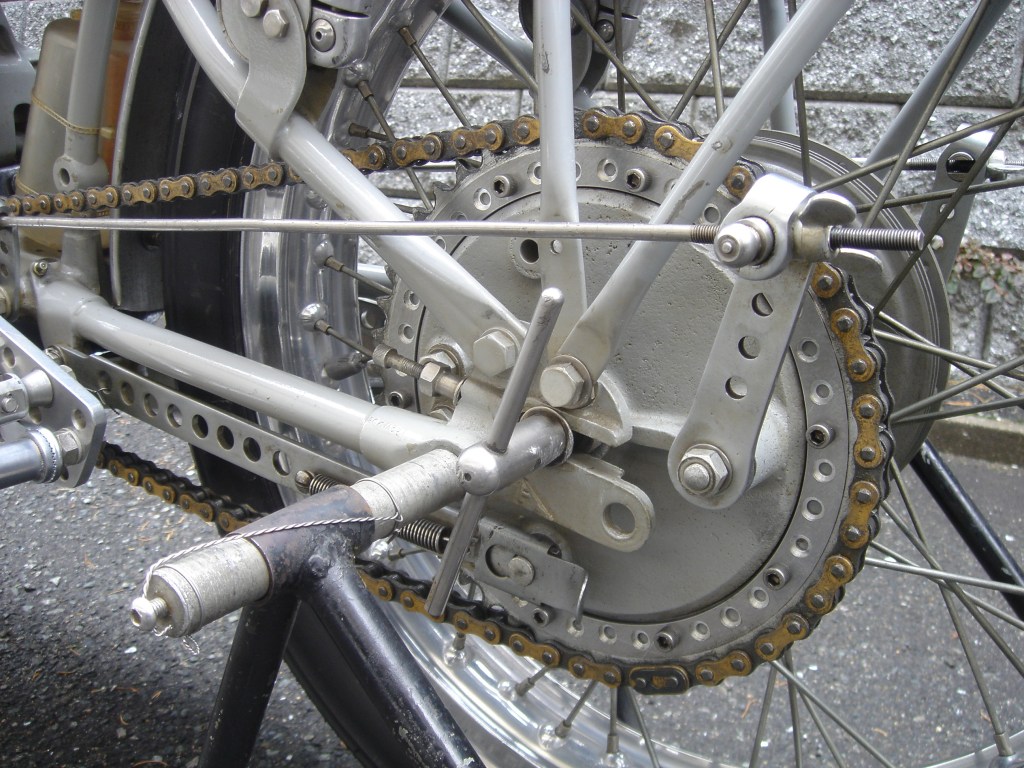
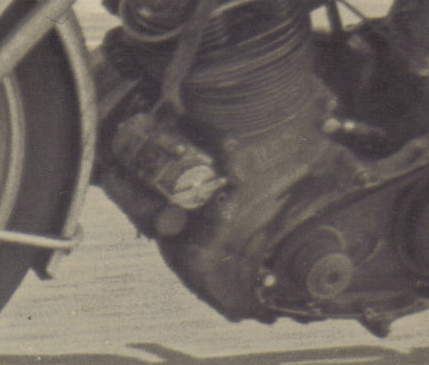
Vincent racing motorcycles were fitted with a special and simplified chain adjustor.
Here we see the standard road-going arrangement.
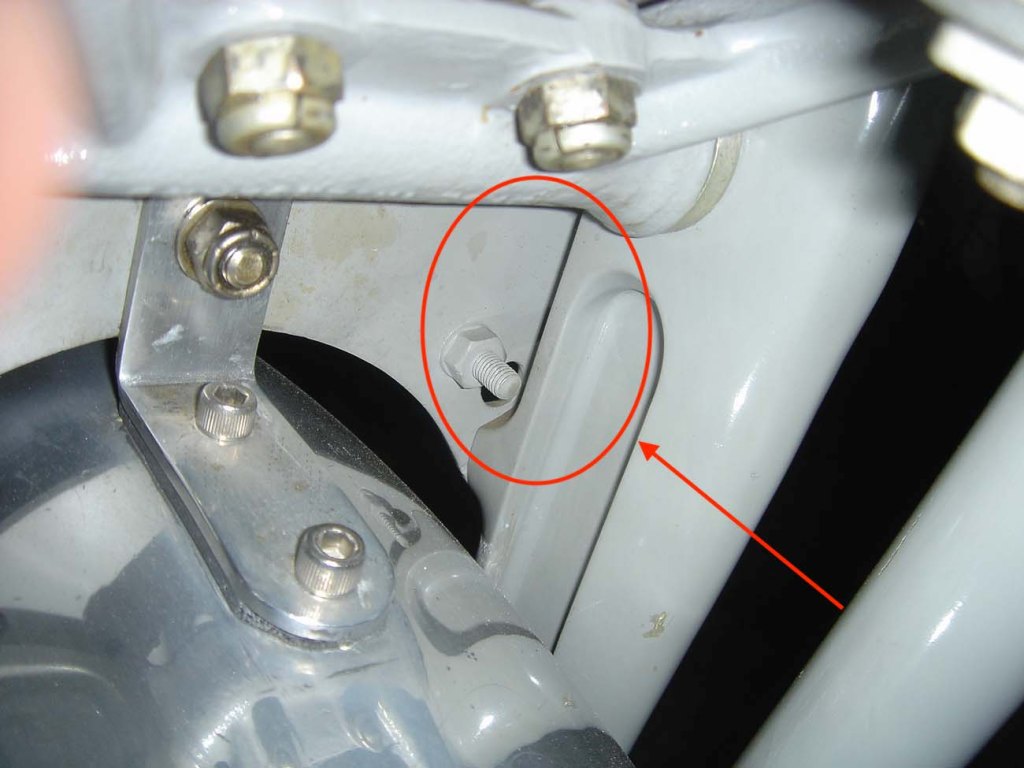
Racing models were supplied with a T-bar adjuster and locknut. These were not present on 2751 though they were originally fitted.
Just visible here…
As employed by Peter Johnson. Here the RFM number is also visible.
David Dunfey kindly put me in touch with Vic and Matt Olsen, who were making some, and they agreed to make me a pair.
Cadmium plated too!
These were made from the drawings published by Frank Griffin and Eddie Stevens in a series of articles titled ‘Throwing Light on some Obscure Components’. Thank you gentlemen! And what a great resource the VOC is.
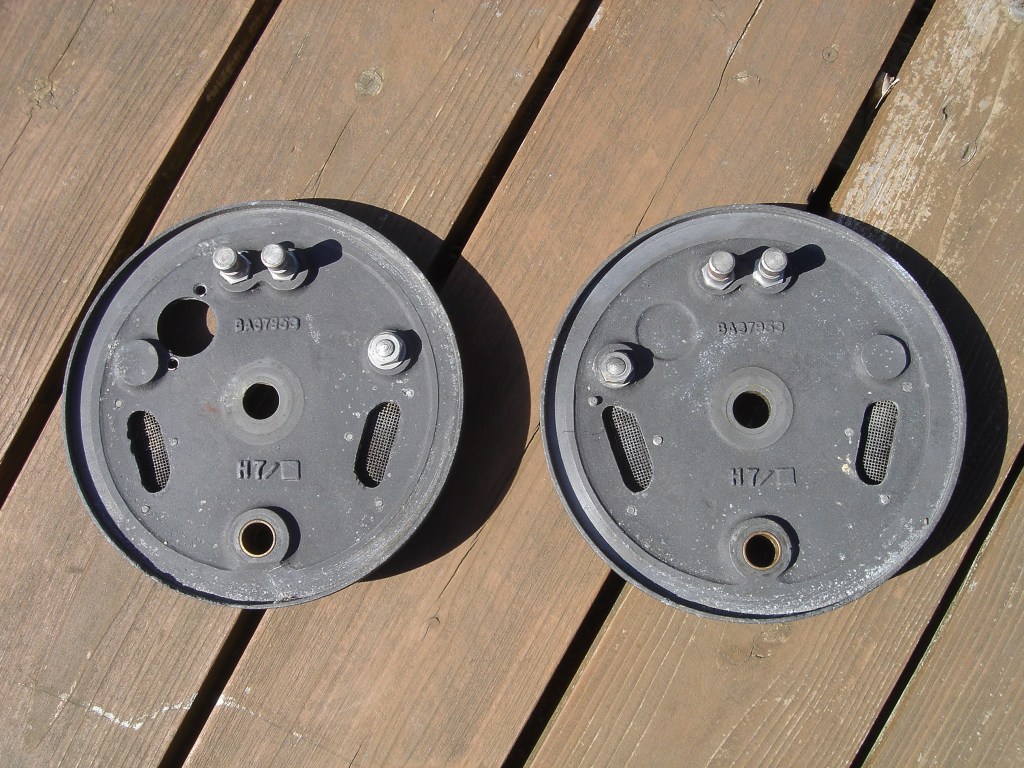
The front brake plates of the Grey Flash were the same as those fitted to the Black Lightning models. They were made from Elektron magnesium alloy with a detachable air scoop and a neat mesh screen to prevent grit ingress. A solid axle featured a waisted bolt, for lightness and ribbed Black Shadow drums were employed.
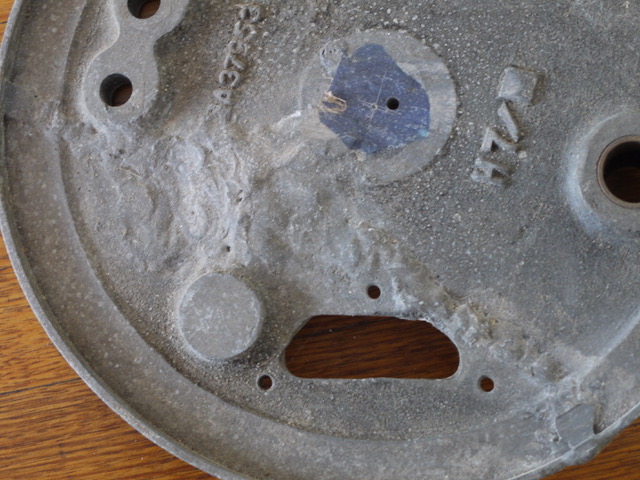
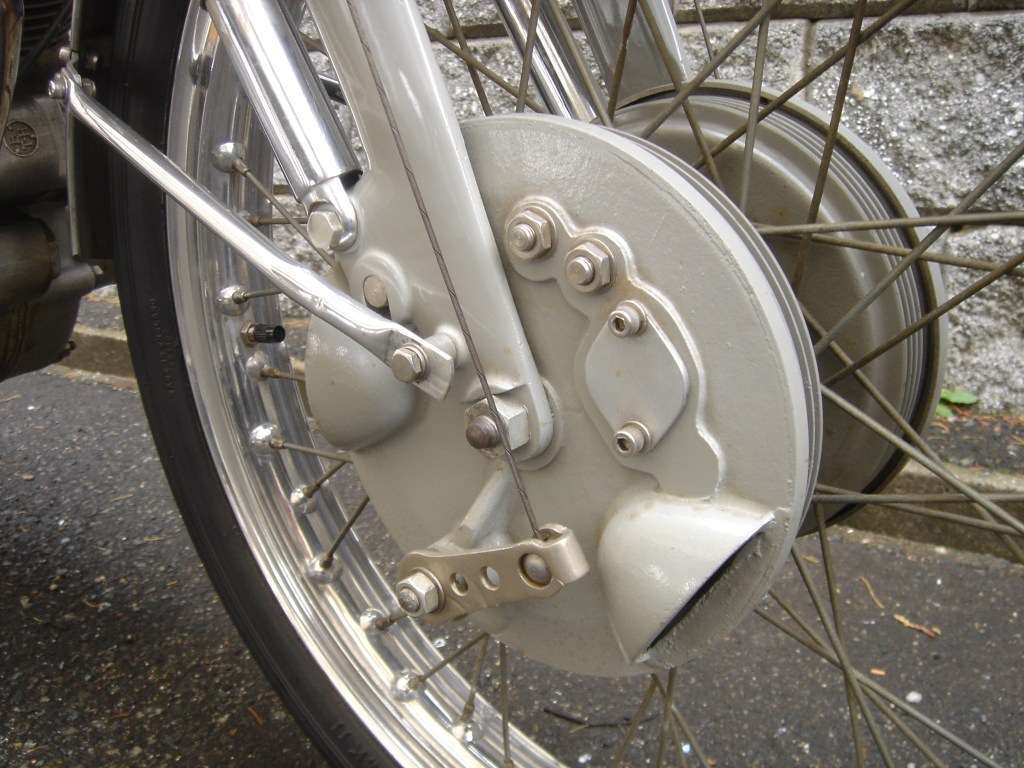
According to Peter Johnson, the original drums were not present when he acquired the bike, but the Elektron magnesium plates were and they were in a terrible state – using them would have been very dangerous. Peter managed to acquire a set of similar brake plates cast in aluminium from Ted Davis. Incidentally, Peter still has the old Elektron items.
1.11.2019: Peter sent these photos of the original 2751 brake plates through to me today. They were used as casting patterns.
They have seen a hard life…
Peter notes that they were not painted and thinks they were fitted as-cast or possibly anodised – is it possible to anodise Elektron magnesium? I think that this helps to answer the colour dilemma set out below… I believe that brake plates were fitted in the “raw” in many cases. Some Grey Flashes were fitted with brake plates painted black but I would like to suggest that these were plates initially earmarked for fitment to Black Lightnings and – being the only available plates to hand – were fitted to Grey Flashes to move the bikes out of the door, so to speak.
The plates that Peter acquired from Ted Davis. They feature cast-in air scoops.
Anyway, as lovely as these Ted Davis plates are I decided to ask around to see whether anyone had a set of original Elektron magnesium ones they wanted to part with since I want to get the specification closer to how the bike was when it left The Works. Incidentally, I would not recommend anyone use original magnesium brake plates for anything more than static display or careful demonstration riding at low speed. Happily bike chum Paul Woelbing came to the rescue!
Mesh screens visible.Detail of the scoops.
I disassembled them, had them blasted and painted them to prevent further deterioration. I painted them black… Indeed these plates were originally painted black, as were most fitted to other Vincent racing machines. But some were painted grey… David Dunfey has looked into this and concludes that earlier bikes left The Works with black plates whilst some later bikes were fitted with plates painted grey. Would 2751, being such an early example featuring special finishes and additional fettling, have left Stevenage fitted with regular Black Lightning plates painted black? It seems incongruous that such attention to detail lavished on other areas of the bike would not have been applied to something as visible as the brakes… If the readers of this blog have the time, would they be so kind as to click on the ‘Grey Flash 2751 History’ heading from the home page and scroll down to look through the period shots of the bike – I’d like to hear your thoughts! Bear in mind that all ferrous parts of the bike were dull chromed whilst the fork legs were anodized a grey colour – and then there is also the light to take into consideration…
When compared to the black ribbed drums they look grey, to my mind…
The brake plates on the rear hub are the original Vincent racing Elektron magnesium items and I have removed and examined them to confirm this.
The brake torque arms and brake cam arms are drilled. Certainly the torque arms are a factory racing item and still have their original dull chrome finish.
The Vincent Girdraulic fork legs are an instantly recognisable feature of later Vincent HRD motorcycles. The legs are handed but cleverly machined from a single forging. Some people say that they were produced for Vincent by the Bristol Aircraft Co. but I have read that this is not actually true. Anyway, the fork legs featured the part number and ‘MADE IN ENGLAND’ cast into the bottom of both sides and then these were machined accordingly, producing a handed leg with the cast-in script visible on both sides. This avoided the need for handed forgings.
Here we can see the script on the fork legs of my ’54 Black Shadow.
The fork legs of 2751 have had the script ground off. I feel that this would have been done at the factory to give the legs a smoother appearance devoid of casting numbers.
Note absence of script. The brake plates and mudguard stays are not standard – more of this later.
In 1949 Vincent HRD motorcycles were abandoning the proprietary Brampton girder forks in favour of the Girdraulic forks of their own design. So, this was an early set of Girdraulics that was further fettled to give this early Grey Flash a more “finished” look. Later on we will strip the paint off to hopefully reveal what should be (according to the Works Order Form) an anodised finish underneath. At this time it will be apparent whether the script cast into the fork legs was ground off prior to them being anodised or not.
Genuine Grey Flash fork legs differ from all other Girdraulic fork legs fitted to other Vincents, racing or otherwise, in one other important way: the inside face of each leg is deeply milled for lightness.
From the top……all the way down the leg.
The amount of alloy confidently milled out reflects how carefully calculated this operation was – rigidity could not be sacrificed for the cost of lighter unsprung weight. This would not have worked for the heavier and faster Black Lightnings.
Additional: the below comment on this post by Somer got me scratching my head… Over the next few days I started going through my data and I think I’ve found the additional feature that the learned reader was referring to. Grey Flash Girdraulic fork legs were further modified in one other way: a bevel was machined into the forks to relieve material where the FF32 bridge plates bolt onto the forks.
The bevel is present on both legs and visible in this shot.
When the legs are stripped I will add details of this feature to the ‘Restoration’ section of this blog. Thanks Somer!
25.10.2019 David Dunfey has been in touch and kindly sent me this photograph showing the bevel in detail:
Thanks David!
David also told me of one other very hard-to-find feature that is unique to racing Vincent Girdraulic fork legs. I have elected not to reveal that in this blog as David has his own notes on racing Vincents and will reveal all in good time. And he should be given much credit for his deep knowledge of this very specialised subject and detailed analysis of every component that sets the racing models apart from the road-going machines.
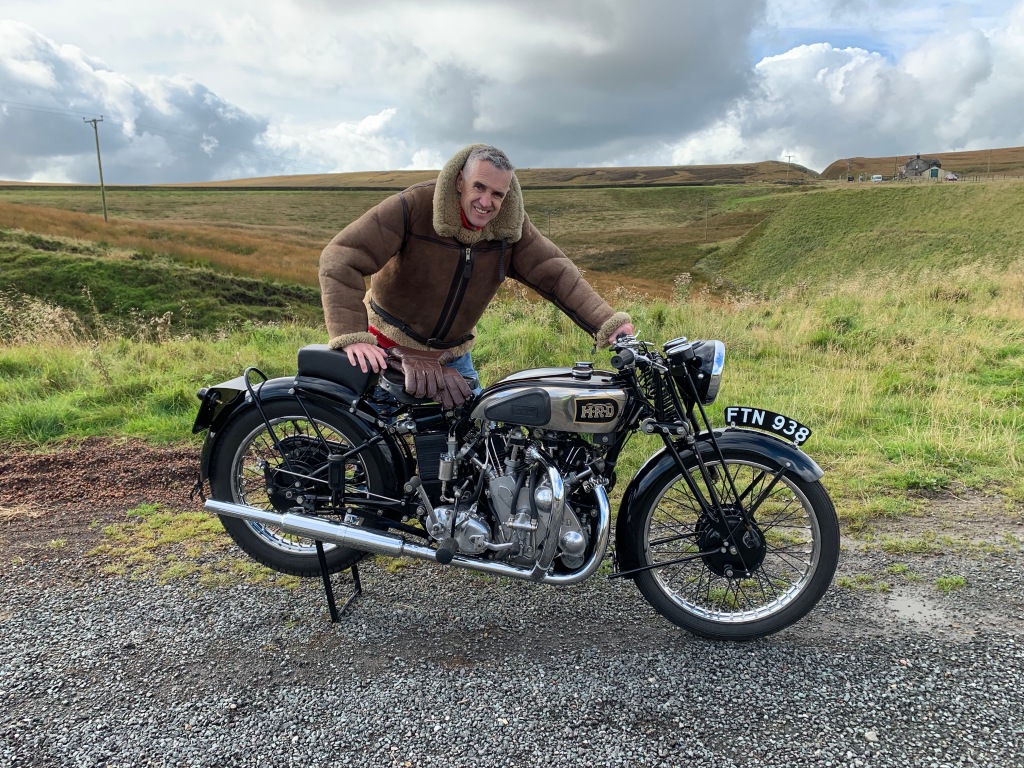
My name is Humphrey Smith. I’m a British national domiciled in Japan and I love fiddling with, riding (and sometimes driving) old bangers. I am pictured here with my 1938 Vincent HRD Series’A’ Rapide, a restoration that took 15 years. This was taken in October 2019 after my first post restoration ride – oh what a feeling!
The Purpose of This Blog.
The blog will be divided into three parts:
To detail the known HISTORY of Vincent HRD Grey Flash 2751.
To ascertain what PARTS were original and to source missing parts.
To record the RESTORATION of this important racing motorcycle to as close to Works Record Card specification as possible whilst retaining period modifications from the bike’s racing past.
NOTE: scroll down to start reading the History section.
HISTORY
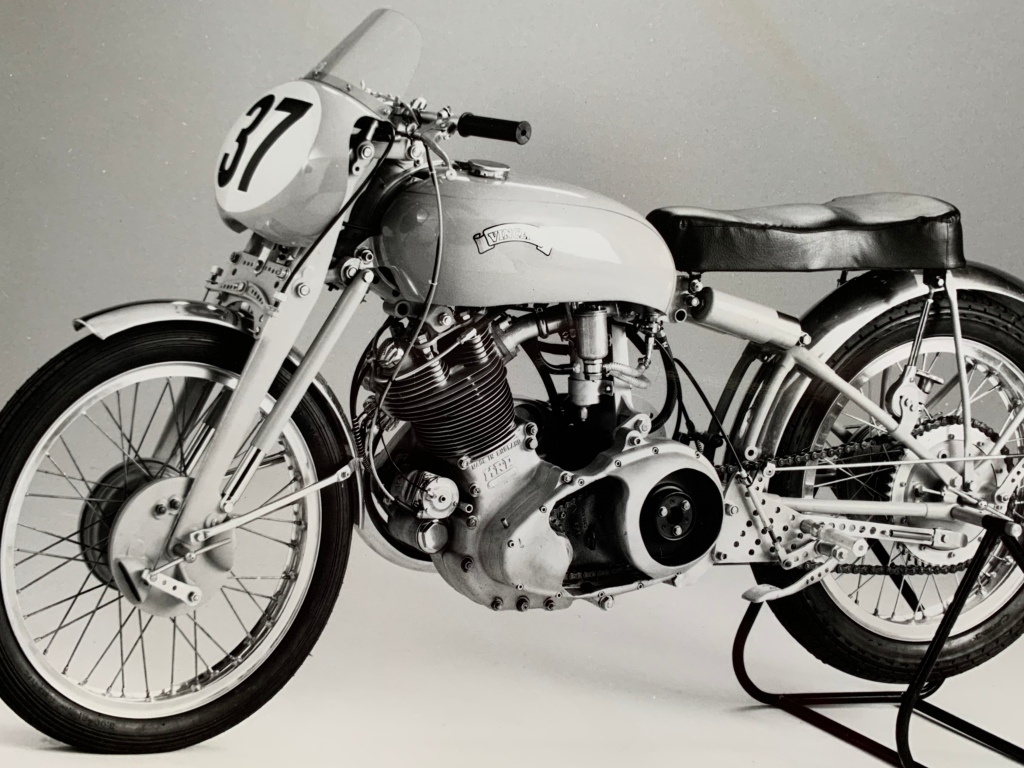
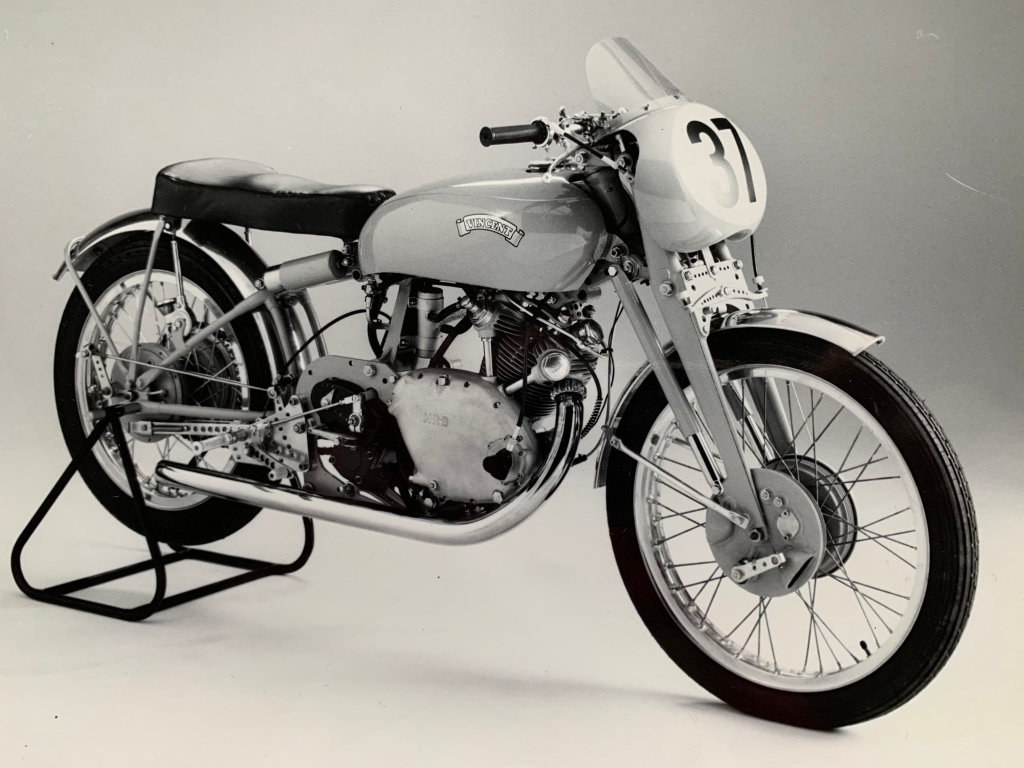
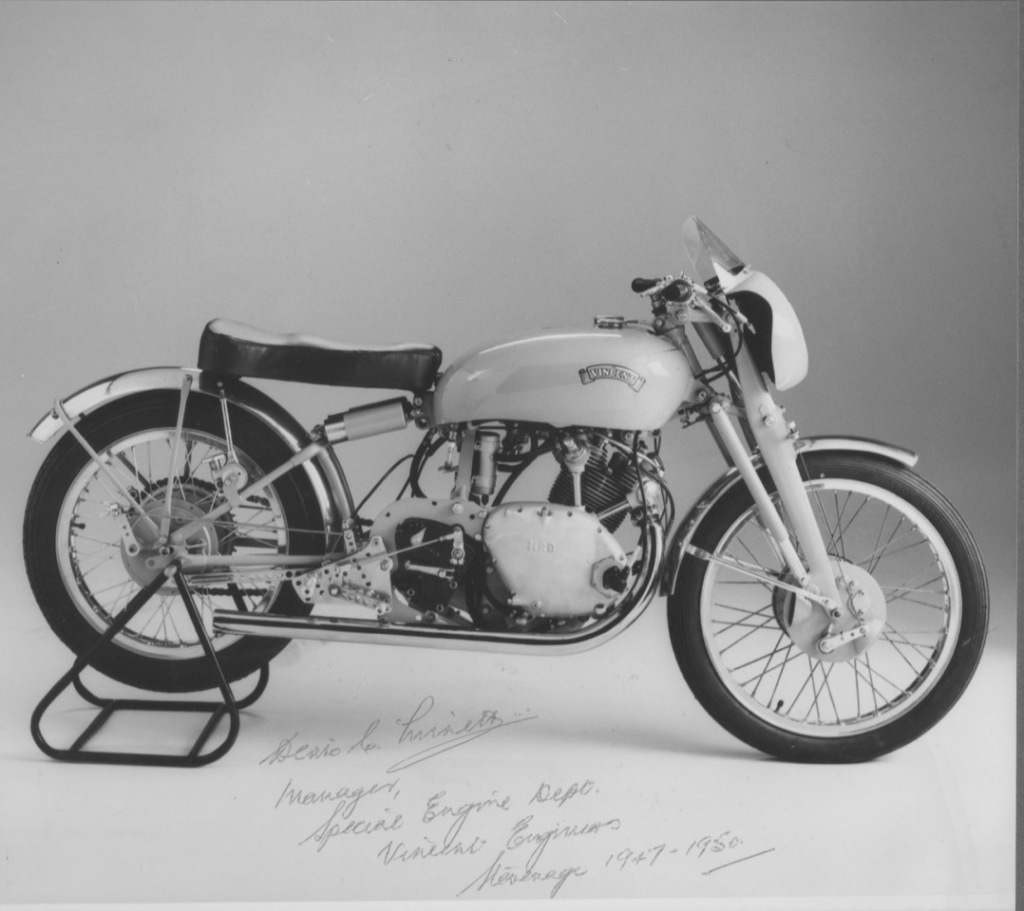
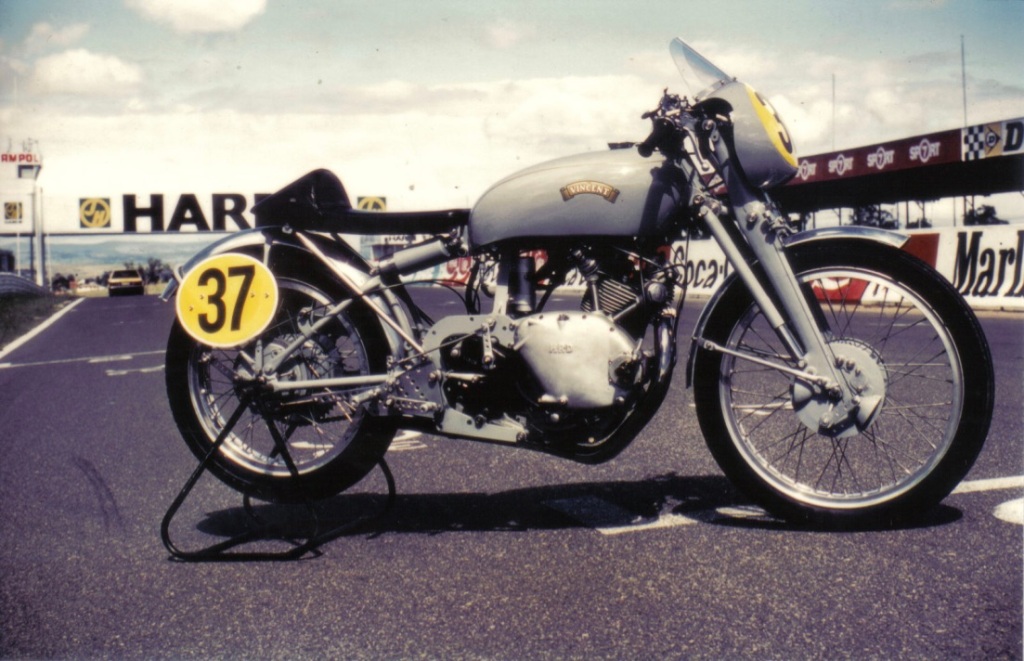
Grey Flash 2751 (the engine number) is one of approximately 33 of this model constructed and it is the third production machine after the ‘Eppynt Comet Racer’ (2734) and the Earl’s Court show model (2750). I said ’33’ though two of the last bikes were converted to road trim and two left The Works as engines only so the real number of fully assembled racers was likely closer to 28.
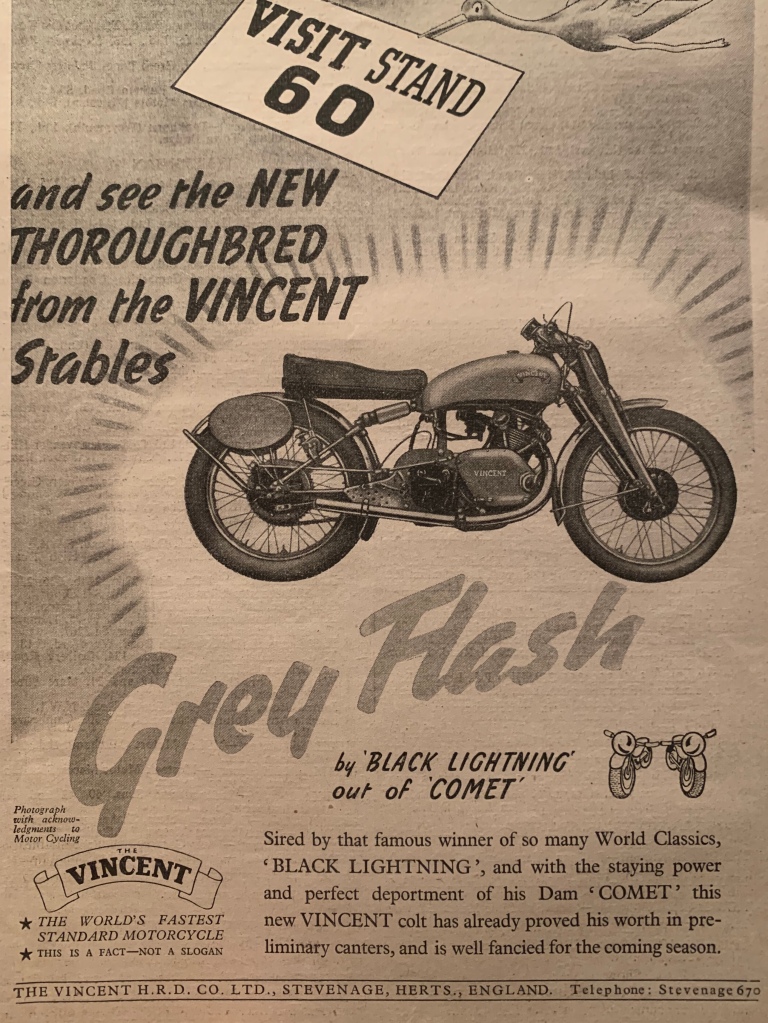
From Motor Cycling magazine promoting the 1949 Earl’s Court Motorcycle Show
The Vincent Owners Club holds most of the original production records:
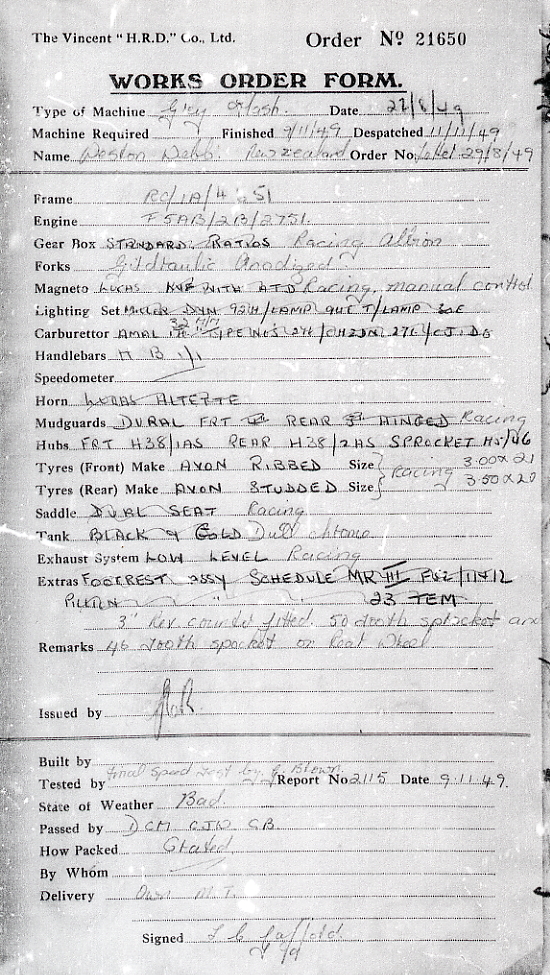
This fascinating document gives a very detailed record of the exact specification the bike left the Stevenage factory with, who was involved in its assembly and testing and where it was shipped to.
We know it was ordered, by letter, by New Zealander Geoff Weston Webb on the 29th August 1949. At that time, Weston Webb, of Auckland, was the NZ agent for Vincent HRD. Geoff had also apparently traveled to the UK and would have seen the show model Grey Flash on display at the Earl’s Court Motorcycle Show on 21st October 1949.
Several entries in this document are worthy of note and will be covered in detail later on in the blog:
The forks are listed as ‘Girdraulic Anodized’.
The magneto is listed as ‘Lucas Racing Manual Control’.
The Carburettor as a 32mm Amal.
The fuel tank as being ‘Dull Chrome’.
A ‘final speed test’ was undertaken by the legendary George Brown and the finished machine passed by: Dennis Minnet (head of the Special Engine Dept.), C. J. Williams (racer and Works Development rider) and George Brown.
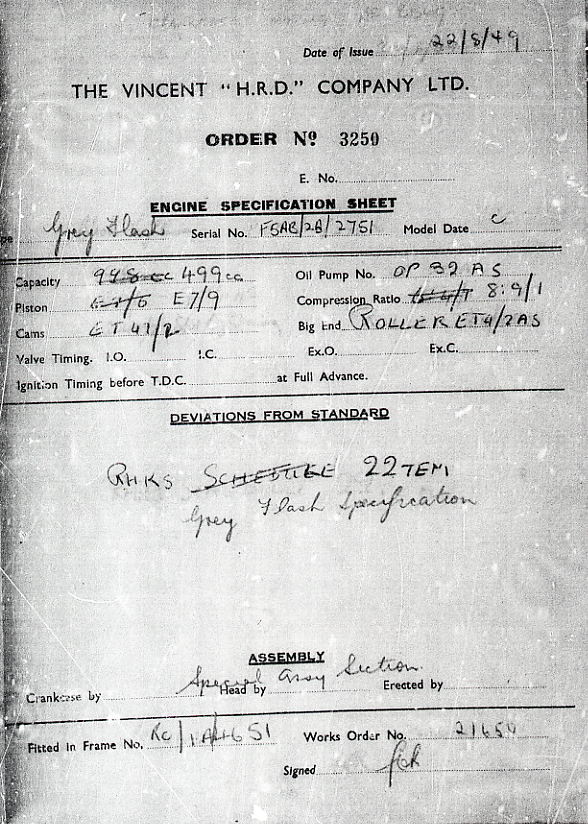
The Engine Specification Sheet of Grey Flash 2751
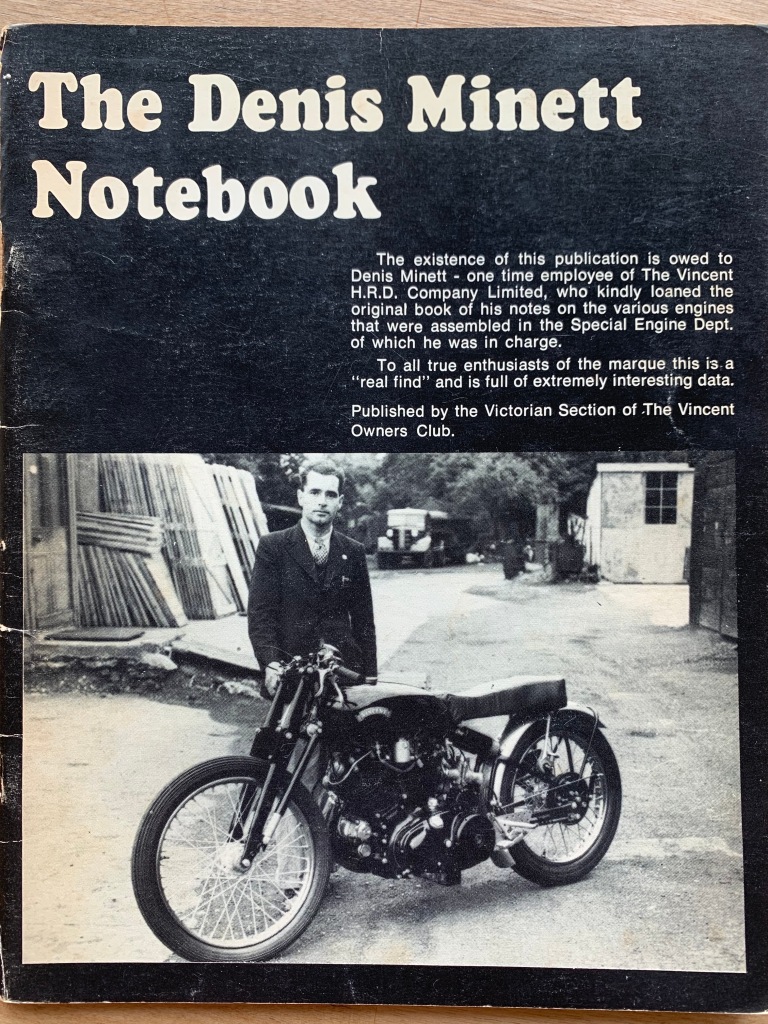
The Denis Minett Notebook
Denis Minett was in charge of the Special Engine Dept. at the Stevenage factory. Denis maintained a notebook listing details of all racing Vincent HRD motorcycles and racing engine units supplied to customers. The DM Notebook is difficult to come by as, in the wrong hands, it would provide invaluable data for counterfeiters to work with.
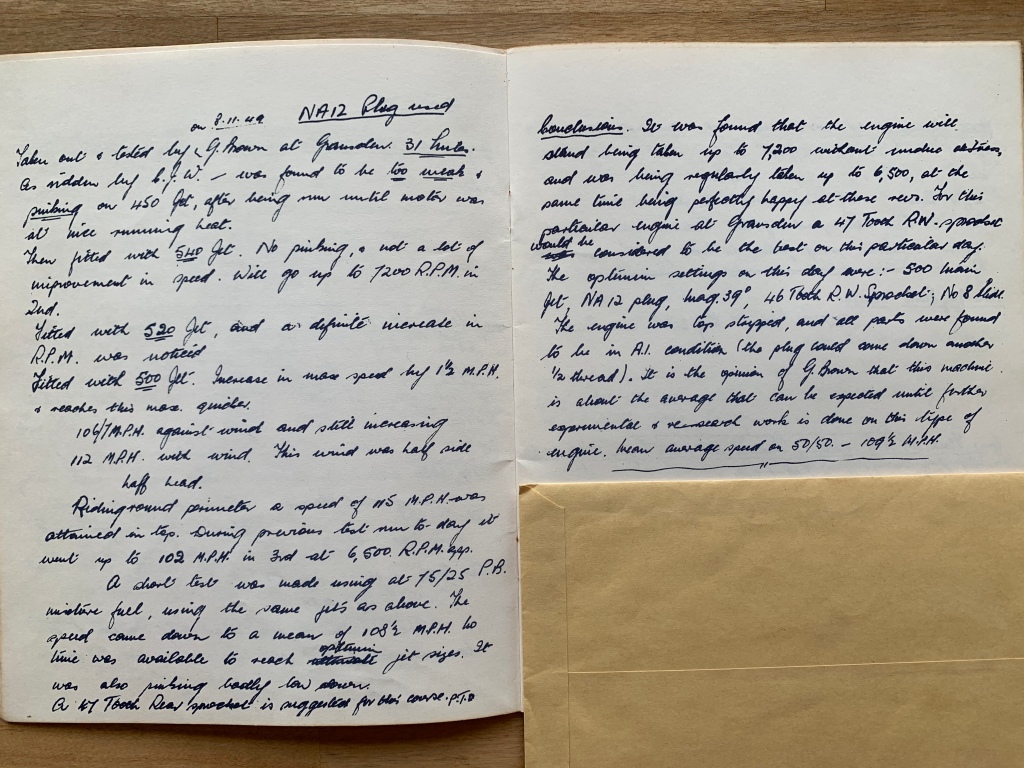
2751 has three pages devoted to it in the notes – this is rather a lot and points to the prototype status of this, the third production Grey Flash. Most entries are limited to a few lines recording date, engine/frame numbers and outlining specification.
Denis’ handwriting can be a little hard to read…
So, here’s a transcript:
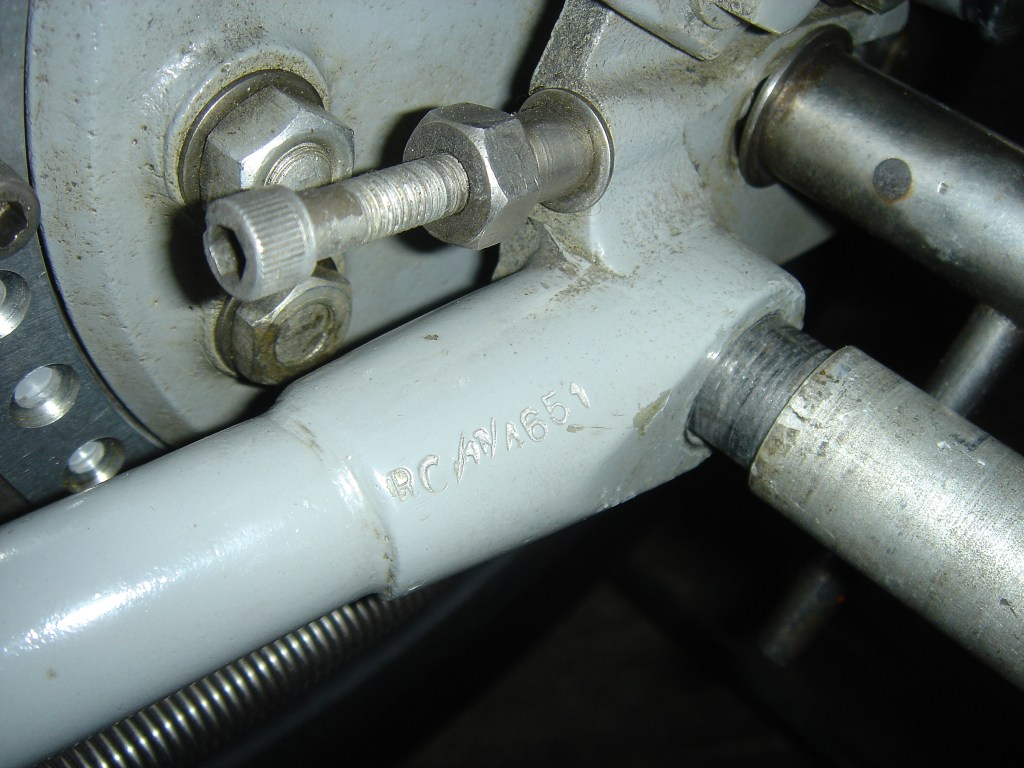
Grey Flash Engine #: F5AB/2B/2751 Frame #: RC/1A/4651 Weston Webb, NZ 63cc 8.9:1 (CR) Standard pinion 3.3075 bore 56/69 (inlet opens/closes) 78/51 (exhaust opens/closes) mag 35° → now 39° Points increased (opened up .002”) Fuel 50/50 No 8 slide 450 main jet 109 needle jet NA10 spark plugs 32mm carb 1st test run 62 miles 2nd test run 39 miles 3rd test run 60 miles Taken to Gransden and ridden by C.J.W. (Jack Williams raced in IOM Senior prewar on Vincents and worked as a tester post war – did most of the testing of the prototype Black Shadow). Top ratio 5.07:1. low 50-tooth sprocket up and down main runway. Strong wind blowing: 105mph @ 6,200rpm – with wind. 95mph @ 5,800rpm – against wind. 90mph in 3rd (6:1 ratio) at supposed 6,000rpm on counter. Top ratio 4.66:1 with 46 tooth rear wheel sprocket – 107mph. The rev counter was eventually considered to be unserviceable and speeds taken are as given by speedo. Taken out and tested by G. Brown on 08.11.49 at Gransden – 31 miles. NA12 spark plugs used. As ridden by C.J.W. was found to be too weak and pinking on 450 main jet, after being run until motor was at nice running heat. Then fitted with 520 main jet and a definite increase in RPM was noticed. Fitted with 500 jet. Increase in max speed by 1.5mph and reaches this max quicker. 106/7mph against wind and still increasing. 112mph with wind. This wind was half side, half head. Riding around perimeter a speed of 115mph was attained in top. During previous test run today it went up to 102mph in 3rd at 6,500rpm approx. A short test was made using at (sic) 75/25 petrol/benzol mixture fuel, using the same jets as above. The speed came down to a mean of 108.5mph. No time was available to reach optimum jet sizes. It was also pinking – mostly low power. A 47 tooth rear sprocket is suggested for this course. Conclusions. It was found that the engine will stand being taken up to 7,200rpm without undue stress and was being regularly taken up to 6,500rpm – at the same time being perfectly happy at these revs. For this particular engine at Gransden, a 47-tooth rear wheel sprocket would be considered to be the best on this particular day. The optimum settings on this day were:- 500 main jet NA12 spark plug Magneto 39° 46-tooth rear wheel sprocket No 8 slide The engine was top stripped and all parts were found to be in A1 condition (the plug could come down another half thread). It is the opinion of G. Brown that this machine is about the average that can be expected until further experimental and research work is done on this type of engine. Mean average speed on 50/50 – 109.5mph
The crated bike left The Works on the 11th November 1949 and was shipped to New Zealand aboard the SS Akaroa.
Raced Hard in New Zealand
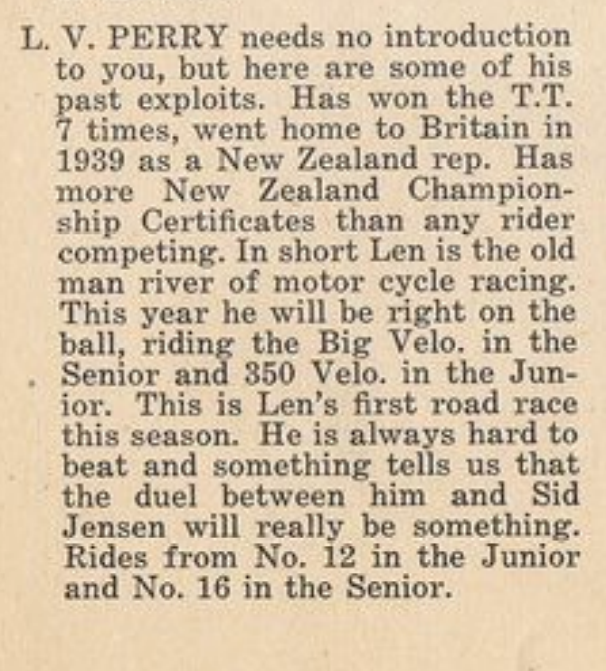
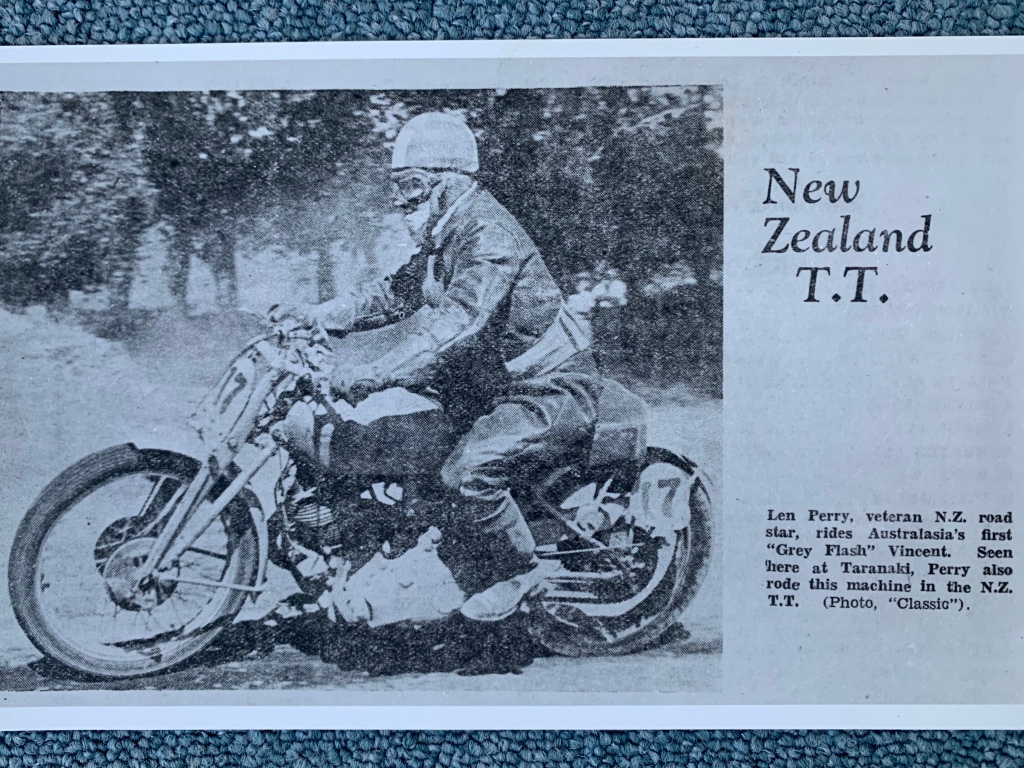
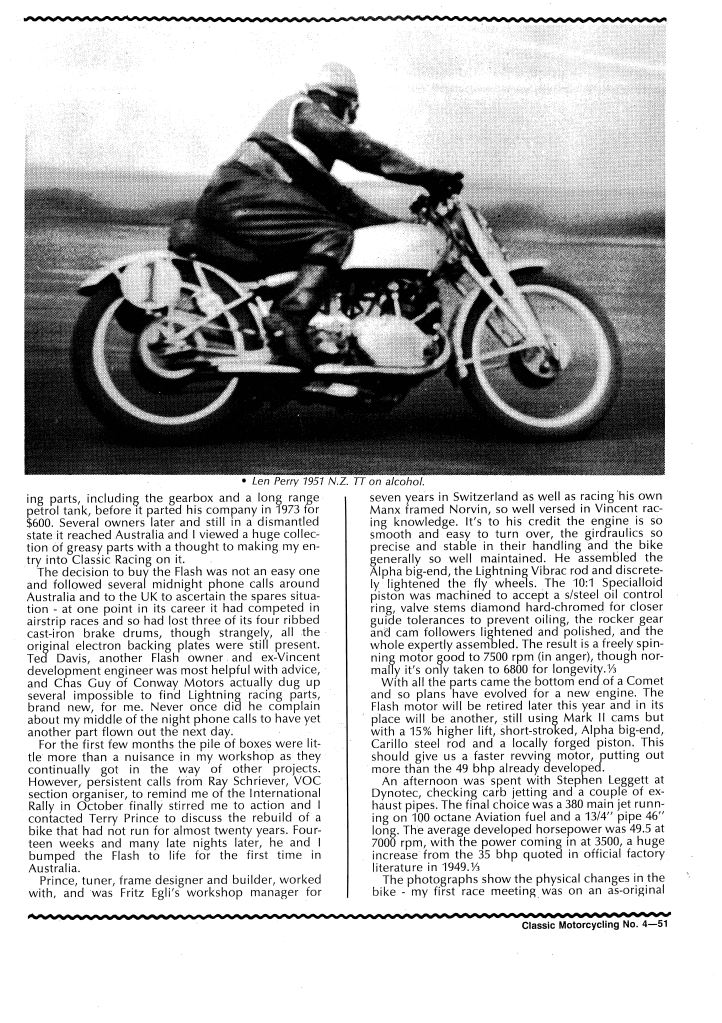
Geoff Weston Webb did not ride the bike himself but sponsored several promising riders including one Len Perry who was later to marry Geoff’s daughter, become his son-in-law and eventually take over the business. On 2751 he led the NZ TT until the 10th (and second last) lap when the Rudge clutch fitted to it failed.
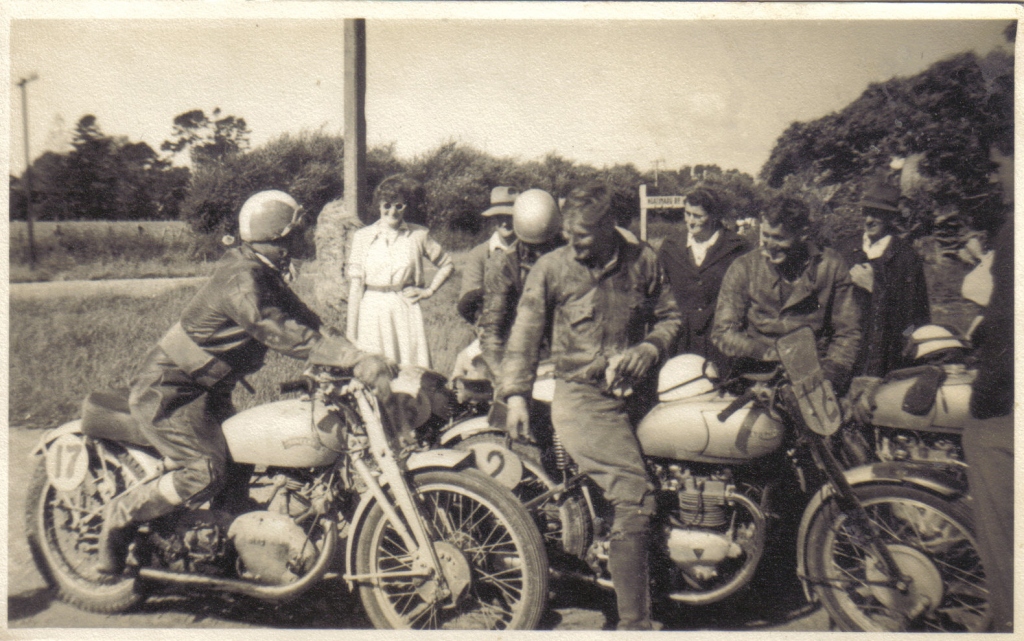
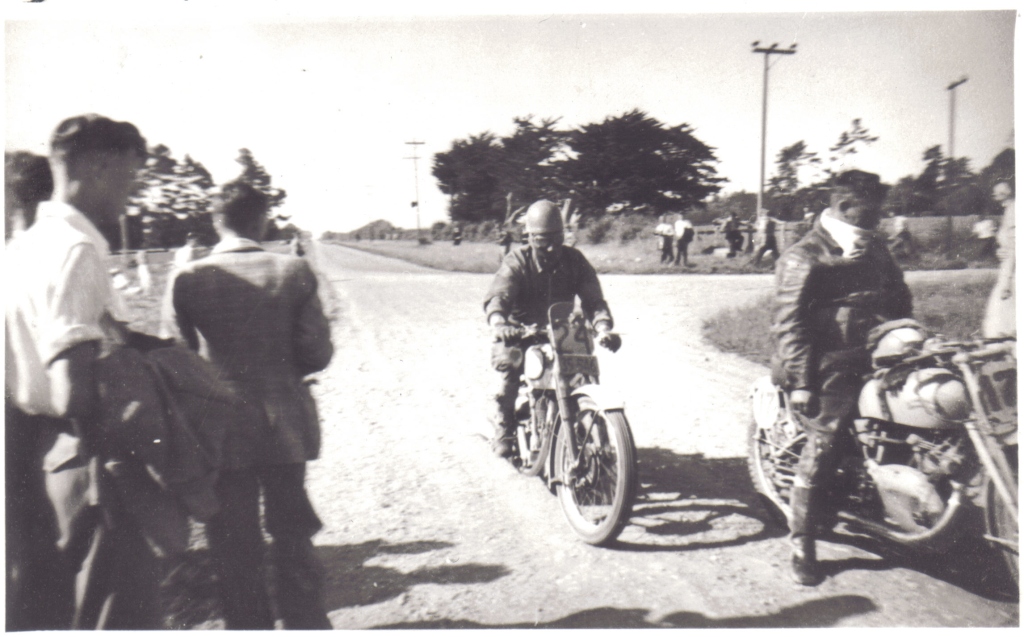
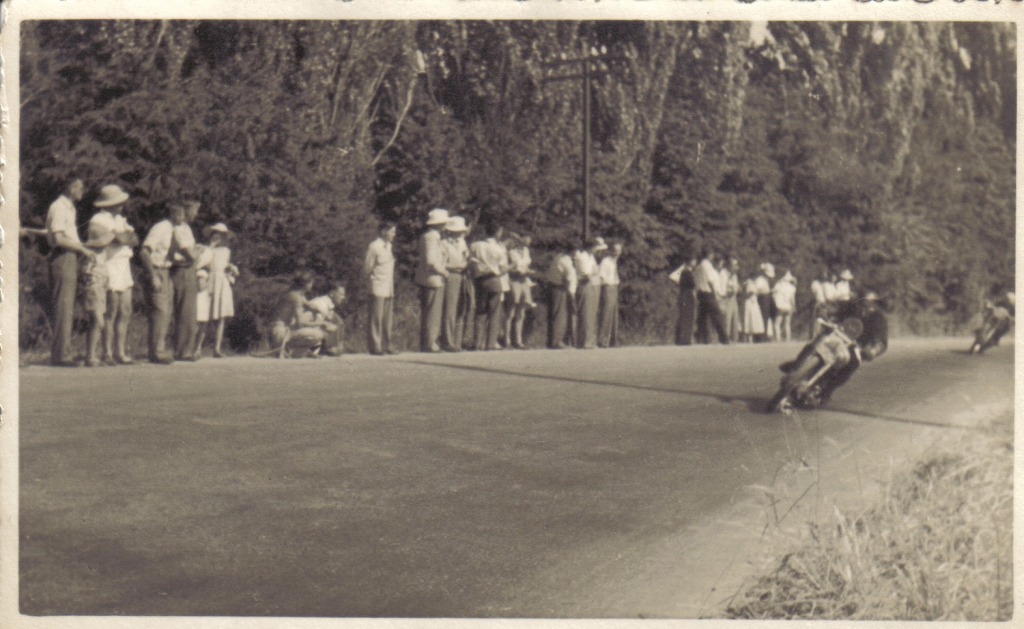
‘1951 New Zealand TT – Len Perry in the lead. Clutch failed Seagrove’.
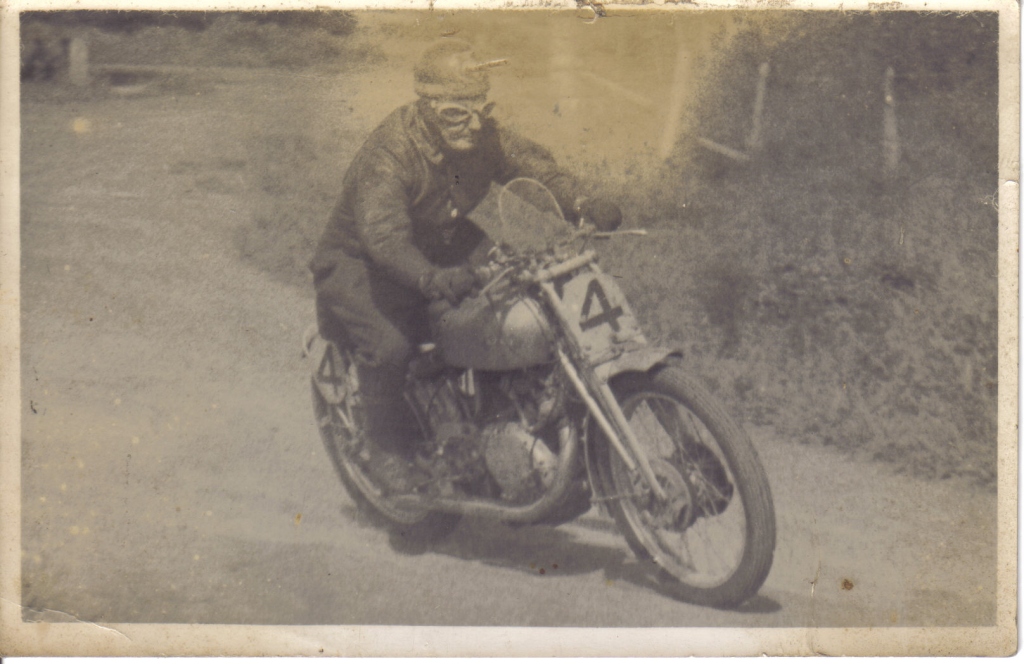
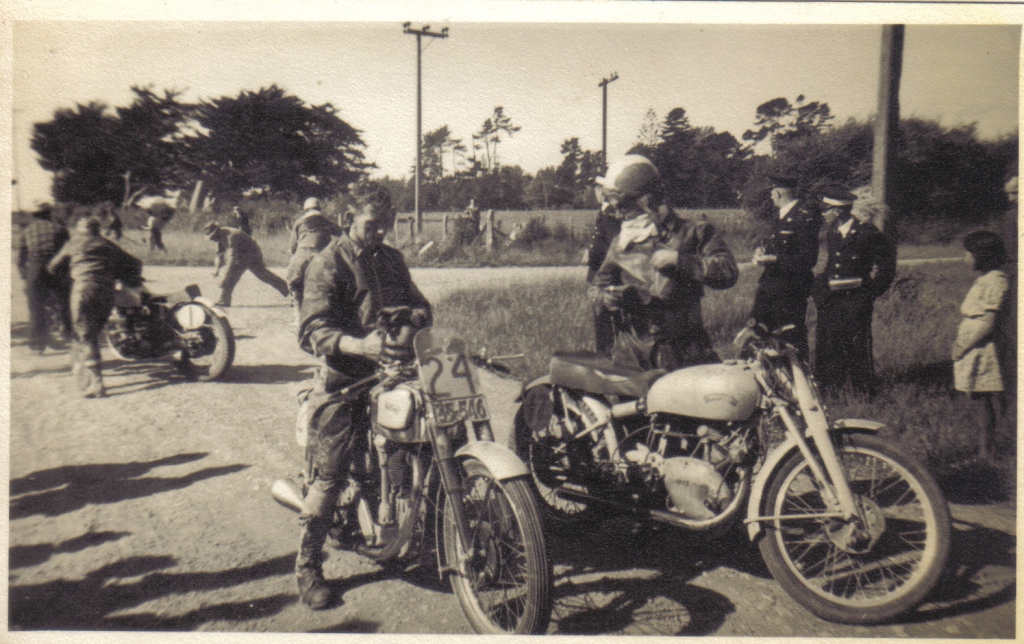
The next three photographs were taken at the same location in succession. The captions have been mixed up though…
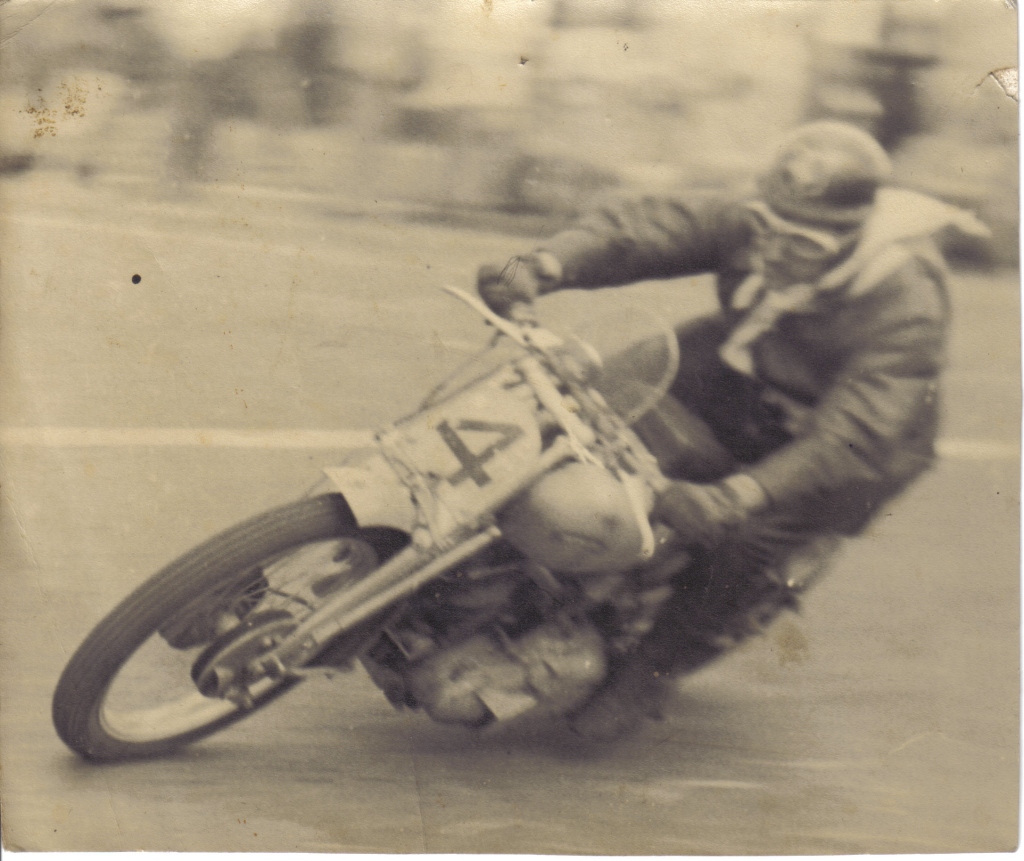
Either: ‘Senior Taranaki GP 25/11/50 (with Pete Stone)’……or ‘Matarawa GP 1952 – finished 3rd’ (Matarawa is near New Plymouth)‘Pete Stone and Len on Vincent’
All three photographs were actually taken at the First Taranaki Grand Prix which was held on November 25th 1950. I later on managed to find the exact location where they were taken and update the blog with corresponding shots grabbed from Google Street View. To find this fascinating bit of research please use the search feature of the blog ‘Looking for Something’ and type in Ngatimaru Road – this will take you to a post titled: Joining some Dots.
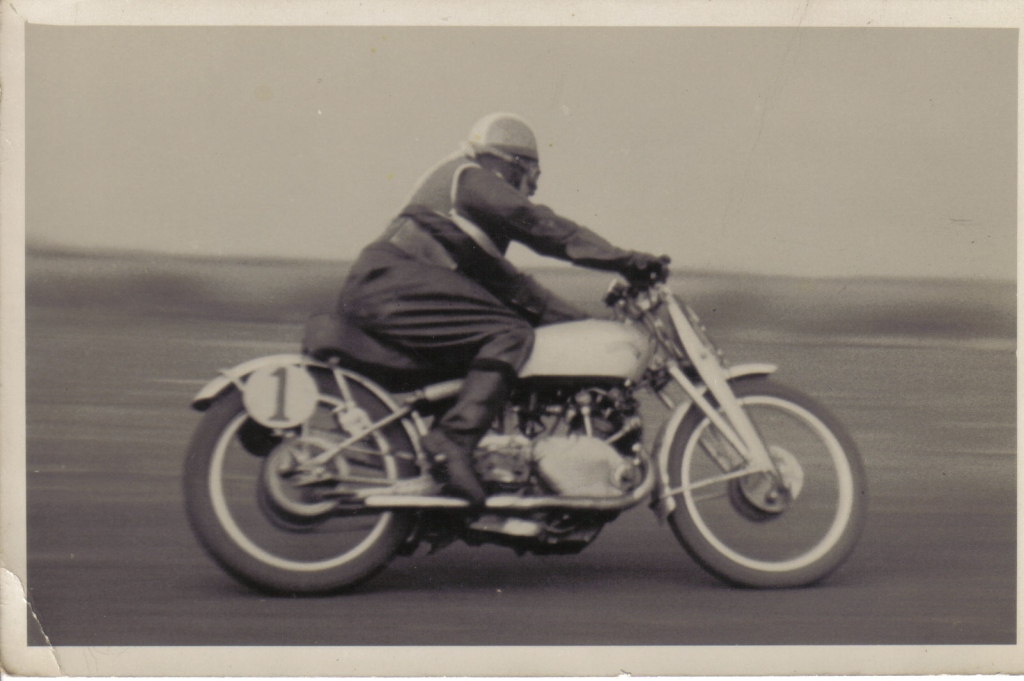
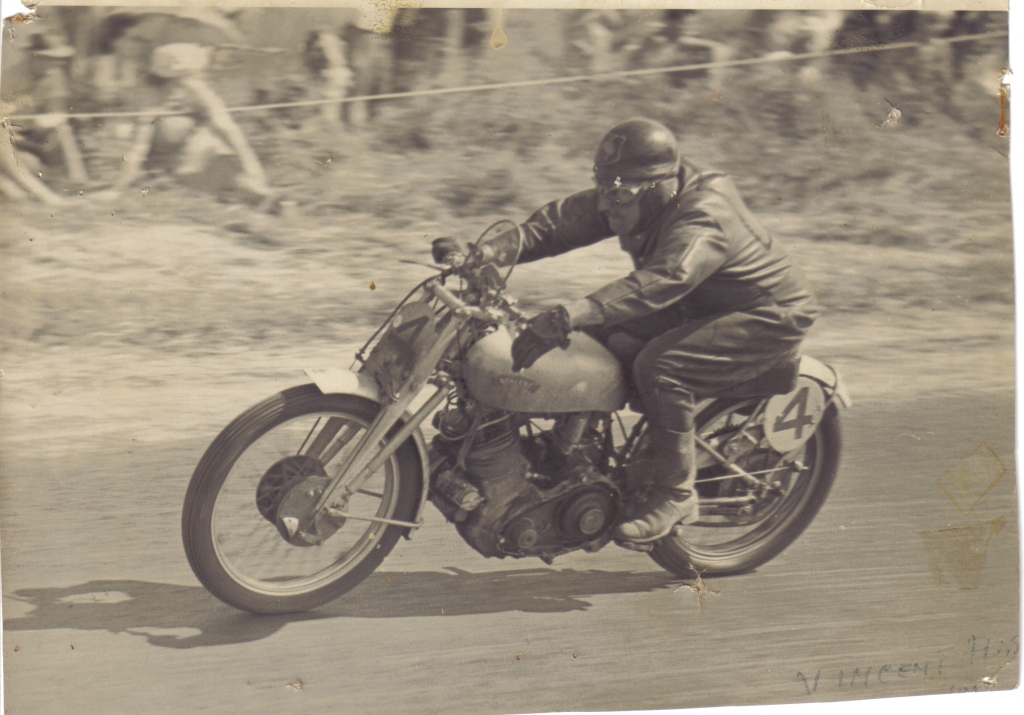
These images were sent to me by David White of NZ. They show 2751 in-period and confirm many aspects of the interesting specification of the bike. They are invaluable as reference and will be referred to during the restoration process. I’ve kept the best shot until last…
‘Hamilton 100 1952’
When I first saw this I had to sit down; it was a veritable ‘eureka’ moment for me. Not only can we clearly see which parts are dull chrome and anodized, but…
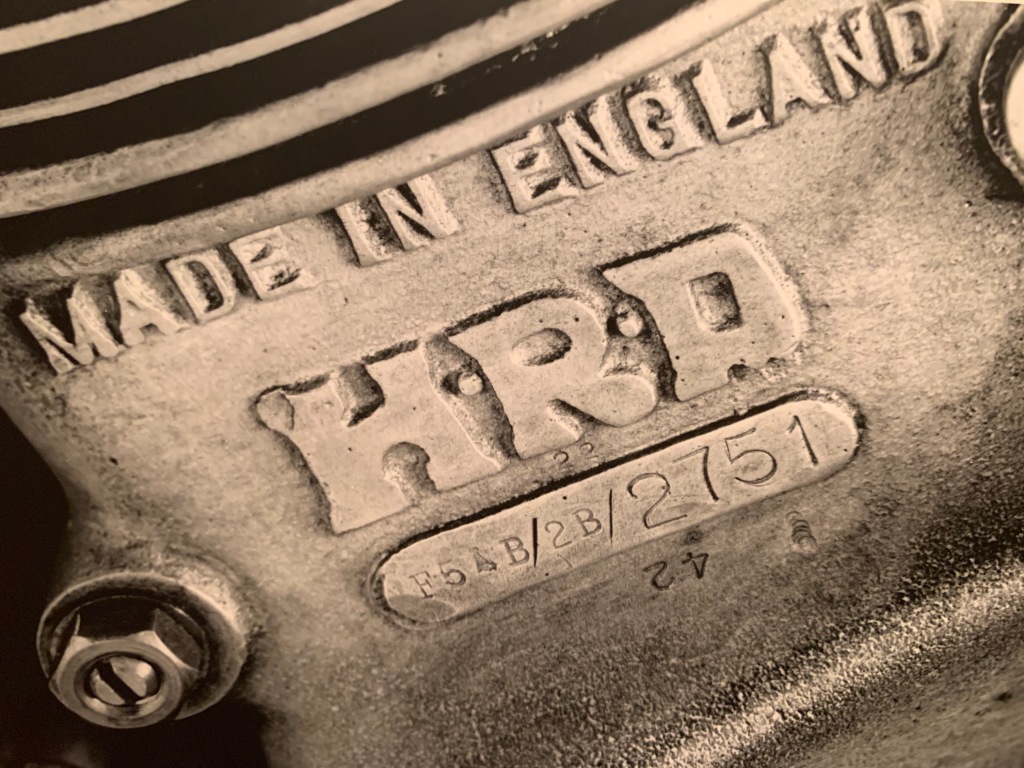
…the magneto is plainly visible – more of that later – and even the ‘HRD’ script cast into the crankcases.
2751 features this script on the crankcases and timing cover whilst the fuel tank featured a ‘Vincent’ decal. 1949 was a year when The Vincent HRD company was in the process of re-branding and the HRD logo was dropped in favour of the Vincent scroll. It would appear that only the first 3 Grey Flashes featured ‘cases and covers cast with the HRD logo.
Grey Flash 2751 was raced extensively by Len Perry and with some success until 1953 when the following advertisement appeared in The New Zealand Motorcycle publication: ‘Vincent Grey Flash with £50 worth of racing spares, mileage under 1,000, guaranteed perfect – £275’
The motorcycle was sold, on HP, to an unknown man (supposedly a farmer). It was used and abused, though not on the racetrack. Some parts were removed (such as the kick-starterless Albion racing gearbox) but it would appear that the bike was far from suitable for use on anything other than the racetrack. It was repossessed by Len Perry, when the farmer defaulted on HP payments, before being sold once again.
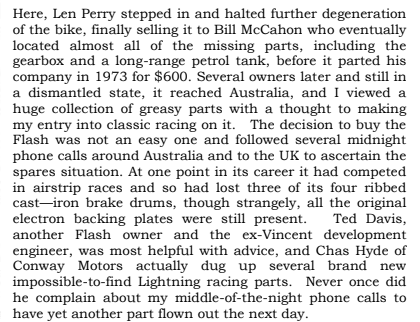
It was bought by William McCahon (possibly in 1964) who recognized its true importance. Bill McCahon was the son of celebrated artist Colin McCahon. He spent some 2 years gathering up the parts that had been removed from the bike. The original Albion gearbox was found under a house (the farmer?) and although looking sound was in poor condition. The original magneto was not to be found so was replaced with a Velocette BTH TT unit (rebuilt by one Fred Cooper). During work undertaken on the engine the original Vibrac conrod was found to be unserviceable and was given away to someone as a memento. The cylinder head was also deemed unserviceable and replaced. (Bill Hoddinott 27.11.2018: The original cylinder head of the GF was an unpainted Black Lightning/Shadow front head with standard size but polished valves and the inlet port opened to 32mm to match the carburetor. It may have been sandblasted for the special finish rather than left as-cast. It cost the Works little to do that, except for the time to clean all the grit out of it, as well as the crankcase, cylinder and covers.) During this period the “bones” of 2751 were witnessed by Vincent HRD enthusiast John von Tunzelman (27.11.2018): “It was almost certainly during 1969/70 that I met Bill McCahon (at his home in Grey Lynn) and saw the Flash. He welcomed my interest and showed me the Grey Flash in a dismantled state. I was interested to see the lightened Girdraulic legs with much material removed from the inner faces. All of the components were there and carefully stored. Len Perry had a son called Geoff who was a very talented race rider but was tragically killed in an air crash while flying over to the USA to race. The aircraft crashed while either landing or taking off on an island in the Pacific.”
Note added 6.11.2019: Len Perry died in 2002 aged 90. Len and his wife, Jean, had a daughter named Dale whom I’d very much like to make contact with. If any reader of this blog is able to put me in touch with Dale I’d be much appreciated. Here is a wonderful 60 Minutes clip of Len taking to a race track for the last time in 1999 aged 87 with the great Agostini! This clip provides a wonderful insight into his character and also features his wife and Dale: https://www.youtube.com/watch?v=YyBeEDnsrvQ
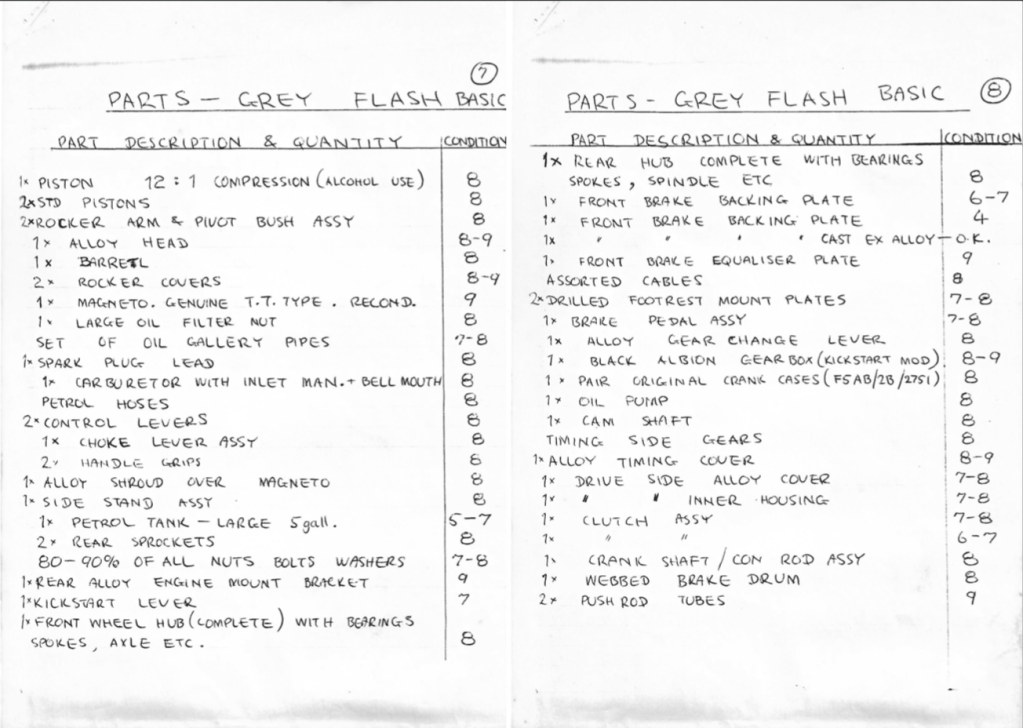
By this time 2751 was a true “basket case”; a project consisting of boxes and boxes of parts that Bill McCahon had assembled. Most of the major components of 2751 were there along with a huge quantity of spares which could be employed for the purposes of rebuilding the bike. The project next changed hands in 1973 and passed through several owners before being sold by one Jim D. White, of Dunedin (NZ). In 1982, Jim advertised the project in various NZ and Australian publications for $6,000. Jim’s detailed handwritten copy of the very long list of parts included in the sale attests to just how much of 2751 remained together. Of interest is a genuine long range Montlhéry fuel tank.
Part of the list – 11 pages in all.
At the top of the list, Jim states that the project is for sale to raise funds for him to buy a house in Melbourne, where he also spent time. The asking price is stated as “highest offer over AU$5,000”. The collection of parts was shipped over to Melbourne where it was sold to the next new and very important custodian.
Raced Hard in Australia
The buyer was Peter Johnson, a professional photographer, from Sydney, Australia.
Peter’s recollection (from an unknown publication).
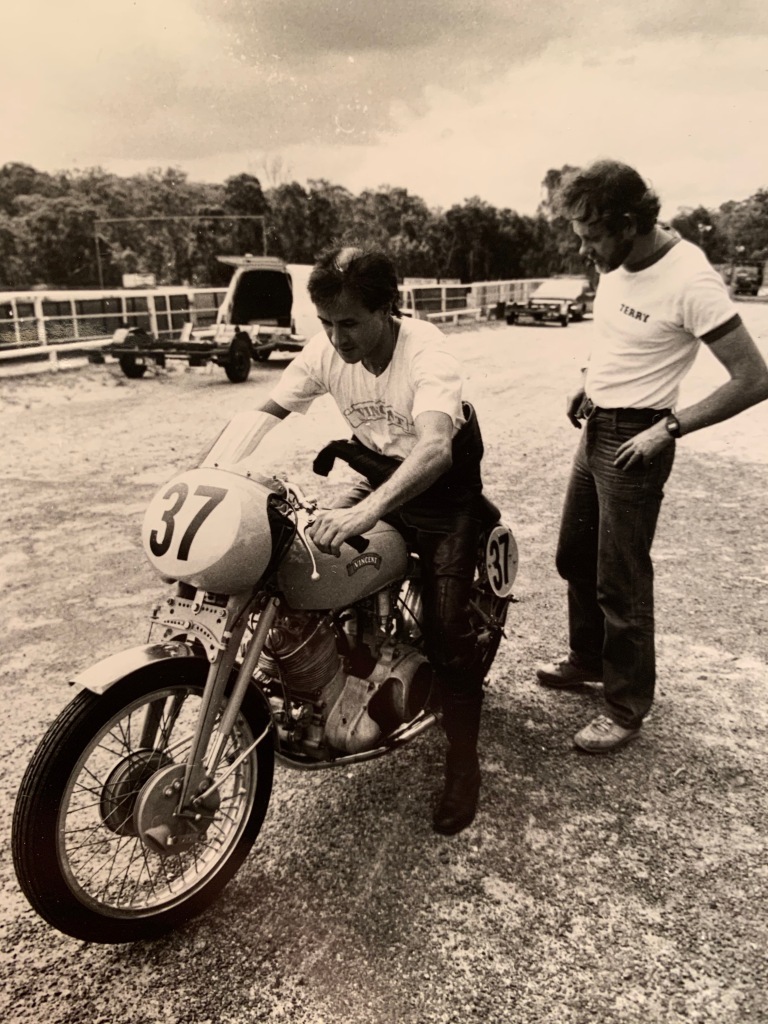
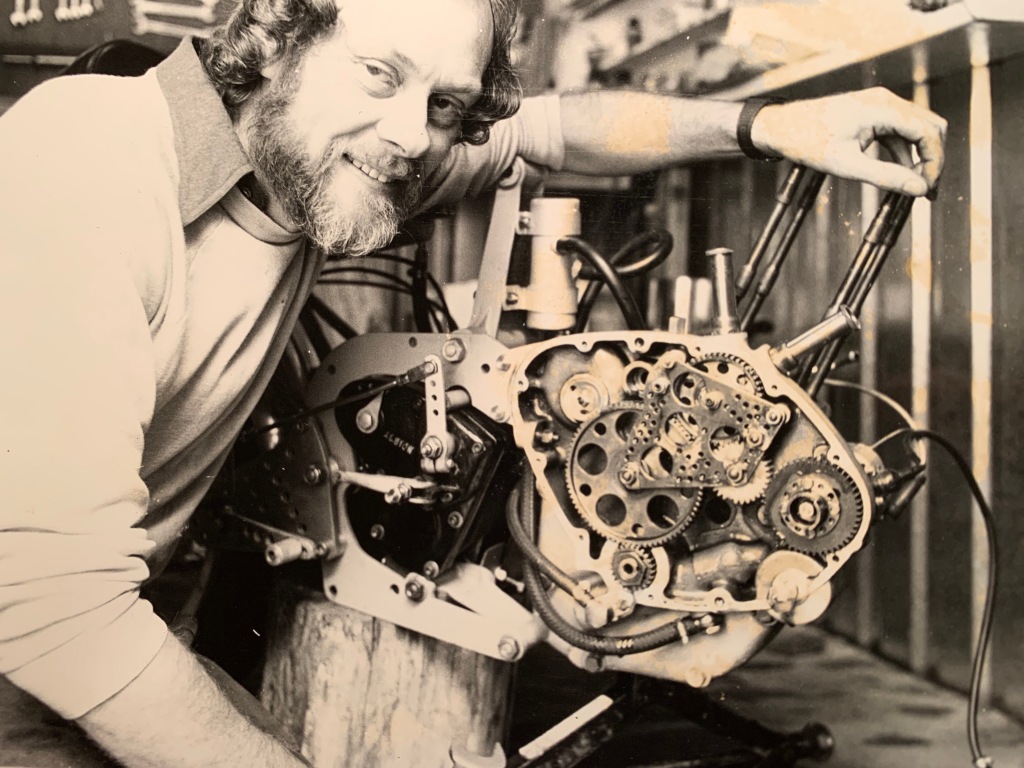
Peter, working with Terry Prince, rebuilt the bike and it was started and ridden for the first time in many years at Yarramundi near Sydney during the 1983 VOC International Rally (as witnessed and later recalled by John von Tunzelman: “It was at the VOC International Rally in Richmond, New South Wales, Australia in 1983 that I saw the Grey Flash beautifully restored and it sounded wonderful when fired up”).
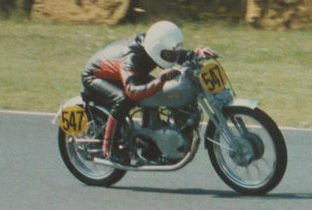
Peter raced and campaigned the bike for a number of seasons, first with the original motor and later on with a rebuilt Comet unit.
Peter Johnson astride the bike with Terry Prince looking on.Terry with the exposed timing chest. Note extensively drilled outrigger plate.Peter’s skill as a photographer ensured that the bike was beautifully recorded during his tenure.
The bike as initially restored for racing but not yet ridden in anger. 19″ rim on the rear and 21″ on the front and standard handlebar. Fitted is the exhaust pipe that came with all the parts that Peter bought – it looks like a stock pipe but surely cannot have been the one the bike left The Works with.
Much communication was exchanged with Peter Johnson regarding his time with 2751. Peter Johnson 20.03.2013: “Good to hear your progress. The carb came with many other original parts, and I suspect/believe it is the original item. The manifold is cast iron… it was cracked when I got the bike, so we constructed a jig, re-welded it with cast iron rods and re-machined the clamp area to the correct diameter. I left it as plain cast iron, but suspect the previous owner has painted it silver to leave his mark – back to bare metal it should be. I actually had a wooden core machined in case the original cracked again – stlll have it, never recast any new ones. lasted because I only raced it for 2 years then rebuilt a comet engine with a GP2 using Terry Prince’s ideas… It flew… And Eric Debenham suggested the original Mk2 cam sounded flat, gave me one of his out of his Norvin, and the difference was light and day. Keeping up and passing long stroke Manxs was easy, but not short stroke models.”
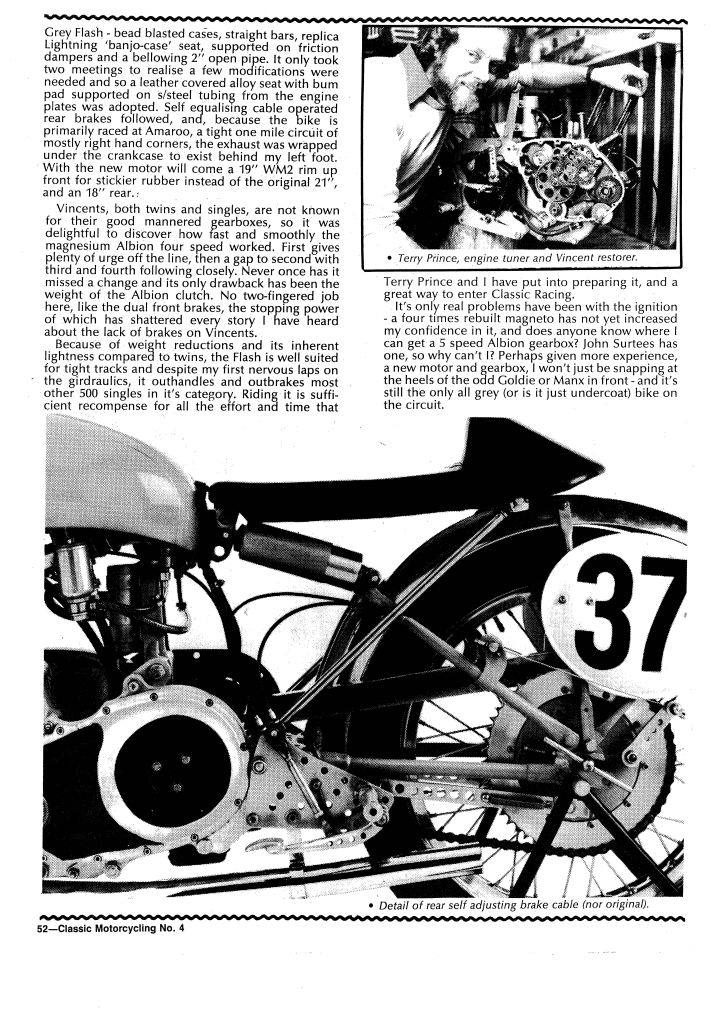
Further developmental tweaks are visible in this shot. 2751 is still essentially a complete unit. It now features a different seat, rear brakes converted to cable actuation, special exhaust pipe and rear seat assembly fixed to the footrest hanger plates with stays enabling the rear wheel to move independently of the seat.
Peter kindly sent me all the paperwork and photographs he had stored at his house; a considerable amount detailing his developing and racing of the bike.
The last iteration, that went very well.
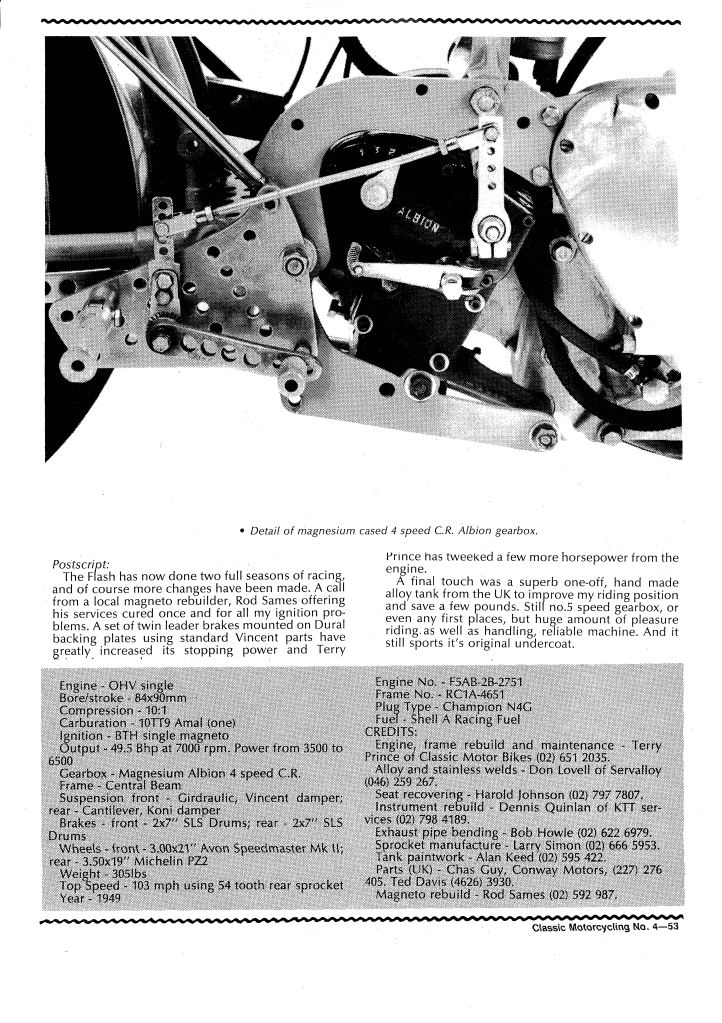
Peter comments: “I fitted a Joe Hunt magneto from the US; reliable big spark, tuned length 2” exhaust – using the inlet I machined for the head (no nut) and a smaller front guard. Mac Read (a good friend from the UK) gave me old drawings for twin leading shoe brakes and Ken Phelps supplied me with a sheet of heavy Dural. I machined the backing plates, made all the pivot points from stainless, and Terry Prince made the actuating arms. They were very effective stoppers using 4 Vincent brake cams. The beautiful alloy tank was made in the UK. I also made a solid bridge for the front brake cable, with adjusters and did away with the brake beam. And I fitted a Norton clutch in place of the Albion unit. Later I attached the Amal GP2 carburettor from my Egli.”
The more attractive side? Still with the original 2751 motor.
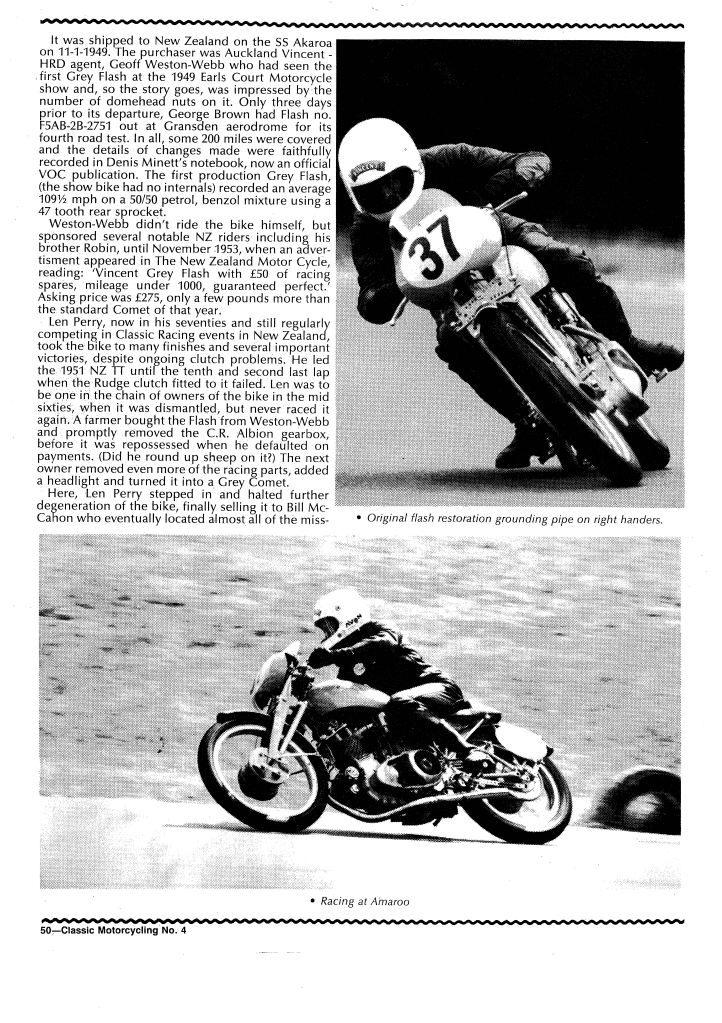
Peter getting down to it at Amaroo Park. Raised footrests, TT carburettor, 18″ front rim and 19″ rear with Metzler tyres. Alloy brake plates courtesy of Ted Davis.
During the five years that Peter fettled, developed and raced the bike it was widely featured in various publications:
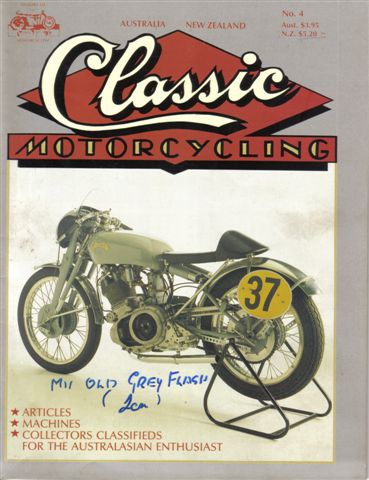
This copy of the Australian publication Classic Motorcycling has been annotated by Len Perry.
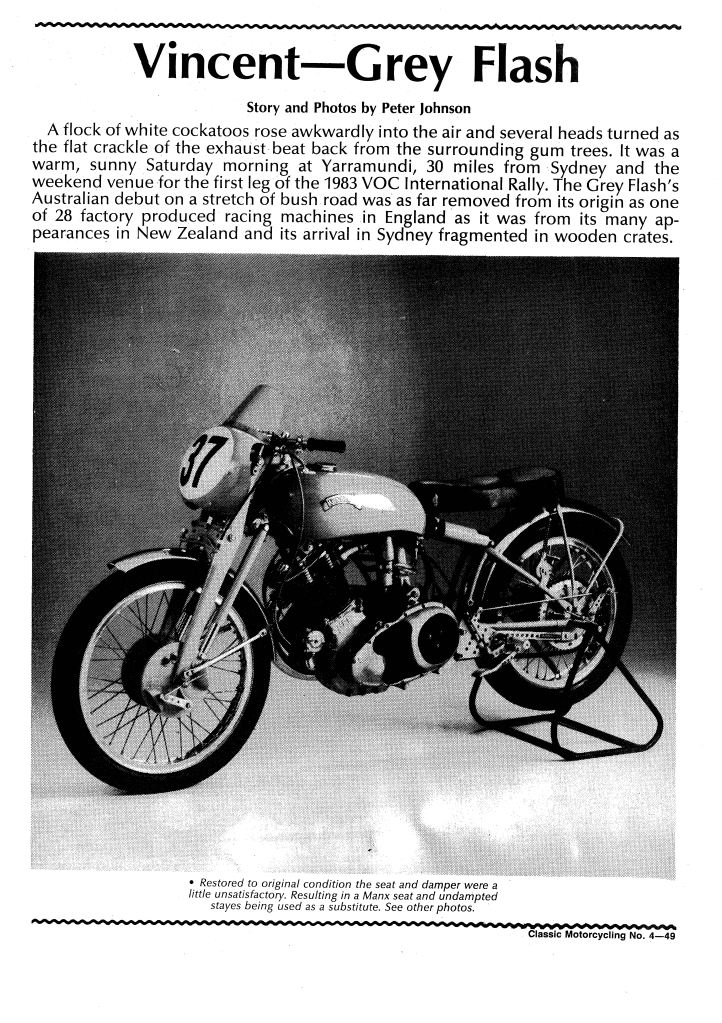
The article is reproduced here and If any readers are able to point me in the right direction as to where to obtain permission, I’d be most grateful.
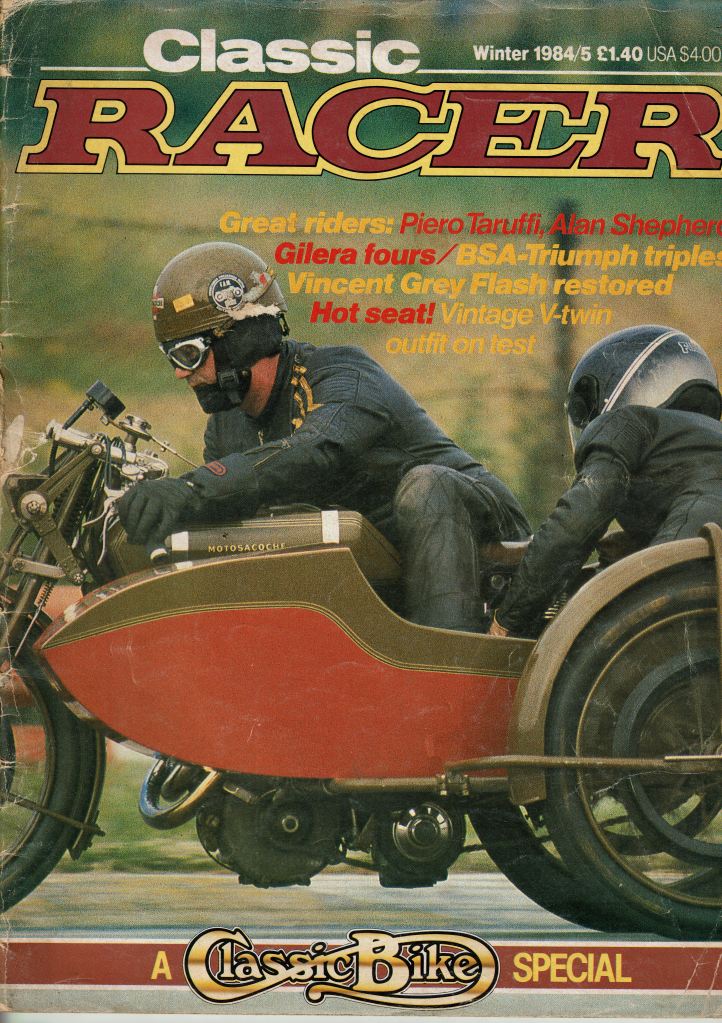
A similarly worded article also appeared in a Classic Bike special titled ‘Classic Racer’ in the winter of 1984/5.
The article is mentioned on the cover.
Sold to Japan
2751 was later retired and restored to a standard-looking specification before being sold (via an ad’ in an 1989 edition of MPH (No.486)) to a gentleman I shall refer to as “Mr. K” from Tokyo.
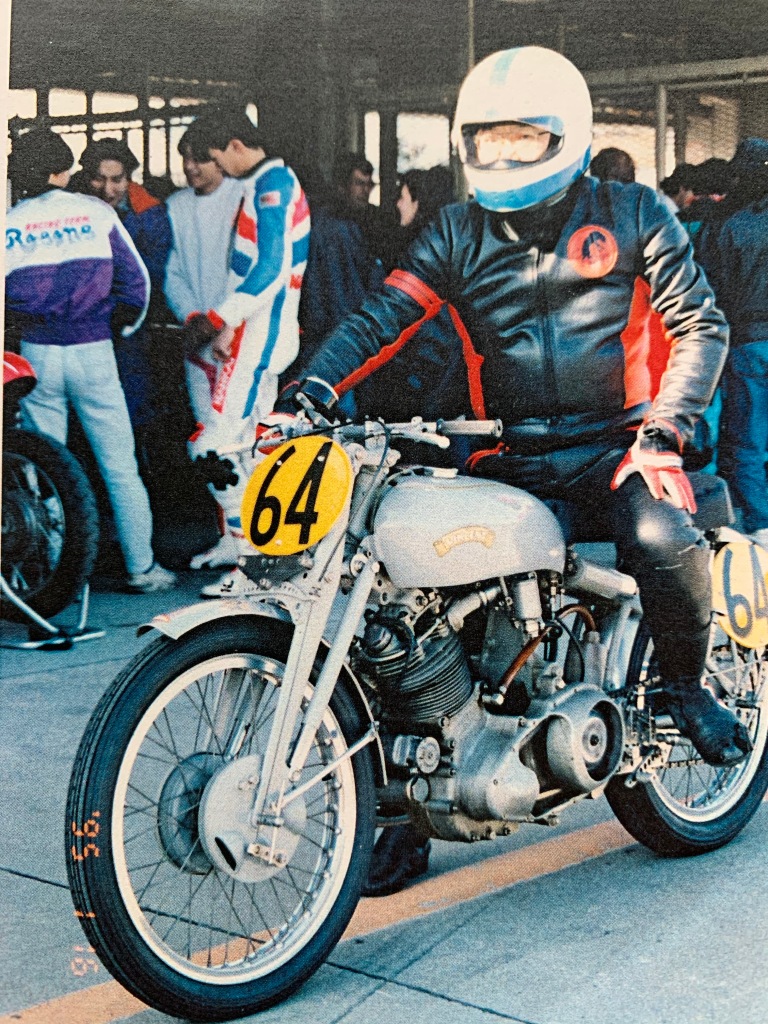
As far as I know, Mr. K rode the bike for a few demonstration laps at Suzuka only. He did fettle the bike to his liking though, leaving his mark…
Taken in 1995.
1989, not long after acquisition.
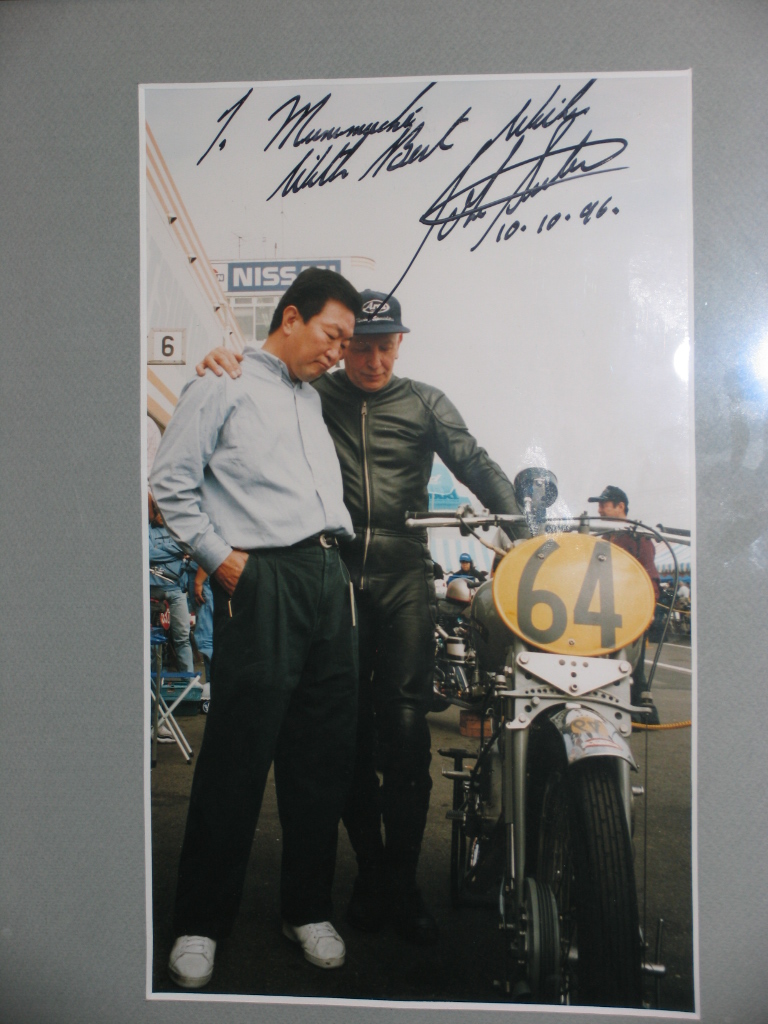
Here Longtime Vincent aficionado the late Munemichi Nosaka admires 2751 with John Surtees.
I bought 2751 from Mr. K in 2008 though unintentionally… It was a deal that looked set to sour after the buyer (whom I had introduced) had to back out of the agreement due to unforeseen circumstances necessitating my stepping in – so as not to cause Mr. K any aggravation.
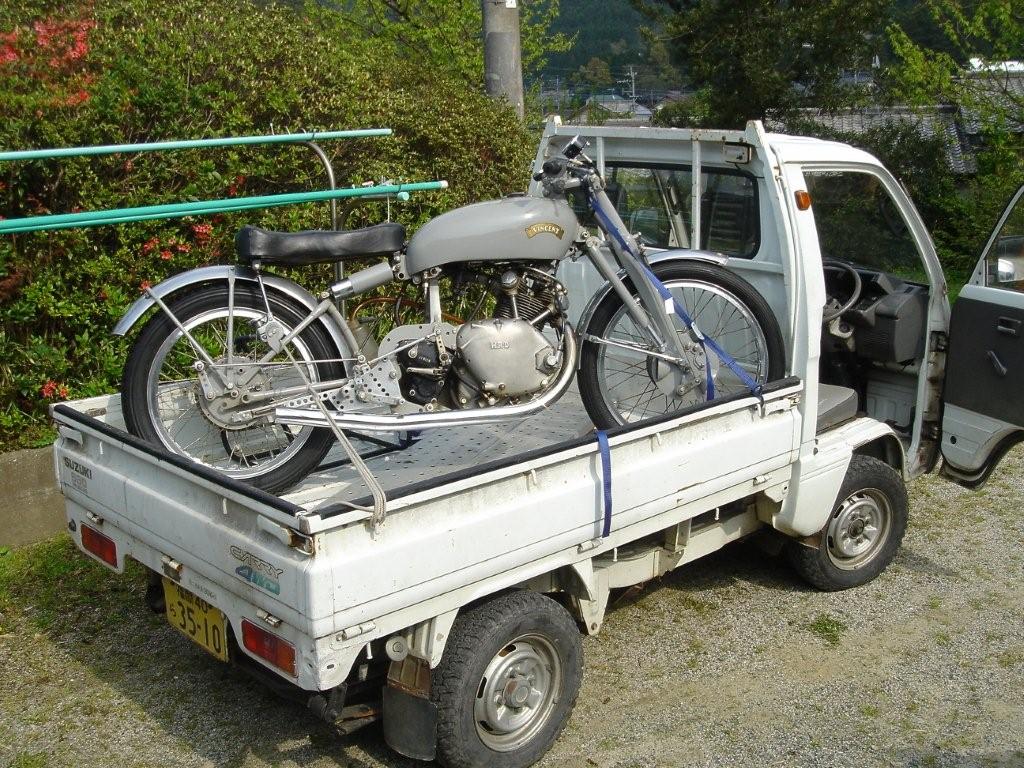
Arrival!
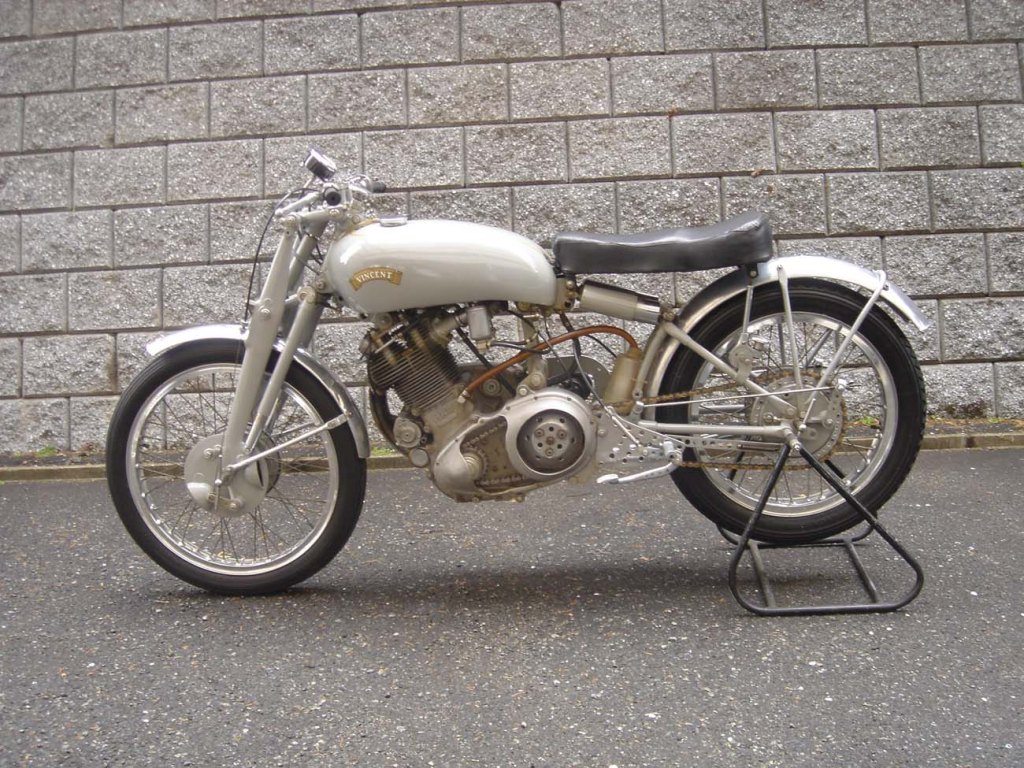
What had I bought…? I knew the important numbers checked out but little else. This is what 2751 looked like when I acquired it:
After much calling around and email exchanges with marque authorities, I was able to breath a sigh of relief: what I had a acquired seemed to indeed be a genuine Grey Flash with many of the unique parts specific to this model still present.
In the next part of this blog I will be listing, with photographs, what I now owned. I will be documenting what was correct, incorrect and what parts I needed to try and find. I knew the search was not going to be an easy one – with only around 28 ever produced, locating original Vincent racing parts was going to be a challenge…










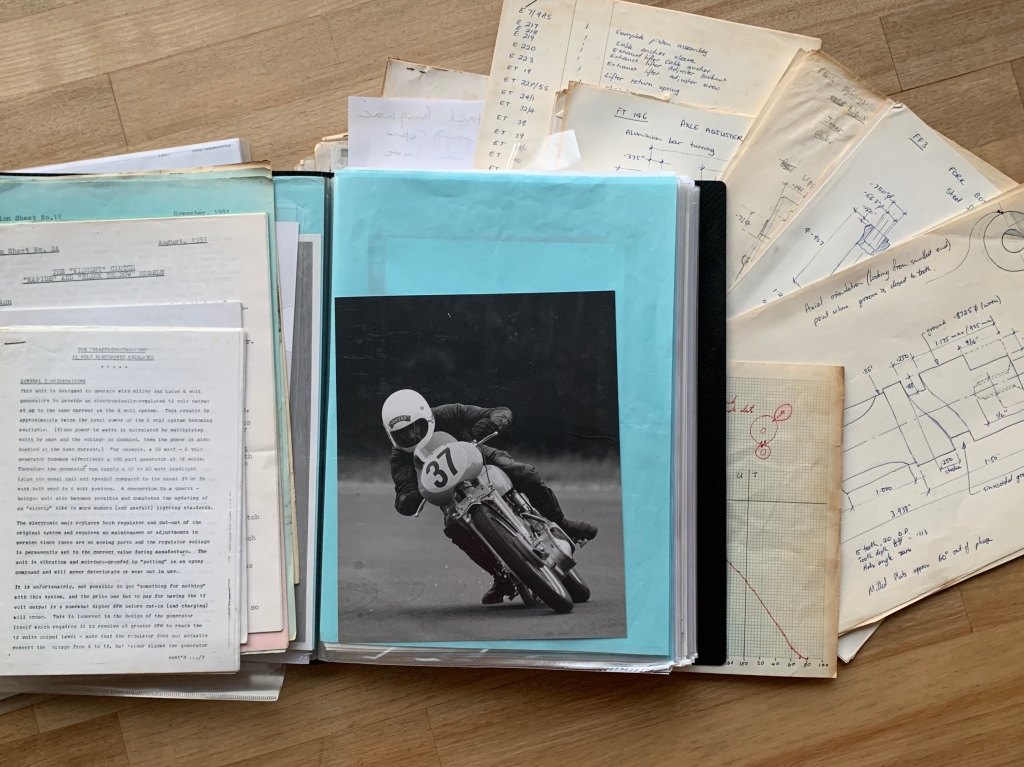
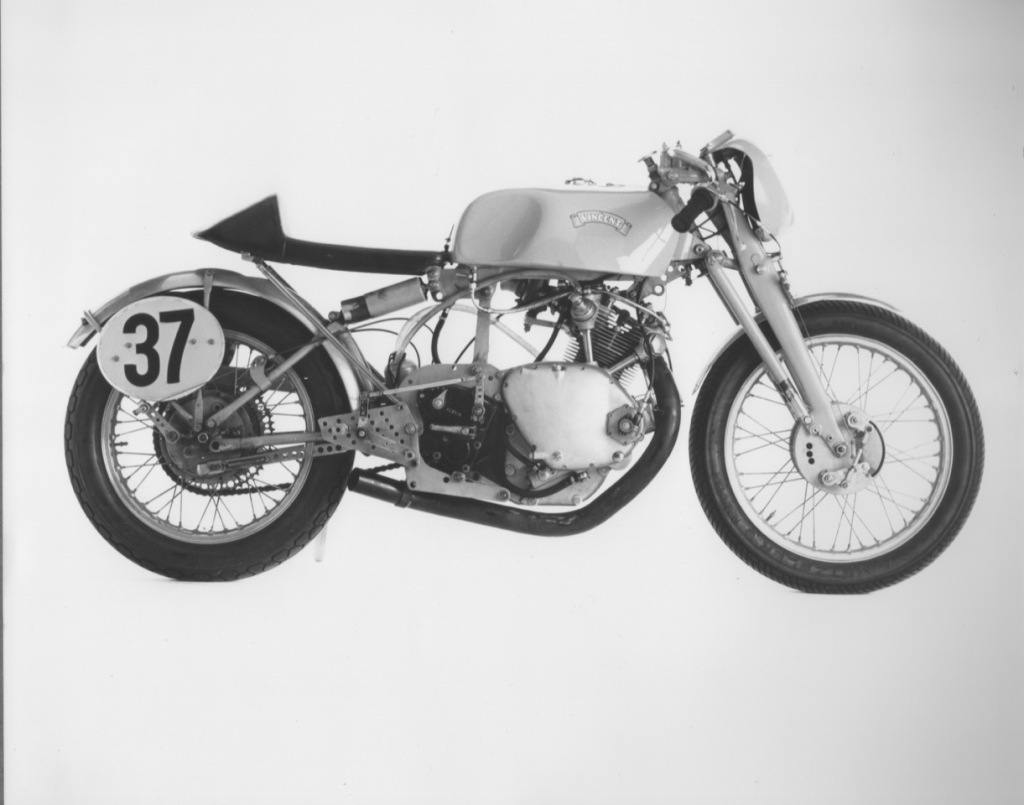
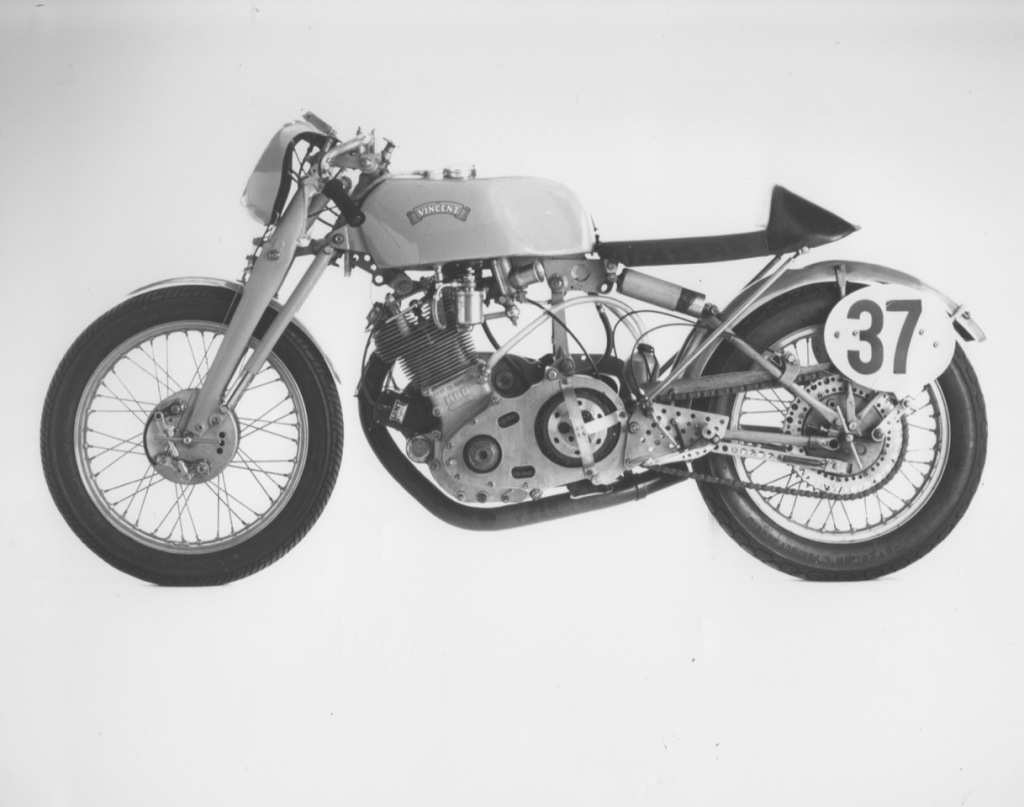
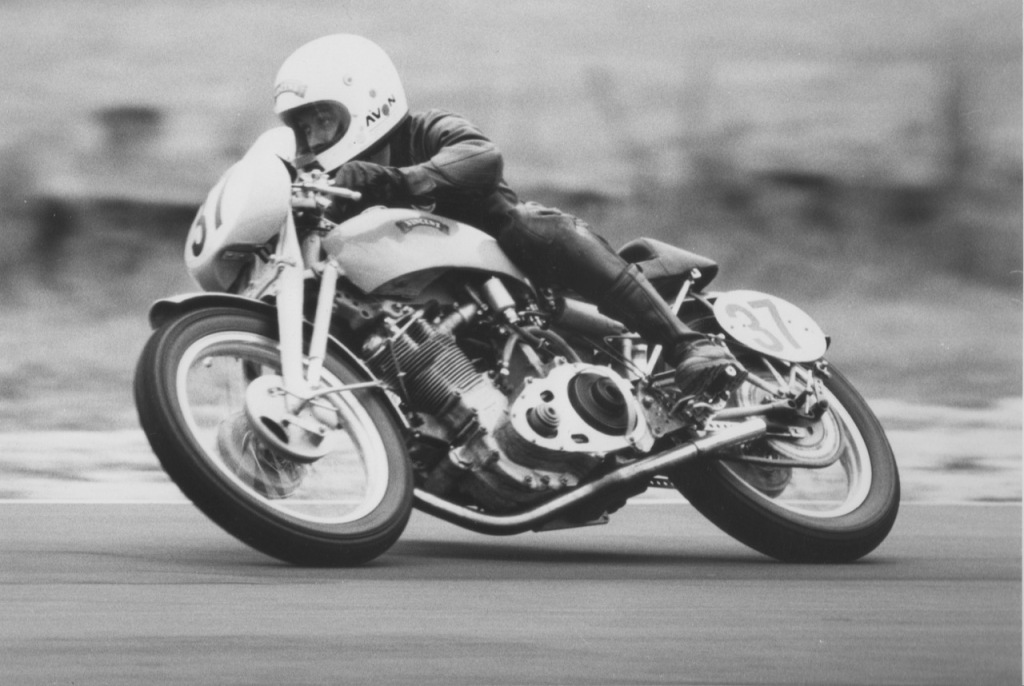
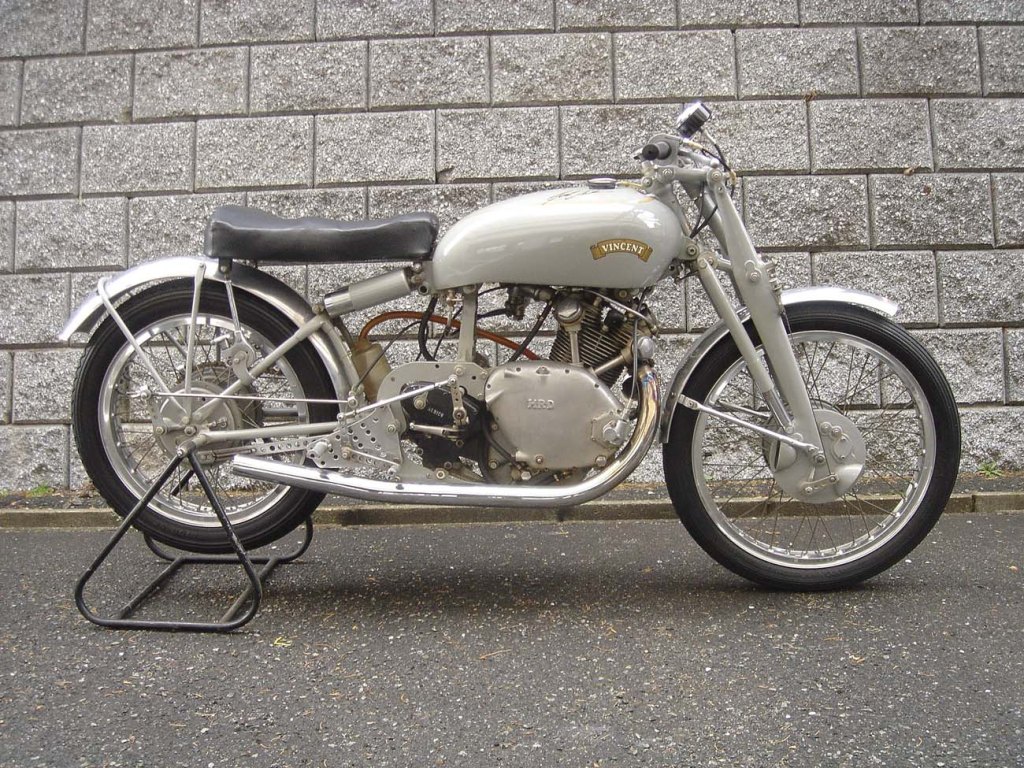
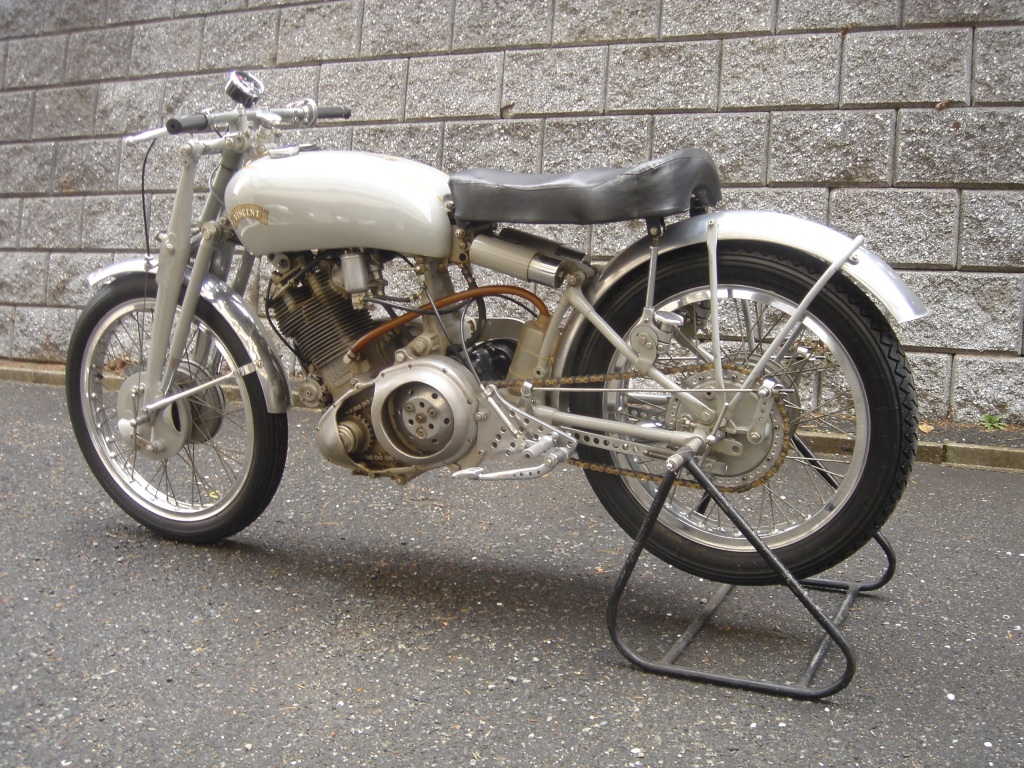
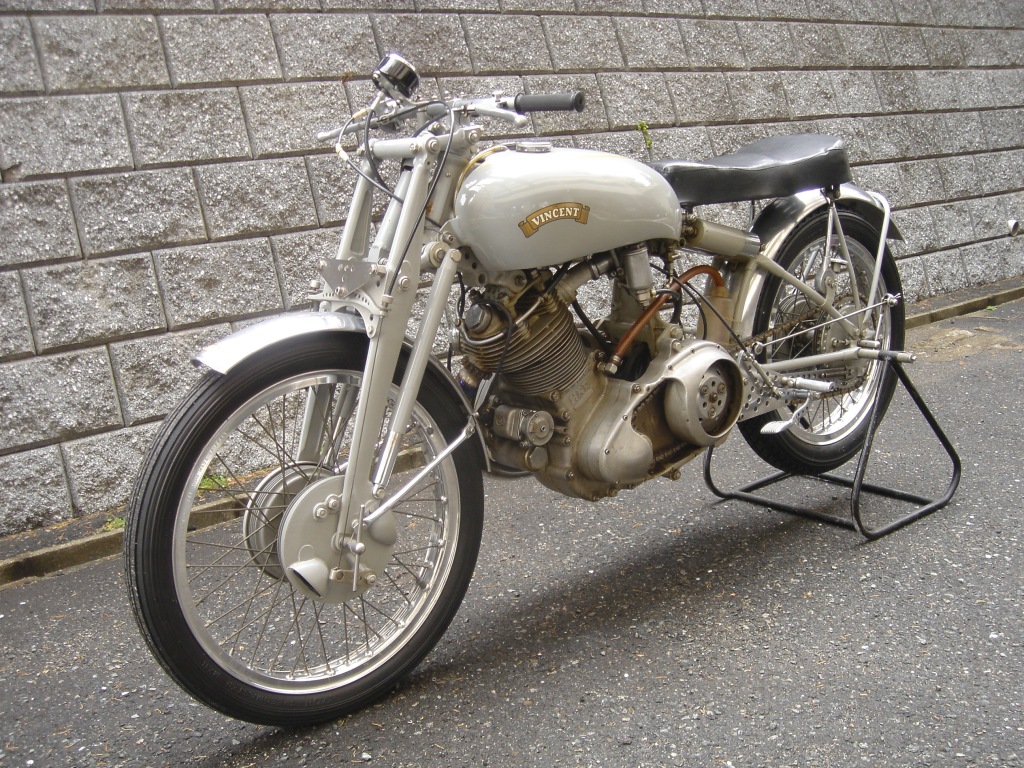
 Grey Flash 2751