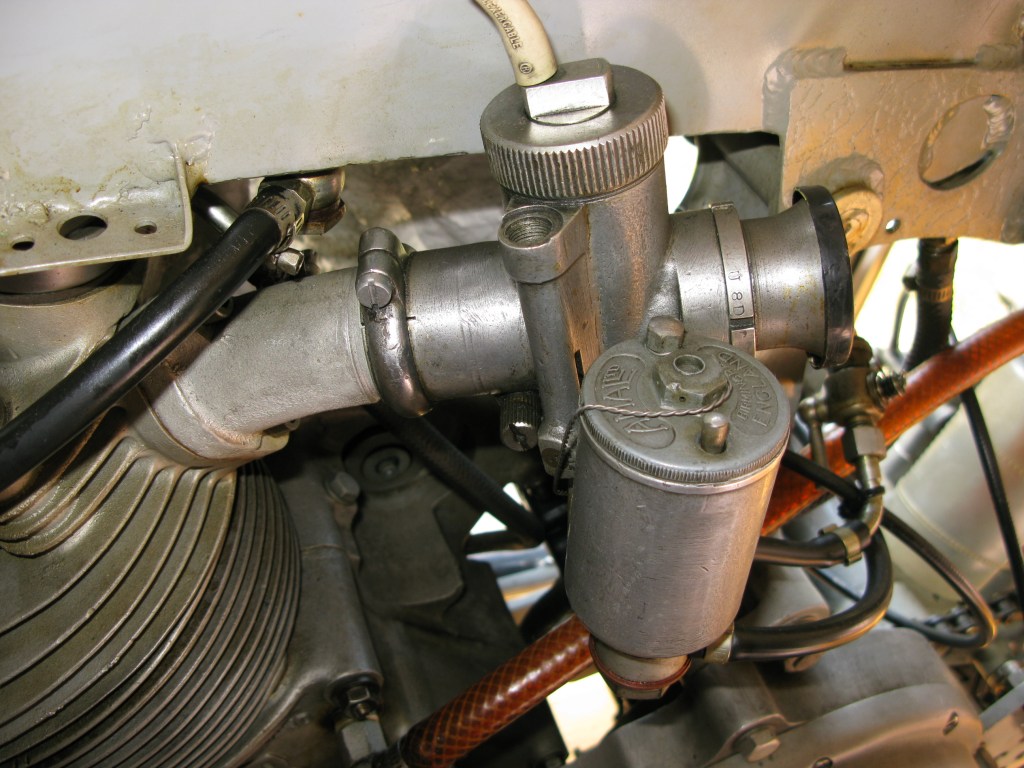
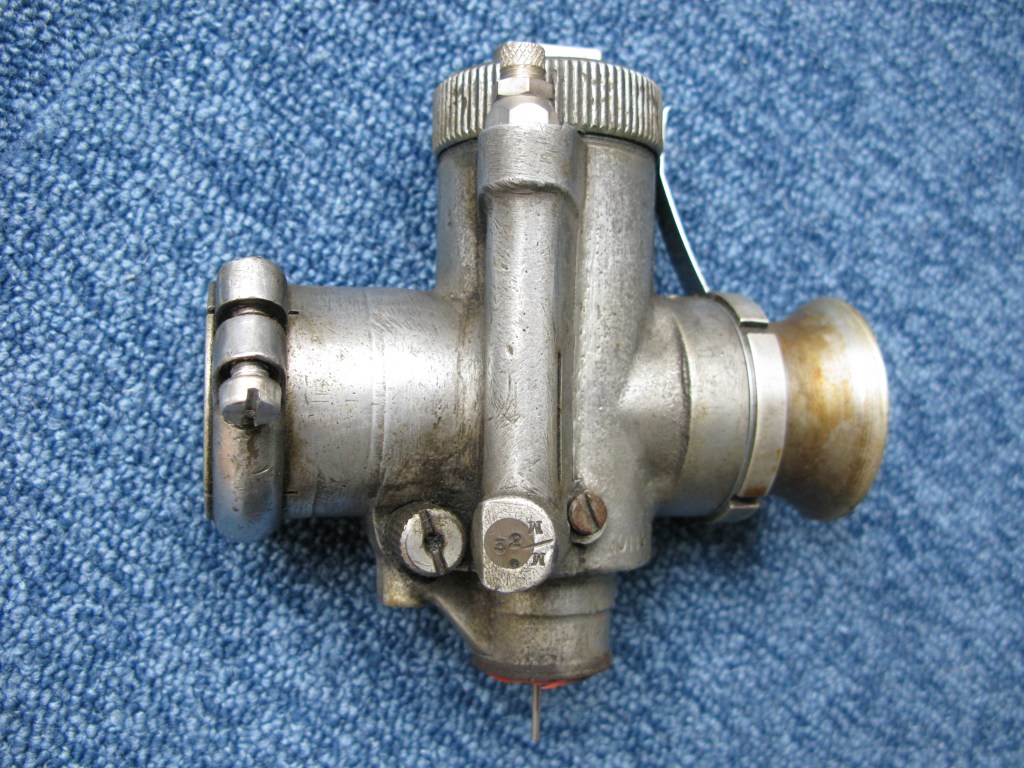
I was initially worried that I might have to try and source a correct carburettor for 2751. This is what came fitted to the bike:
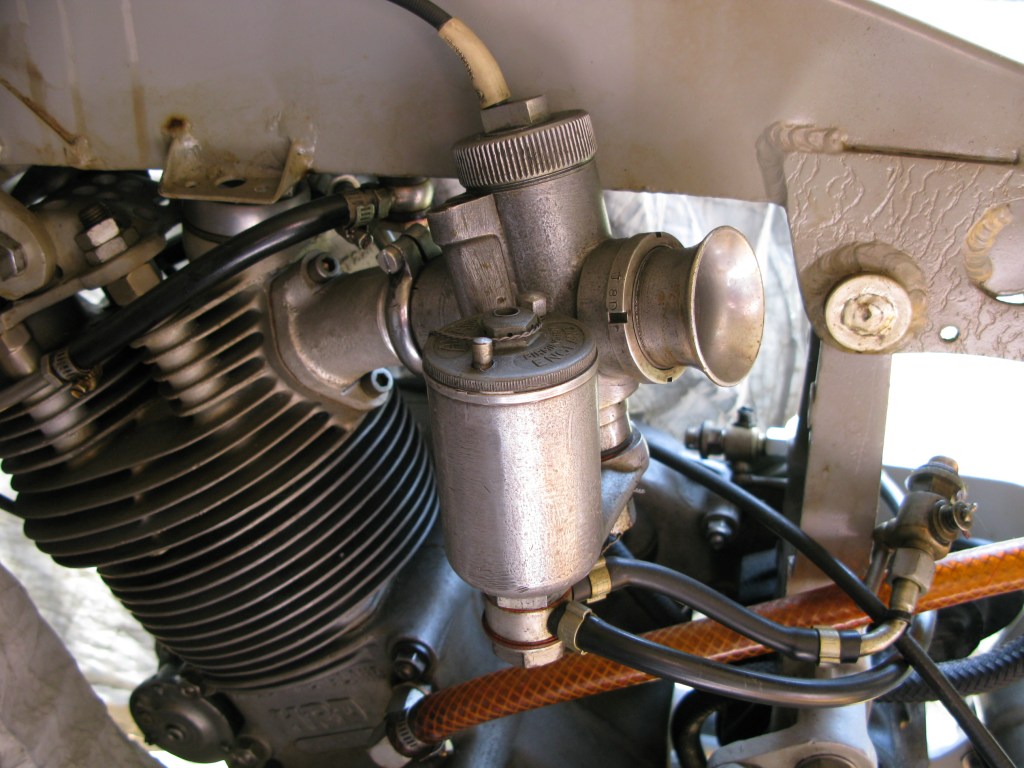
An Amal 32mm 10TT9 carb’.
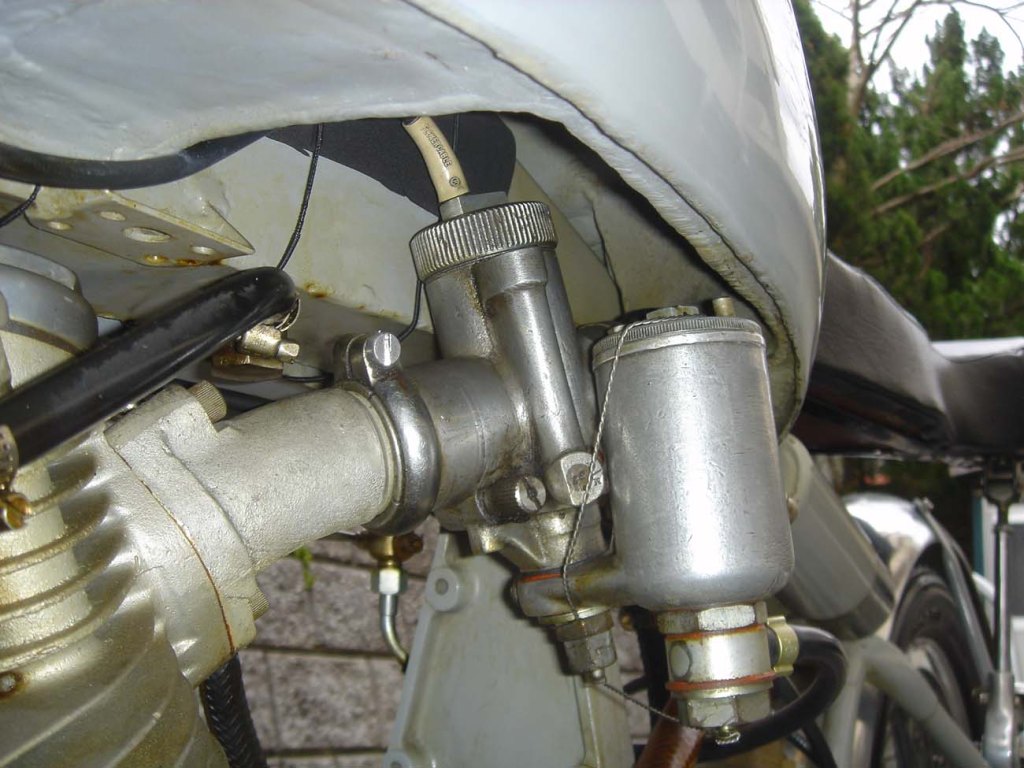
This appeared to be of the correct clip-fitting configuration. The float bowl angle should be 15 degrees. Note the film case cap – photographer Peter Johnson’s touch no doubt!
I needed to confirm that what I had was indeed correct so I removed and photographed it and sent the images through to experts David Dunfey and Bill Hoddinott.
The float chamber appears to be canted at 15 degrees.
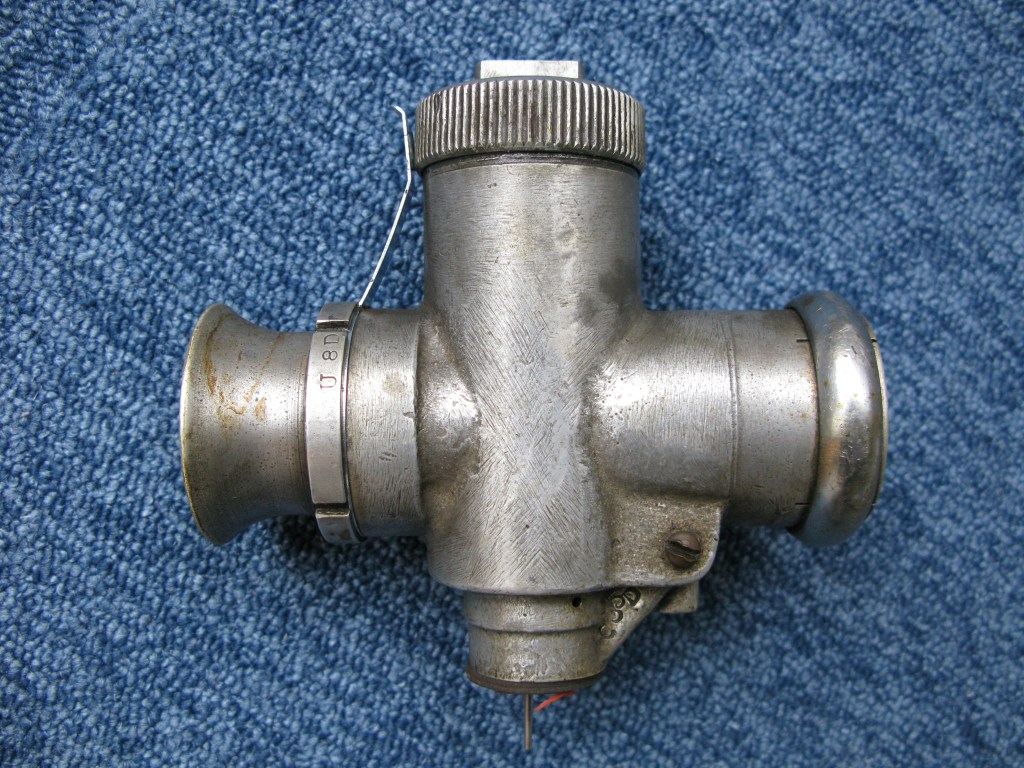
The body after the addition of enrichment plunger components and top cap lock spring.
32mm
Both David and Bill carefully examined the above photos and agreed that the carb’ appeared correct.
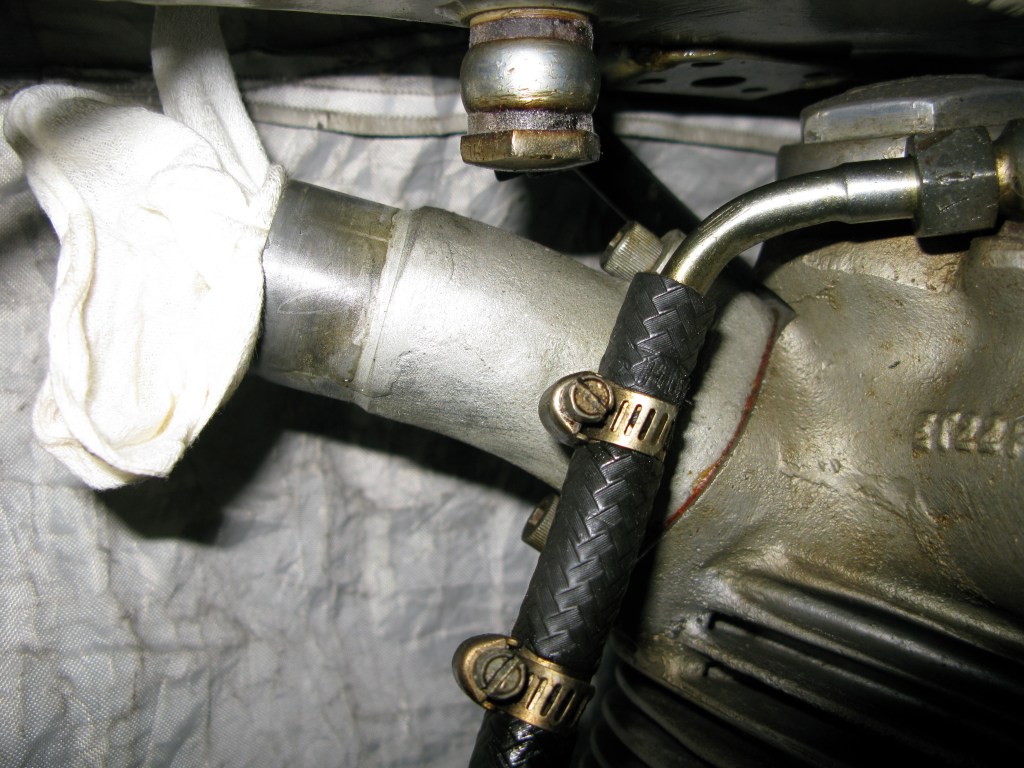
‘ET32/4 Carburettor Adaptor Racing – Front 32mm’ as recorded in the Spare Parts List more commonly referred to as the “manifold”.
This also appear to be of the correct pattern.
Peter Johnson commented: “The carb came with many other original parts, and I suspect/believe it is the original item. The manifold is cast iron .. it was cracked when I got the bike, so we constructed a jig, and rewelded it with cast iron rods , and remachined the clamp area to the correct diameter.. I left it as plain cast iron but suspect the previous owner has painted it silver to leave his mark .. back to bare metal it should be.” Actually, we now know that these were supplied either polished and chromed or left in the “raw” and cadmium plated, which this one would have been.
So, original carburettor and manifold in fine condition – a great piece of luck!
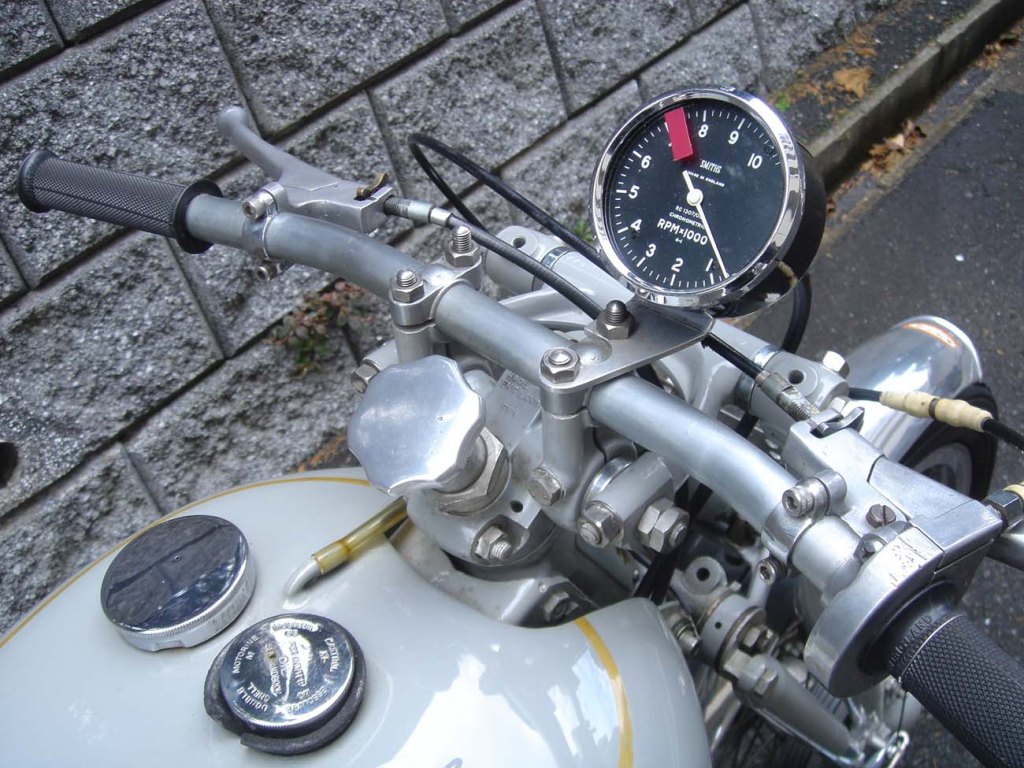
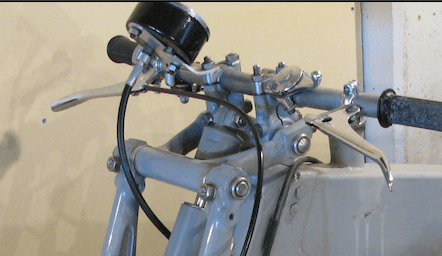
Here is a shot of what the handlebars and controls looked like when I acquired 2751:
Peter Johnson commented that the tachometer and tacho’ drive gearbox were not the ones that the bike left Australia fitted with. The alloy twist grip/front brake and clutch levers are of a more recent type, possibly manufactured by Doherty.
First port of call was Franc. He told me that he had what I needed and that he’d be prepared to entertain a swap for what was currently fitted to the bike as he could use them on a project that he was a working on.
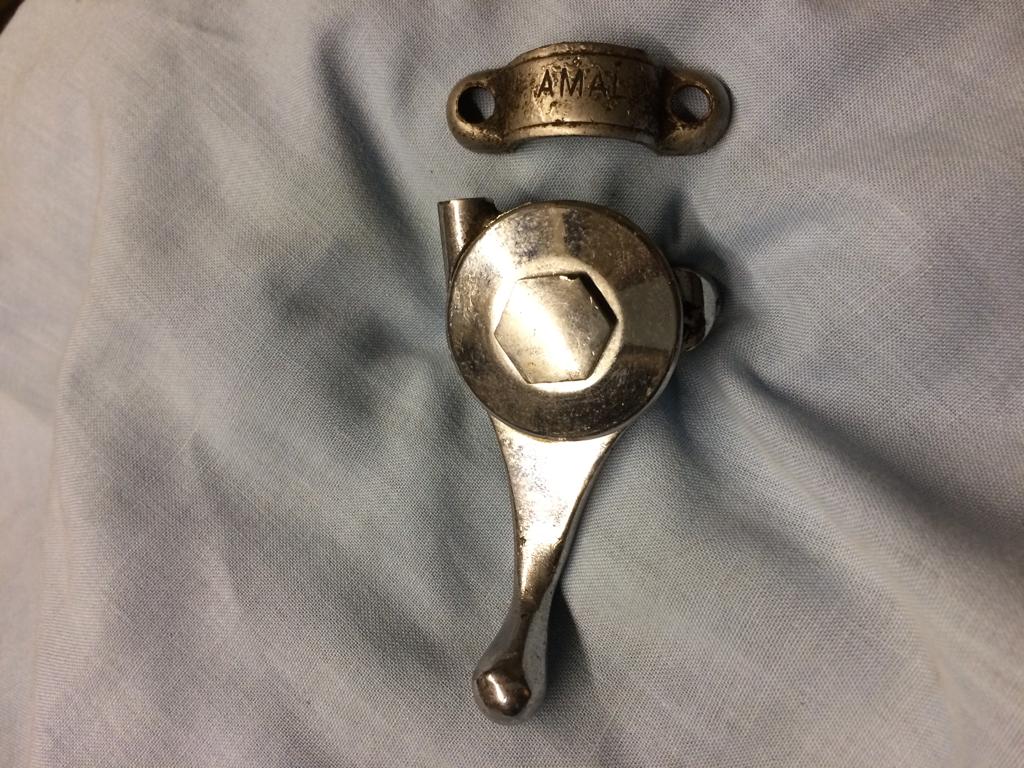
It had already been determined, that to return the bike to Works Order Form specification, a choke control and manual magneto advance/retard control would be required – one for each side.
A period-correct handed pair were supplied.
Levers and a twist grip, that had originally been fitted to a Vincent were also supplied.
Clutch lever.
Brake lever & twist grip.
Loosely fitted.
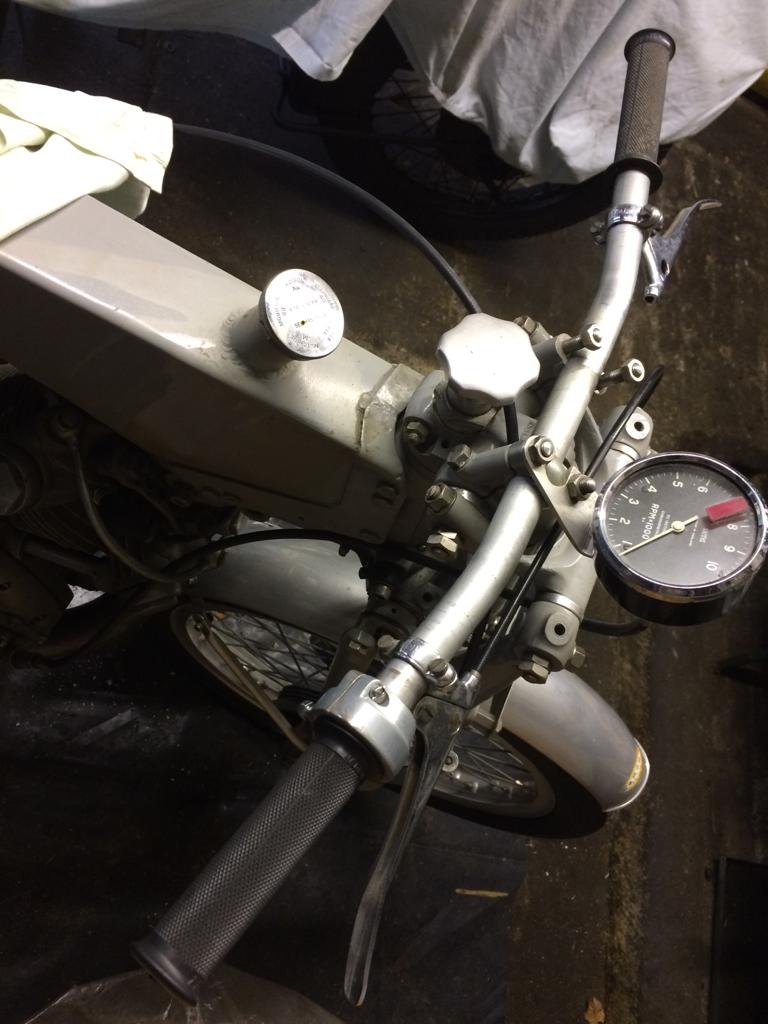
Detail of the current set up minus the magneto and carburettor control levers. Handlebar, handlebar clamps and studs plainly visible.
The provenance of the handlebar is unknown. If the dimensions are close to factory standard then it will be left as-is. The finish of the handlebar appears very similar to what dull chromium plate looks like.
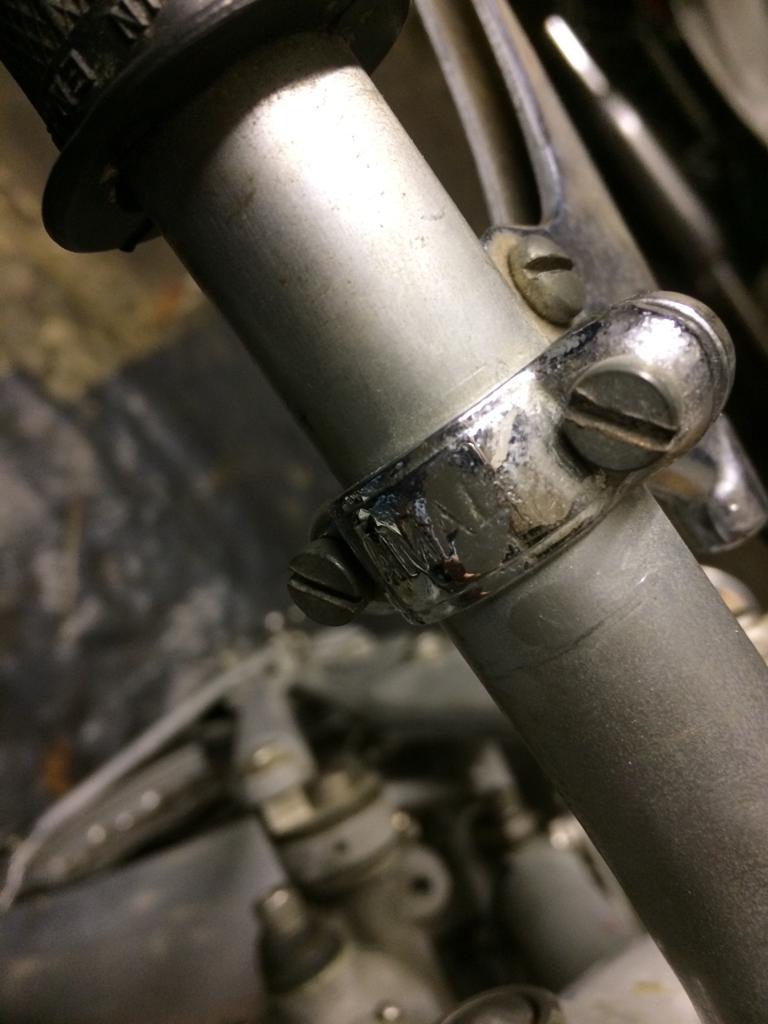
Two of the studs for the handlebar clamps are of the long pattern, as per racing tacho’ bracket configuration. But they are wrongly situated. Both long studs should be positioned on the right hand clamp to accommodate the tacho’ bracket. One of the clamps was removed:
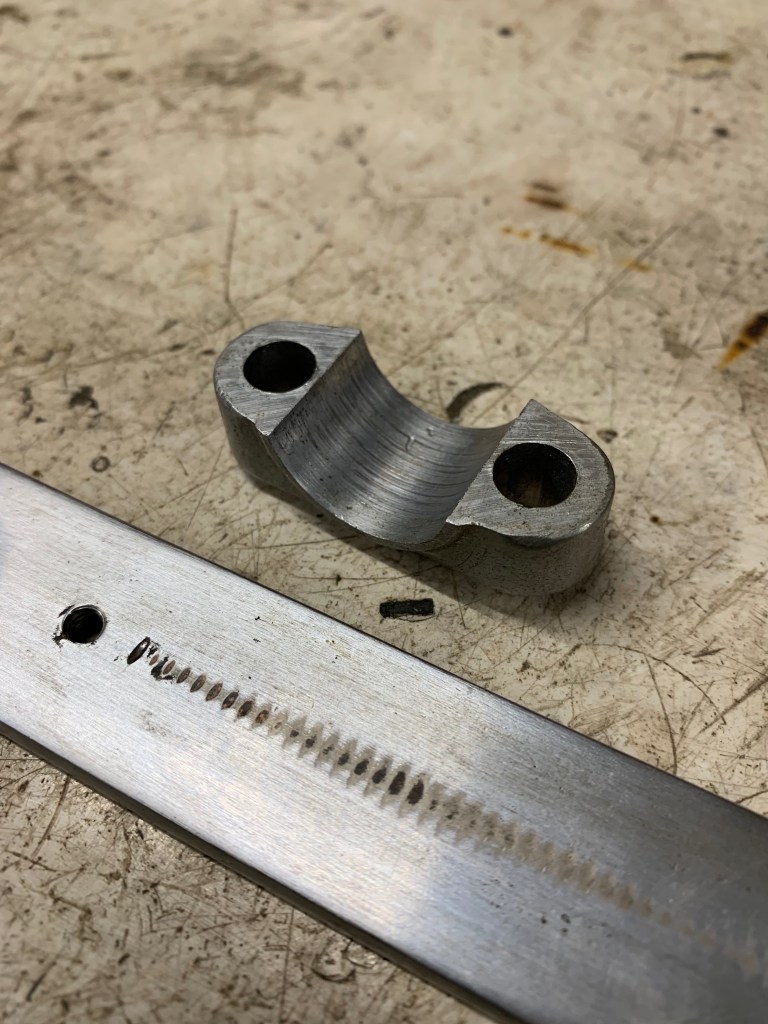
Clamp underside compared to rear brake torque stay.
Interestingly, the clamp appears to show signs of dull chrome – these were usually enamelled black. Indeed, they appear not have been painted. This indicates that they are highly likely to have originally been fitted to 2751.
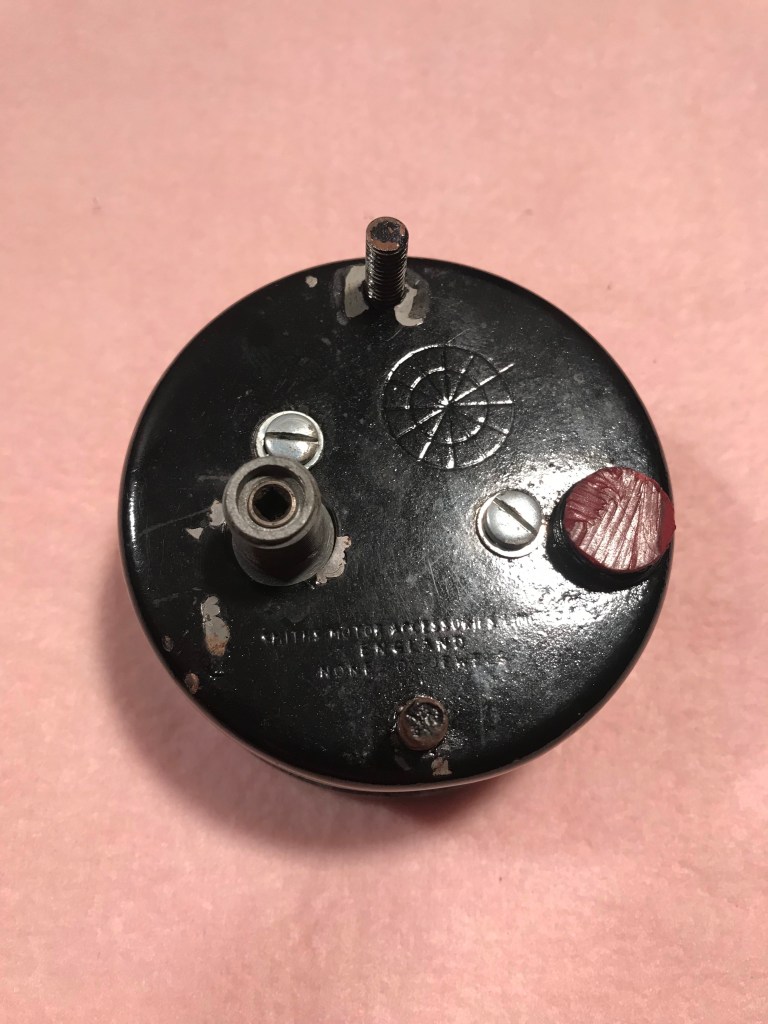
As acquired 2751 had a tacho’ fitted, perfectly functional but of the incorrect type.
Perched on a beautifully crafted bracket.
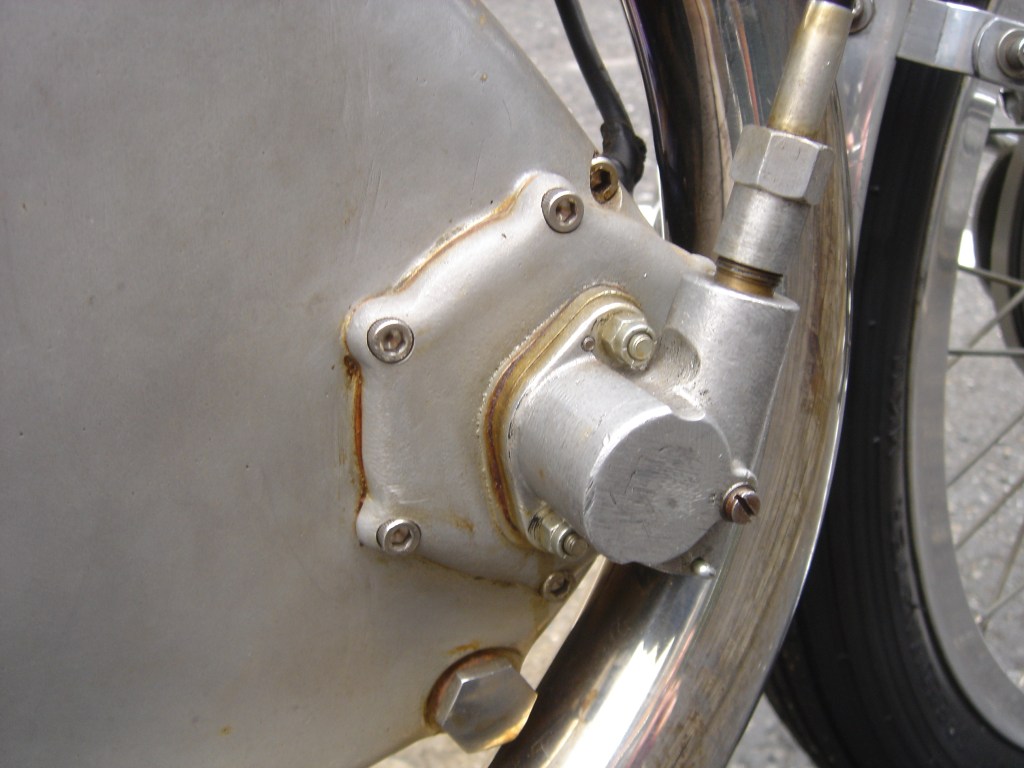
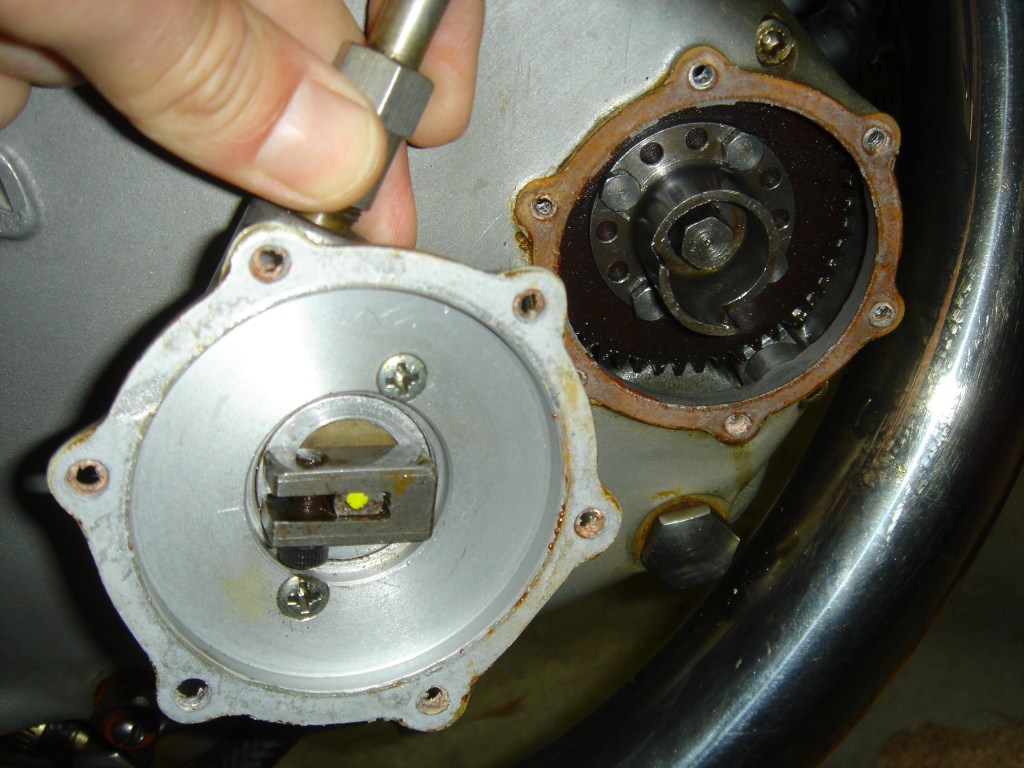
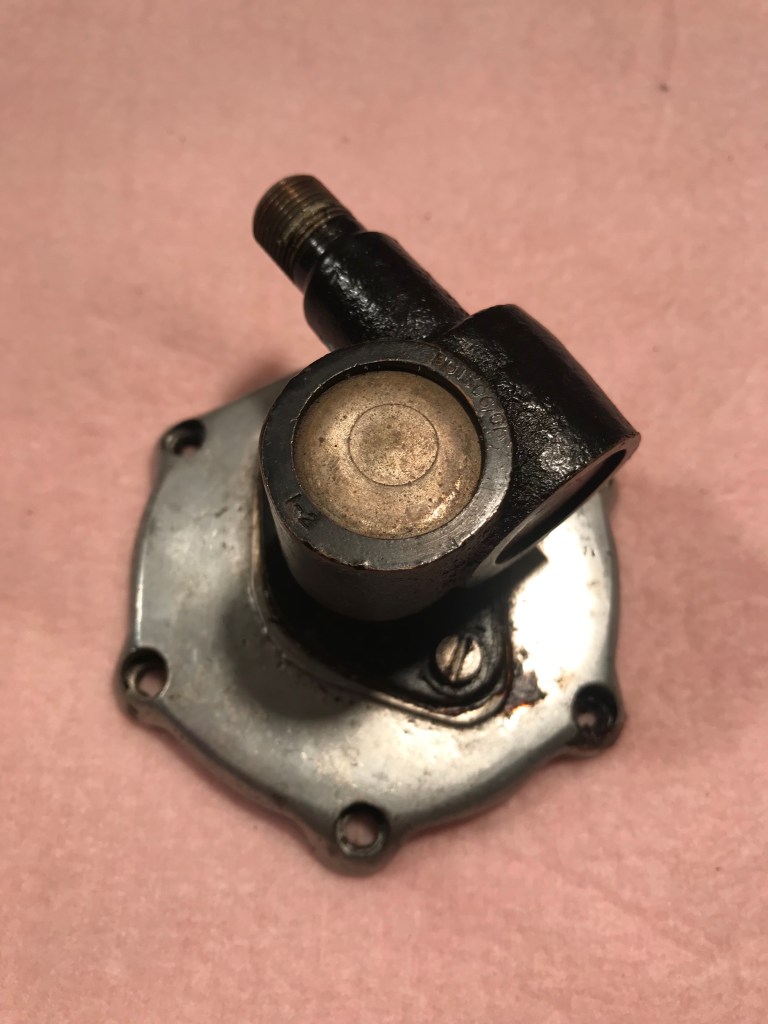
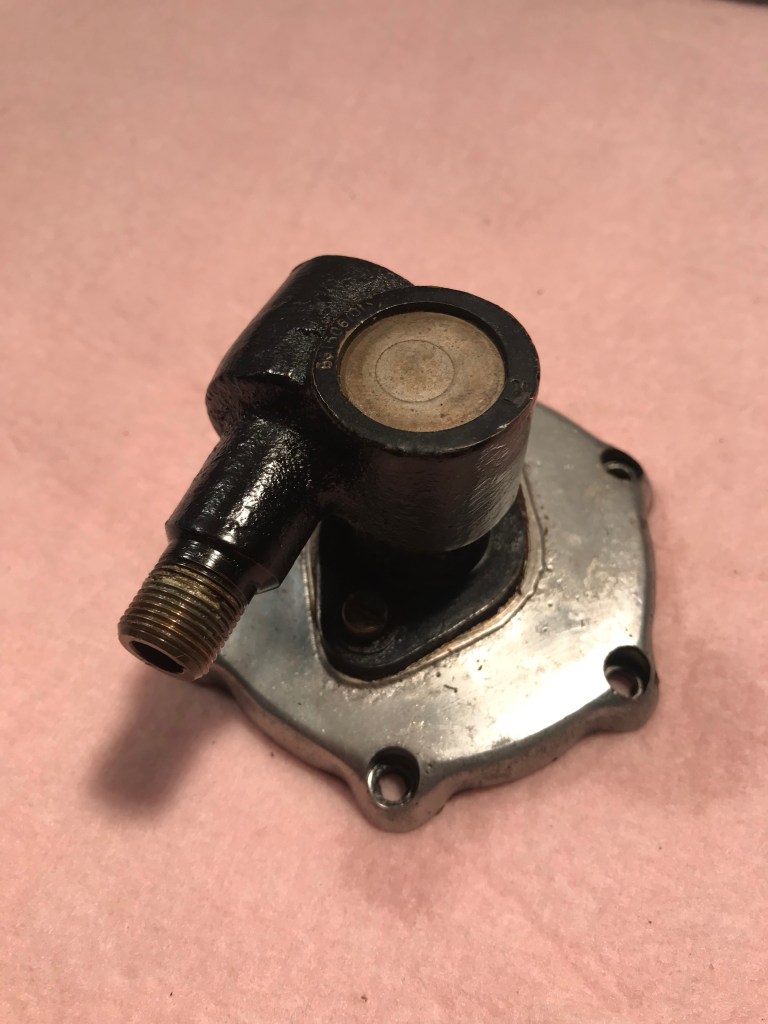
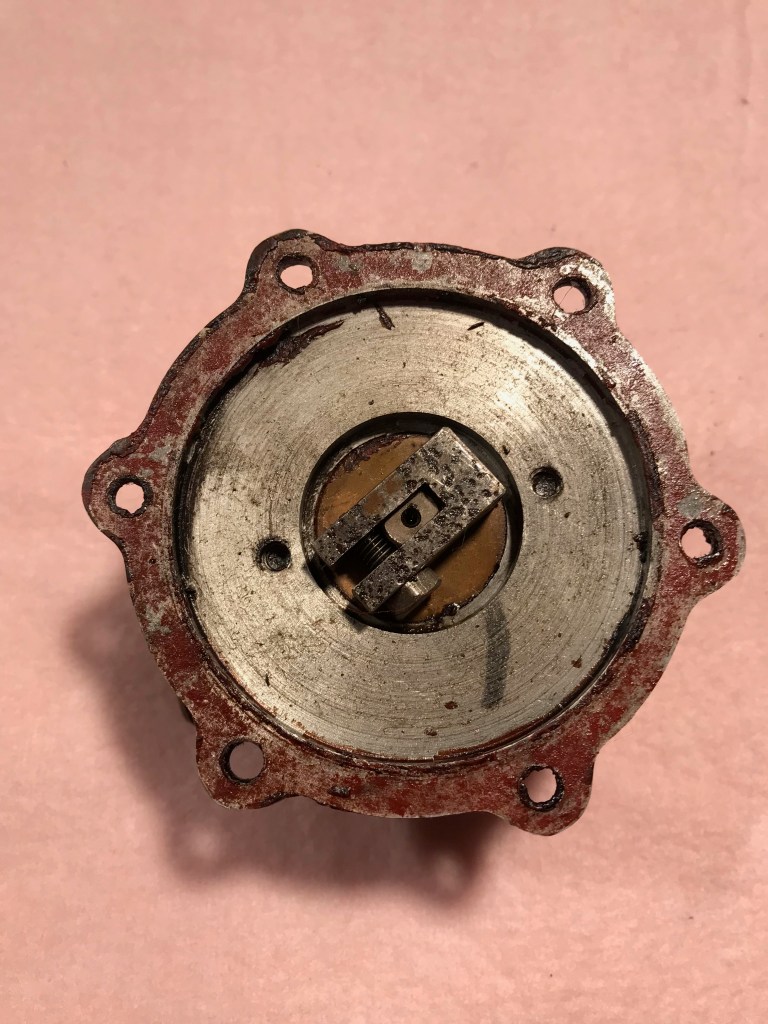
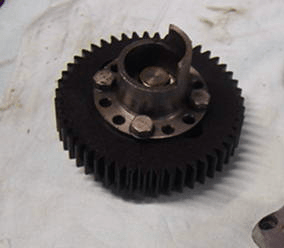
And driven from a modified ATD cover as per Vincent racing configuration – but with an incorrect drive gearbox.
When removed…
This appears to be a standard ATD cover that’s been modified.
First port of call was Franco, again! He included the correct parts together with the other items that he let me have.
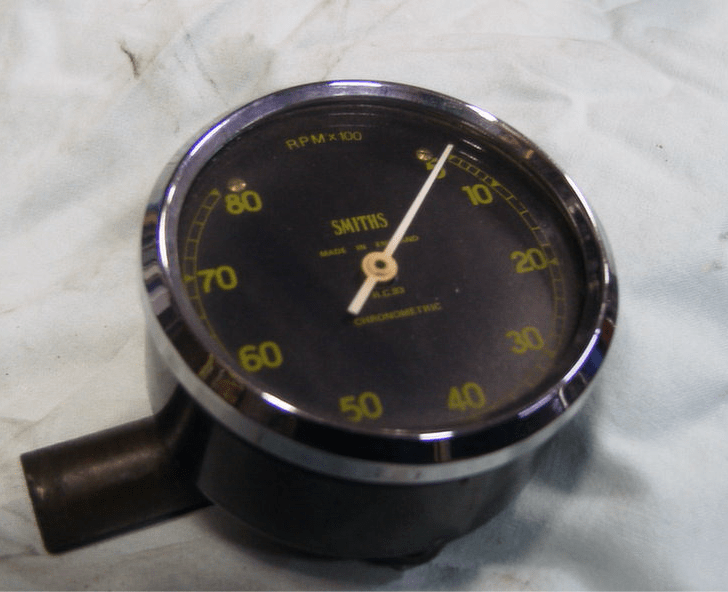
The tachometer I also thought that I needed was one of the striking Smiths instruments of the racing pattern with yellow numerals thus:
One was on offer too… Yum yum!
But it was not to be… This pattern of racing tacho’ did not exist when 2751 left The Works.
This is what I needed.
Supplied by Signor Trento.
The last item is the tachometer mounting bracket. This was usually clamped to the right hand handlebar clamp using special extended studs. Drawings for the bracket and studs are held by the VOC.
Clearly seen here.
And less clearly…
…in period shots of 2751.
David Dunfey kindly sent me a bracket he’d fabricated, to give me an idea. The bracket will need to be made, as it is missing. I may end up adapting the bracket that David sent me.
As acquired, the foot controls of 2751 were as set up and adapted by Peter Johnson for his racing use.
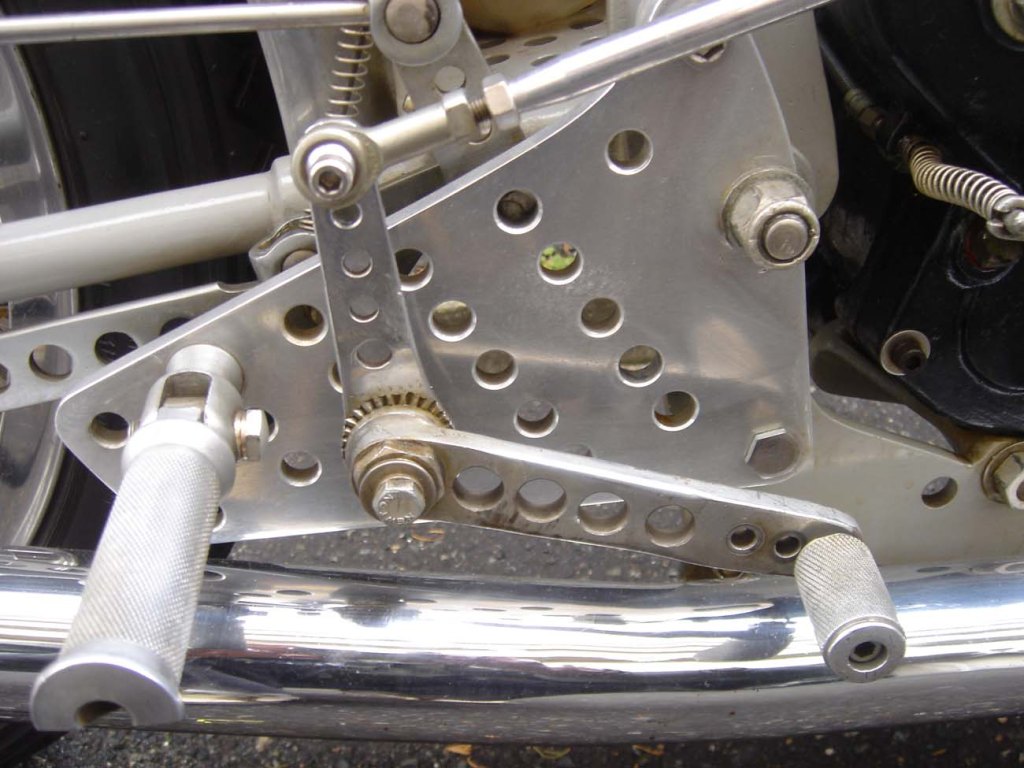
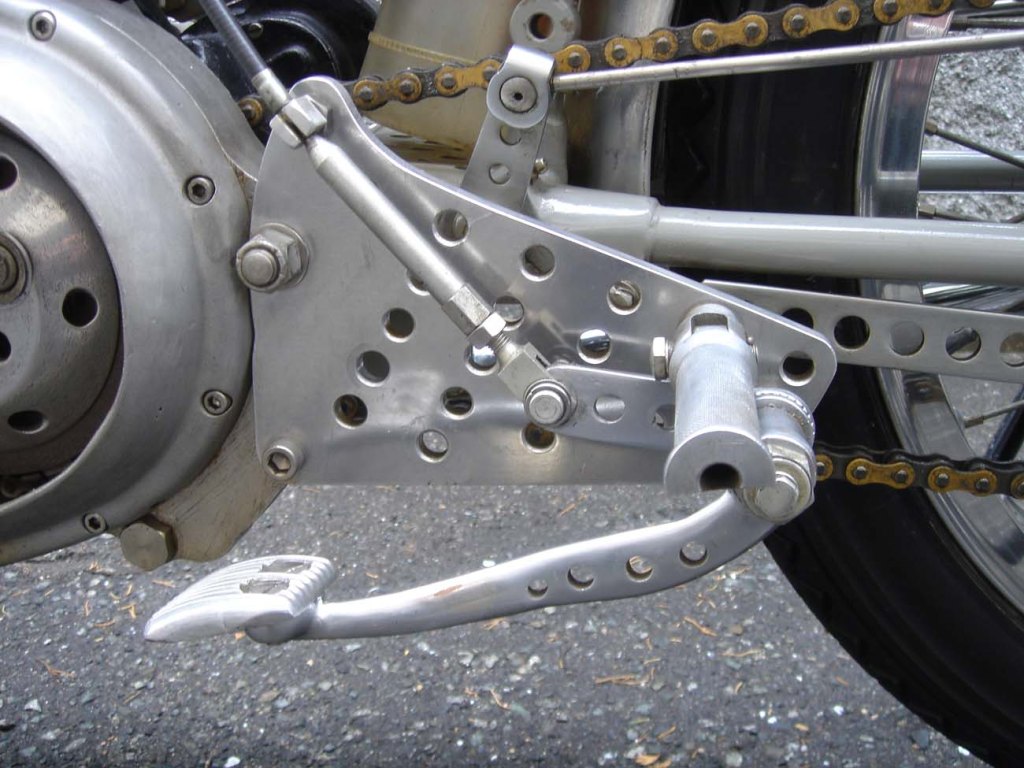
On the timing side the gear change lever looked like this.
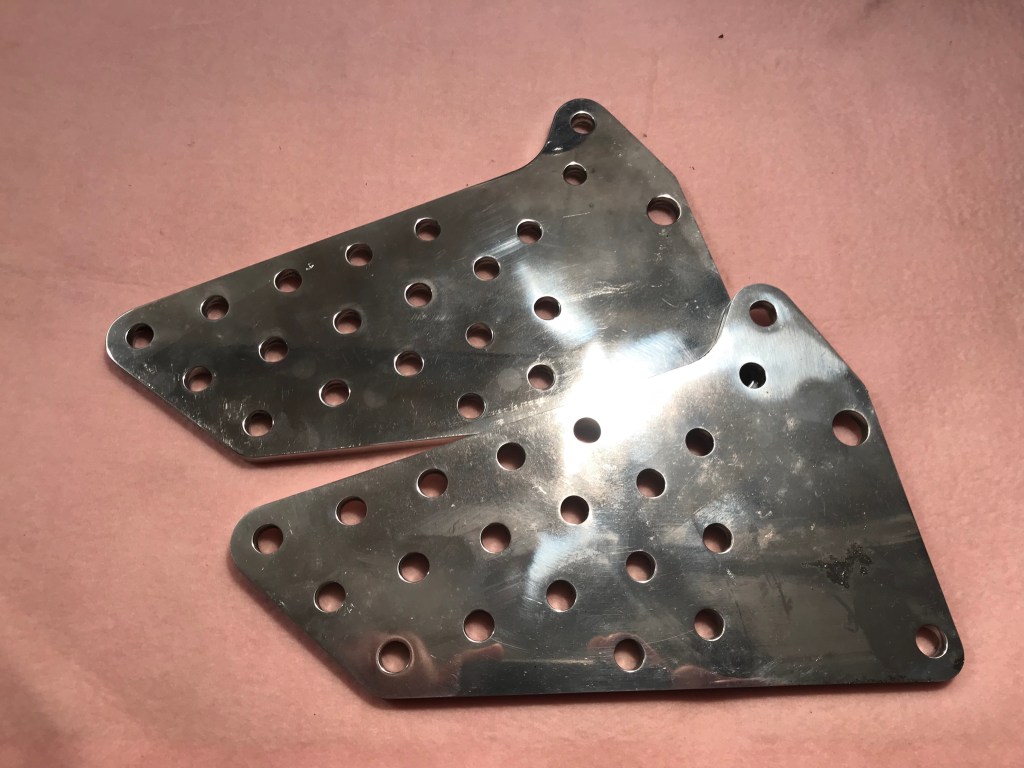
Firstly, the drilled footrest support plate appears to be non standard. I managed to acquire an accurately reproduced pair of plates that I may employ in the restoration.
These are correctly drilled.
I do not want to write-off the plates currently fitted to 2751 as being unoriginal until they’ve been removed and carefully inspected. The bike is an early example and may have differed from later “standardised production” Grey Flashes. Unfortunately period shots that I have of 2751 do not clearly show the foot control arrangement on either side of the bike very well so I will probably default to the pattern that was used and is widely accepted..
The interlinked gearbox actuating arms are both drilled and seem longer than those depicted in the Spare Parts List, which are of the Black Lightning pattern (utilising the Vincent gearbox).
These would be hard to fabricate.
The gear shift lever appears to be the original item but I need independent confirmation regarding all three drilled levers in the linkage.
Chum Franc Trento had some NOS and original racing parts and we came to a deal.
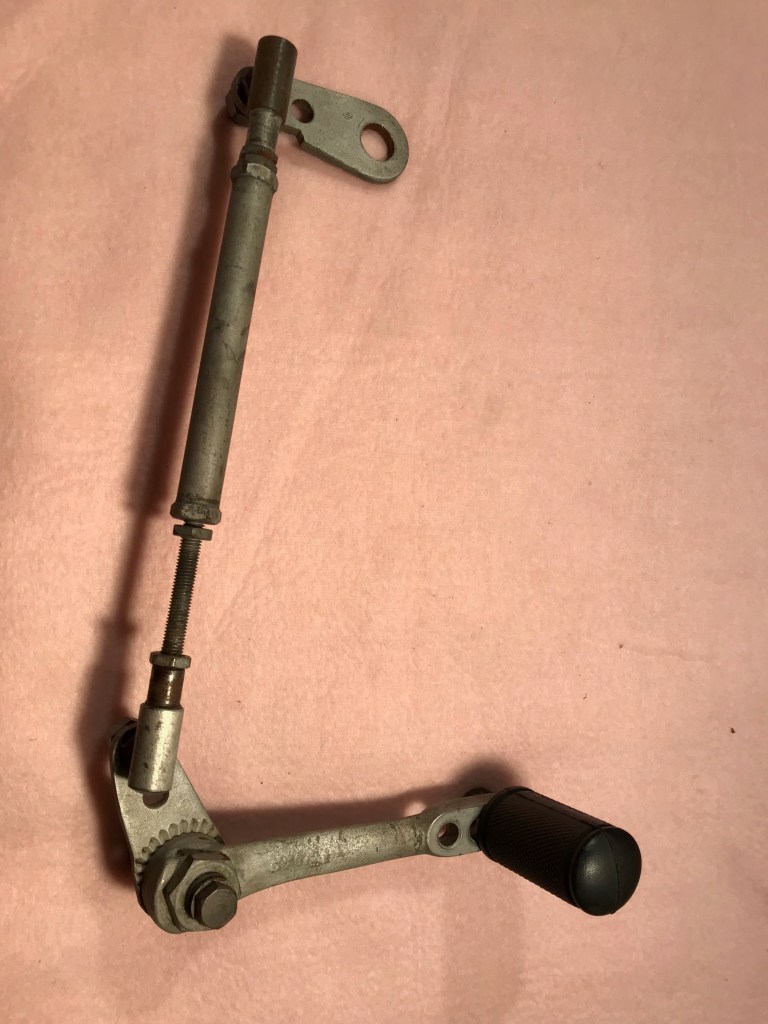
Details of the NOS linkage as acquired.
I would like to positively identify what this assembly might be for – is it a Black Lightning gear change linkage? The lever is not of a pattern that I’m familiar with and was sent to India as spares for a twin raced by a Mr. Ramanan..
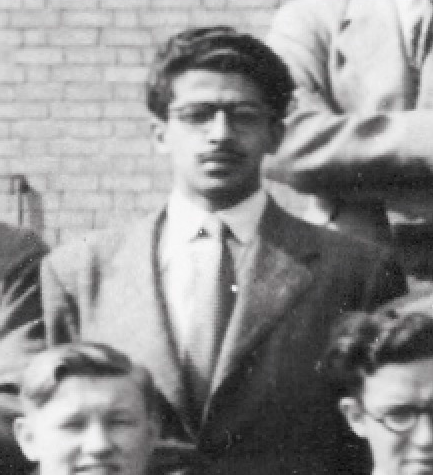
29.3.2020 An update on the provenance of these parts. Shanker Ramanan trained at the Rootes Group in Coventry and resided in England during the period of his training. He already had an interest and some experience of tuning and racing motorcycles. So, in 1952 he ordered a Rapide to take back to India with him. The bike was build to special order, with many racing components as he planned to use it for record breaking. He also ordered a cache of spares to enable him to maintain the bike. In 1953 he set two Indian records on the bike on a Bangalore road. He unfortunately lost his life whilst attempting to better the records he’d previously set.
Shanker Ramanan.
Australian Peter Faulkner travelled to India to meet with Shanker’s widow and research the story (I do not currently have a date to add to the timeline). Peter managed to acquire all the remaining spares, many of which were special racing items. Later on these parts were sold to Franc Trento from whom I acquired the foot controls.
Foot Brake
On the primary or drive side the foot brake assembly looked like this when acquired:
Again the footrest support plate appears to be of the wrong pattern.
Disassembly and inspection should help to determine originality. Parts acquired from Franco for this side:
These are NOS (Ramanan cache) and can be employed in the restoration if deemed necessary.
The drilled brake arm/lever will be retained in the restoration as it was present when the bike was being raced in earnest in Australia. Decisions will have to be made about what will be retained and replaced, refinished and left as-is.
Footrests
The lovely folding footrests fitted to 2751 were fabricated by Peter Johnson. Later pattern Vincent racing foot pegs are beautiful things and I was offered a set in the Ramanan parts Franc had in his possession.
Perfect, or so I thought…
Alas it was not to be… Early racing Vincents made do with a regular part adapted – these knurled beauties didn’t appear until later on, along with the more svelte racing seat. They certainly would have been very suited to the Black Lightning but one has to question whether fitting non-folding footrests was appropriate for the agile Grey Flash…
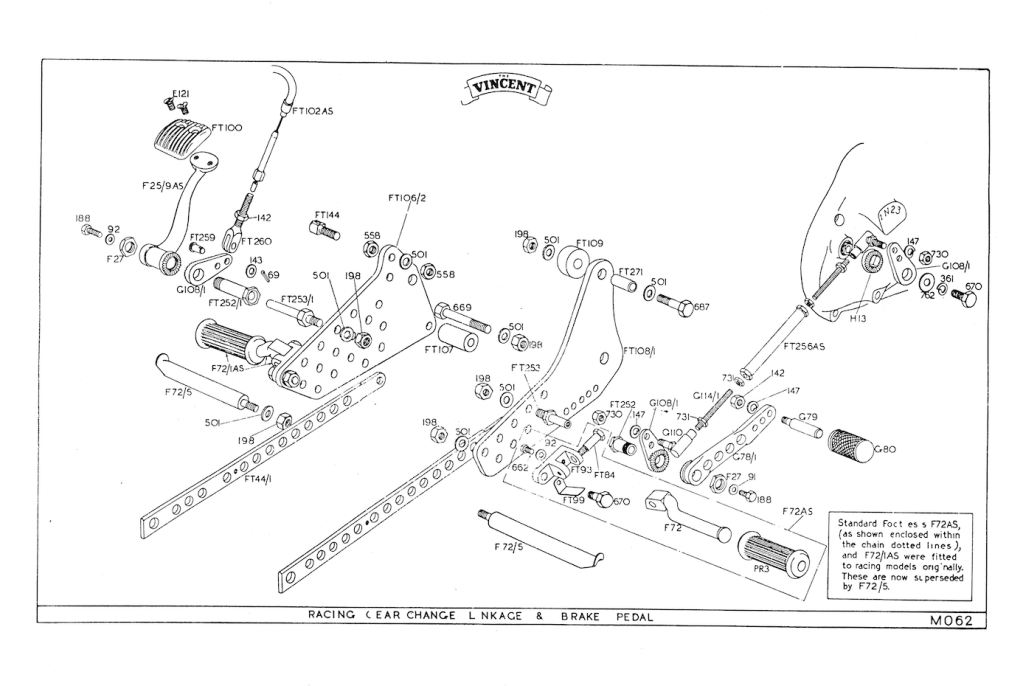
As per the MO62 drawing, 2751 was fitted with pillion footrests furnished with kickstart rubbers.
Plainly visible in this period shot of 2751.
As so often, when I’m stuck for parts, brother Franco came to the rescue!
It would appear that spacers are employed, behind the footrest hanger plate, on the timing (gear change) side only, whilst the plate on the drive side is bolted directly to the inner chain case.
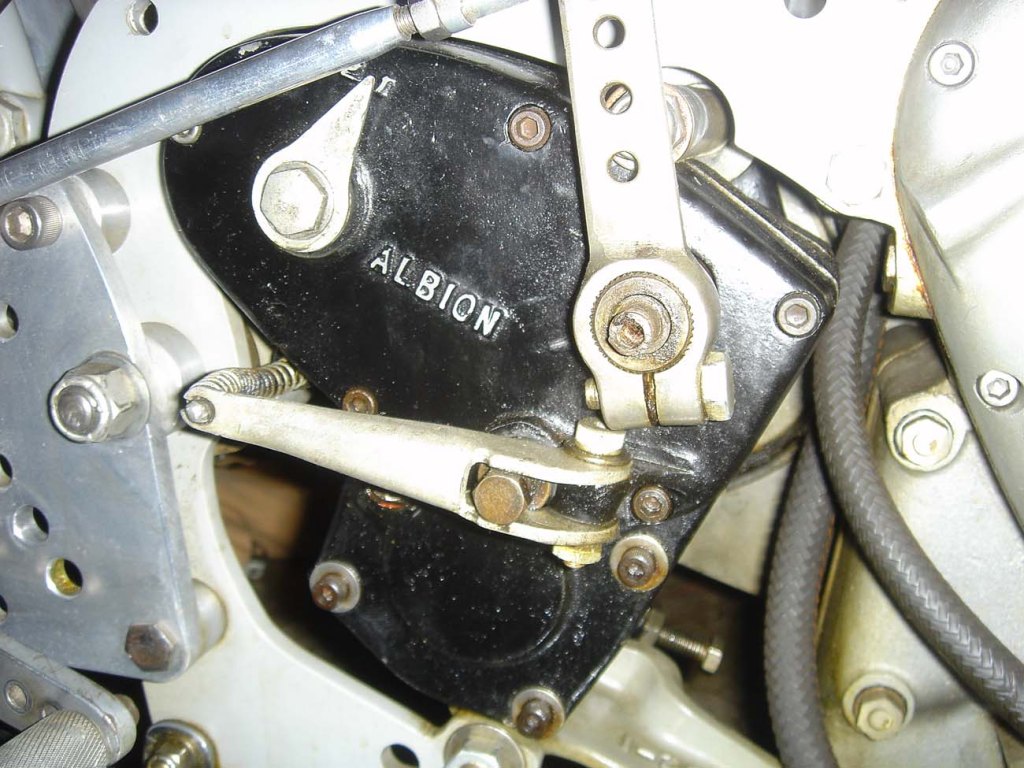
The gearbox fitted to 2751 is an Albion No. 16 close ratio racing item. The casing seems to be magnesium though it needs to be removed and examined closely. It is believed to be the original gearbox that 2751 left The Works with.
The cover plate must surely be of aluminium though.
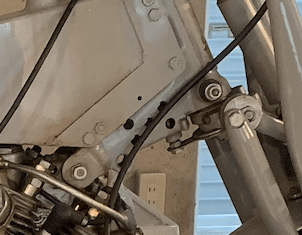
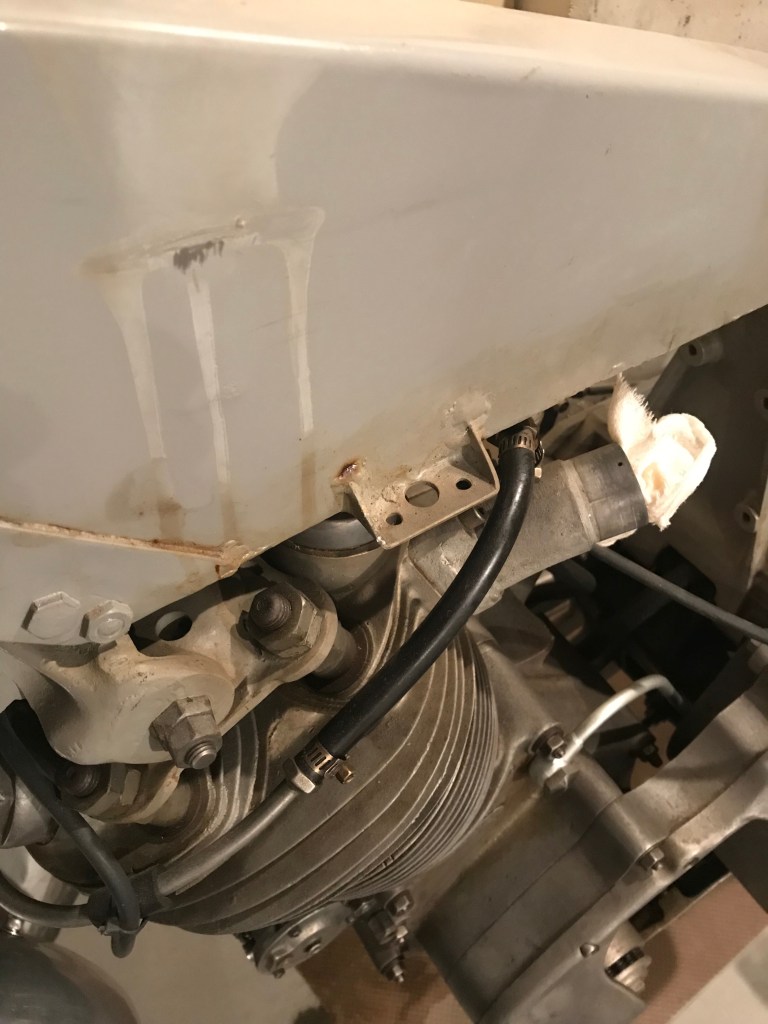
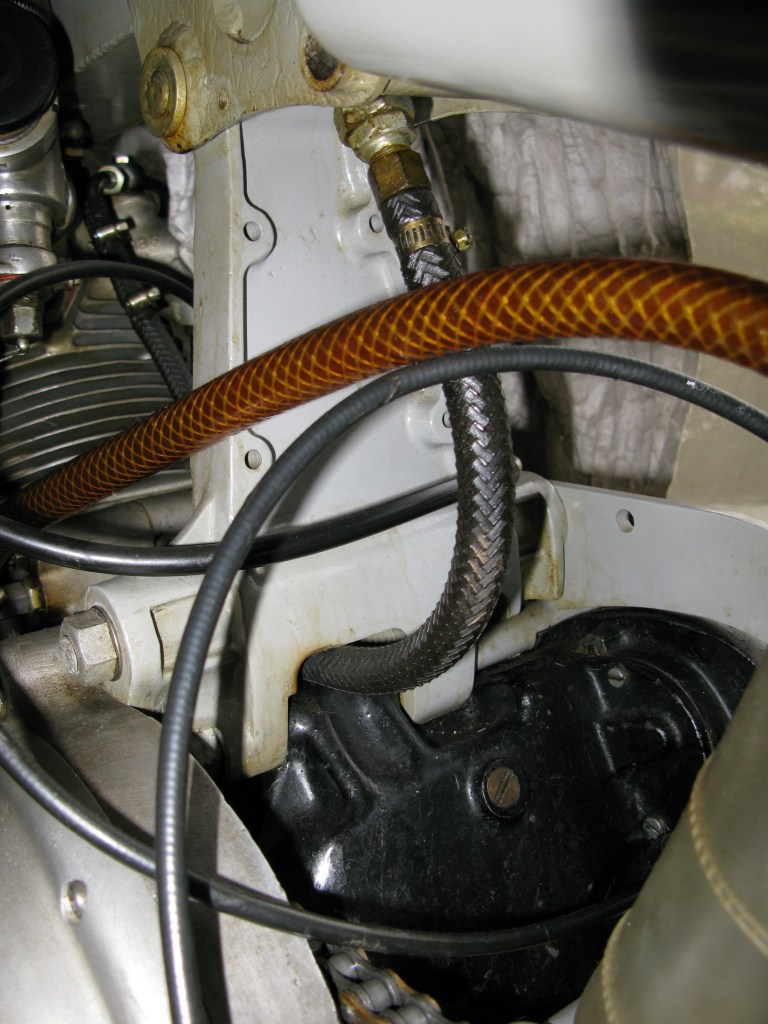
The Vincent Upper Frame Member (UFM) utilises the engine as a stressed member and also acts as the oil tank. It is attached securely to the cylinder head by a bracket (1). The rear of the UFM is attached similarly to the rear cylinder head on 1,000cc vee-twin models. The single cylinder Comet, Meteor and the Grey Flash models, however, feature a bracket/tie (2) that fills the void, where the rear cylinder would be, and connects the rear mounting point of the UFM with the engine plate, gearbox and inner primary chaincase.
The headstock is bolted to the oil tank and, on the Grey Flash, the headstock casting is extensively drilled for lightness.
On Grey Flash models, the vertical portion of the steering head, where the headraces are located, is covered by an aluminium plate where the headstock transfer is visible – this would have originally been polished but may be anodized on 2751.
Once this plate has been removed one is confronted by an extensively drilled area thus:
The UFM number is just visible.
The number RC/1A/4651 explained: ‘RC’ = Series C, ‘1A’ = Grey Flash (the design number) then the frame number. In this case, the frame number (4651) minus the engine number (2751) comes to 1900 – as was often the case with Vincent numbering.
Bracket welded to rear of UFM.
A bracket was welded to the rear of the UFM, by Terry Prince, to enable the attachment of a remote carburettor float chamber for a GP2 carb’. Once the UFM has been stripped of paint, the original dull chrome finish should still be in place. Then a decision will have to be taken whether to remove this bracket or not and how it might affect the external finish of the UFM.
The RFM
The triangulated Rear Frame Member (RFM) of the Vincent features a monoshock and was of a pioneering design. The origins of this feature go back to when Philip Vincent was studying at Cambridge and sketches he made from that time give an insight into his vision.
‘A’ is where the suspension connects the RFM to the UFM via two enclosed springs and a shock absorber. ‘B’ is where the RFM pivots – it’s sandwiched between the inner primary chain case and engine plate at this point. ‘C’ is the rear fork where the wheel is held in place.
Features of the Grey Flash RFM are a drilled and lightened pivot-bearing casting.
Image courtesy Peter Johnson.
I know that the RFM is dull chromium plated because I carefully removed some of the paint on the rear fork lug:
A bit fuzzy but the RFM frame number stamping is visible.
The lug on the opposing side features another less interesting feature though one common on Vincents:
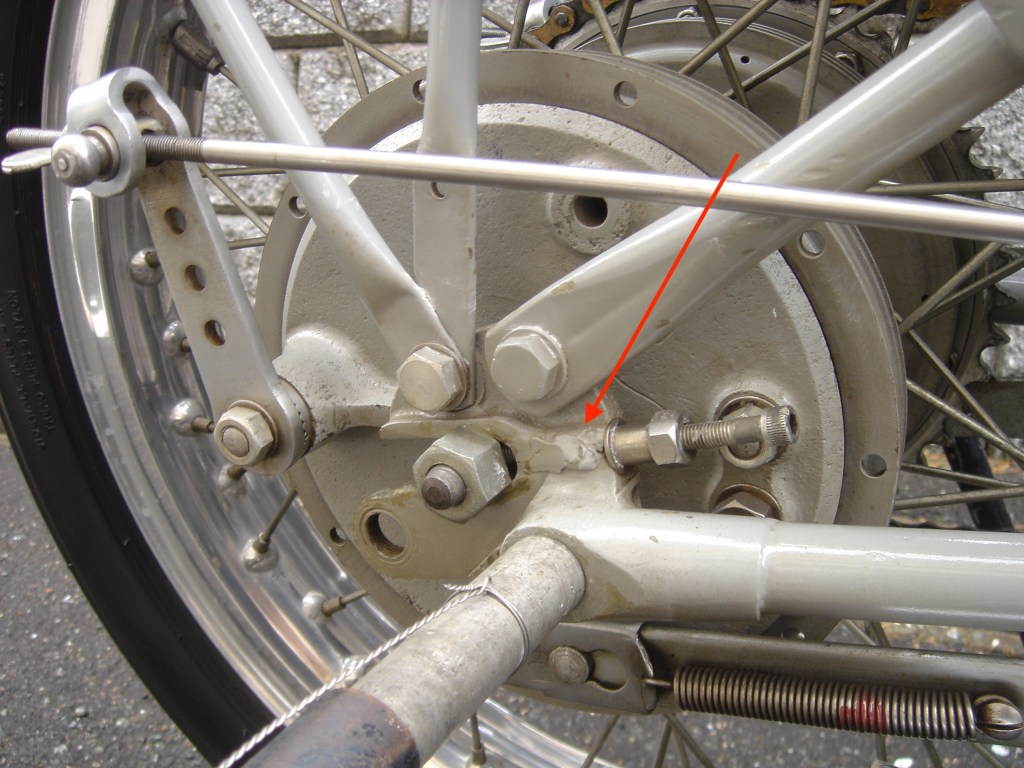
Welded repairs are visible.
The axle is held tight by an “eared” or “lipped” nut on this side. The racing axle is of a solid waisted bolt type configuration not present here. Anyway, this nut features a tab that extends inwards into the chain adjusting slot of the lug. This enables the T-bar (on road-going models) on the opposing side to be rotated by hand whilst the nut remains immobile – a clever design. Unfortunately people unfamiliar with this feature often apply a spanner to this captive nut and attempt to undo it with brute force. The tab rotates, bears agains the lug slot and, if enough force is applied, will split it necessitating a repair by welding or brazing – as seen here… ⤵️
Brackets
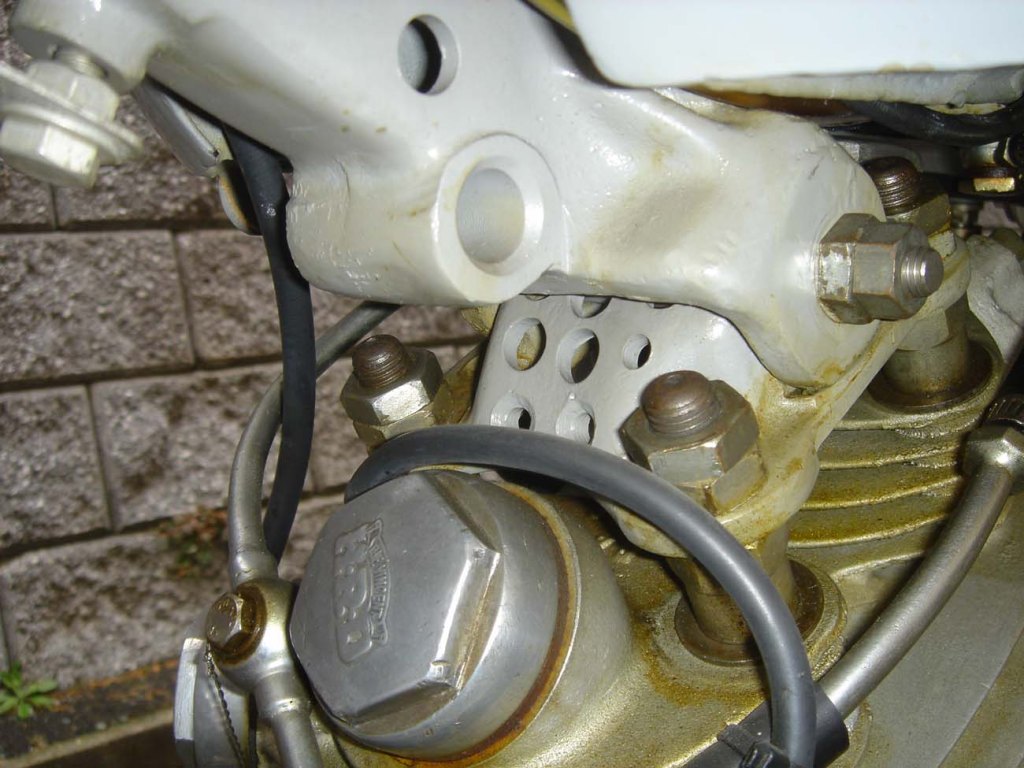
The Cylinder head bracket of Grey Flash models was extensively drilled to a pattern that would be impossible to replicate without access to the relevant drawing.
But hang on…
30.10.2019: Actually, this bracket would truly be impossible to replicate; David Dunfey informs me that it’s not a Vincent HRD produced item… When compared to the drawings held by the VOC it’s plain to see the difference. A bit of a disappointment but one will have to either be acquired or fabricated.
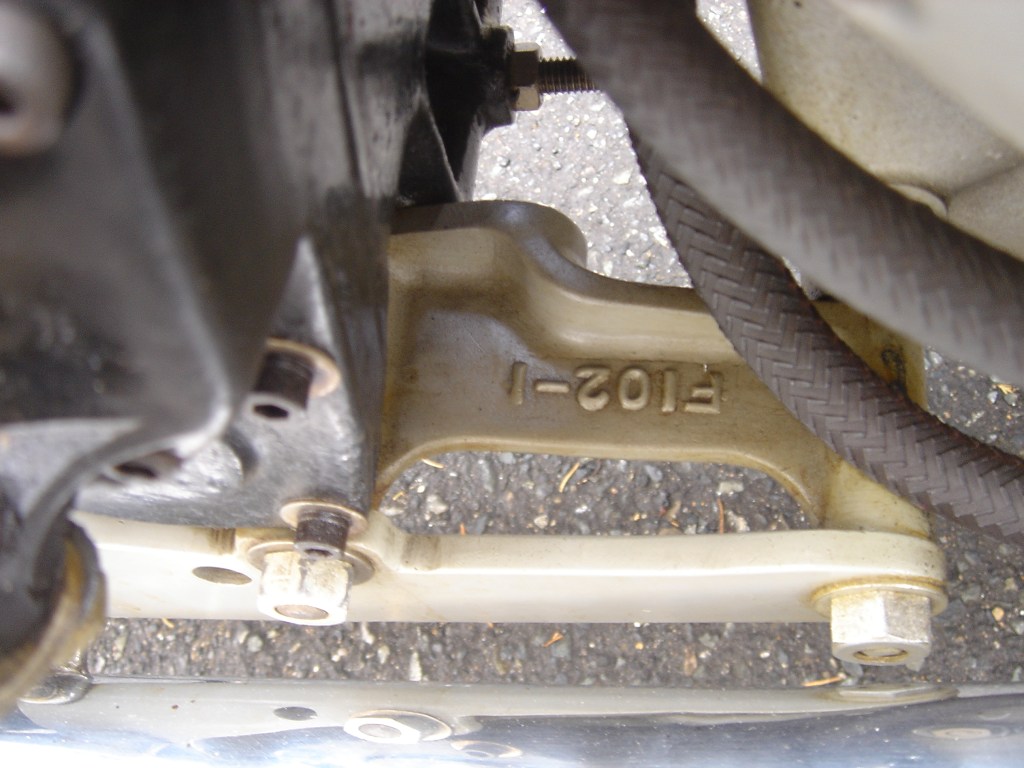
The rear frame tie is of a special pattern unique to the Grey Flash as this model employed a different type of gearbox to those used by the road-going Comet and Meteor models.
The interface with the Albion racing gearbox is visible in this shot. On road-going Vincent singles the tie would have been of a different configuration to mate with the Burman ‘boxes fitted.
Detail of spacer and link.
The gearbox link is also visible in the below shot. I’m unable to state whether this differs from the regular production part or not, at present.
The gearbox link.
The engine plate (pivot bearing plate) is of a different configuration to match the mounting points of the Albion gearbox.
Externally I can see that a considerable amount of the original motor remains. Certainly the cylinder head was replaced. As mentioned earlier in in a comment by Bill Hoddinott: “The original cylinder head of the GF was an unpainted Black Lightning/Shadow front head with standard size but polished valves and the inlet port opened to 32mm to match the carburetor.” We should also assume the barrel utilised now is not the original one. And obviously the piston was changed and the engine lost its special Vibrac connecting rod. Internally I’m eager to see what it looks like and keen to look for markings and stampings in order to ascertain how many of the parts therein, if any, might be original to 2751.
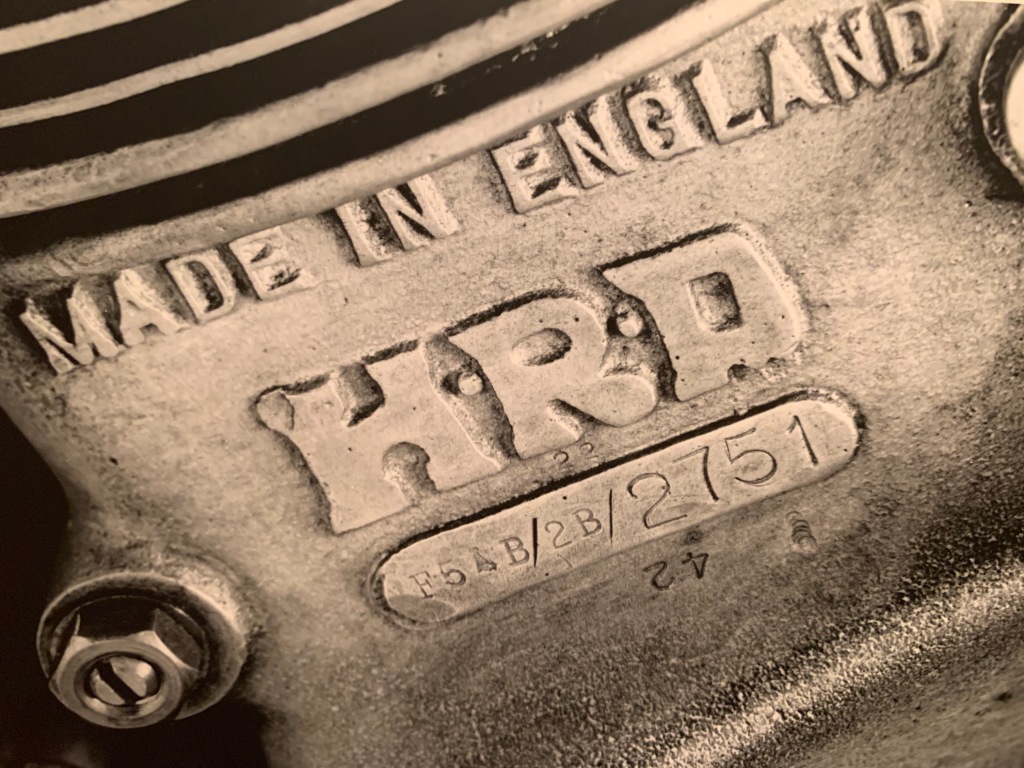
Grey Flash engine numbers explained: ‘F’ = four stroke (engine type), ‘5’ = 500cc (the cubic capacity), ‘A’ = aluminium alloy (material), ‘B’ = bicycle (purpose) and ‘/2B/’ = Grey Flash (the design number). This all precedes the engine number: ‘2751’.
Additional stampings: #1 is at present a bit of a mystery but must be with regards a note on the Engine Spec Sheet (see below). #2 is the mating number – not visible on on the crank case halves until the barrel is removed. #3 are, I believe, inspection stamps. Perhaps readers of this blog could further comment?
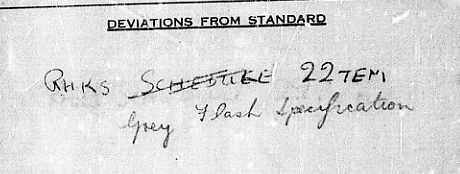
‘RH KS’ – not sure what this refers to… Certainly it’s not Right Hand Kick Start. And ’22 TEM’ – this must be the stamping above the engine number… Can anyone shed any light?
The mating number is plainly visible on the inner primary chain case
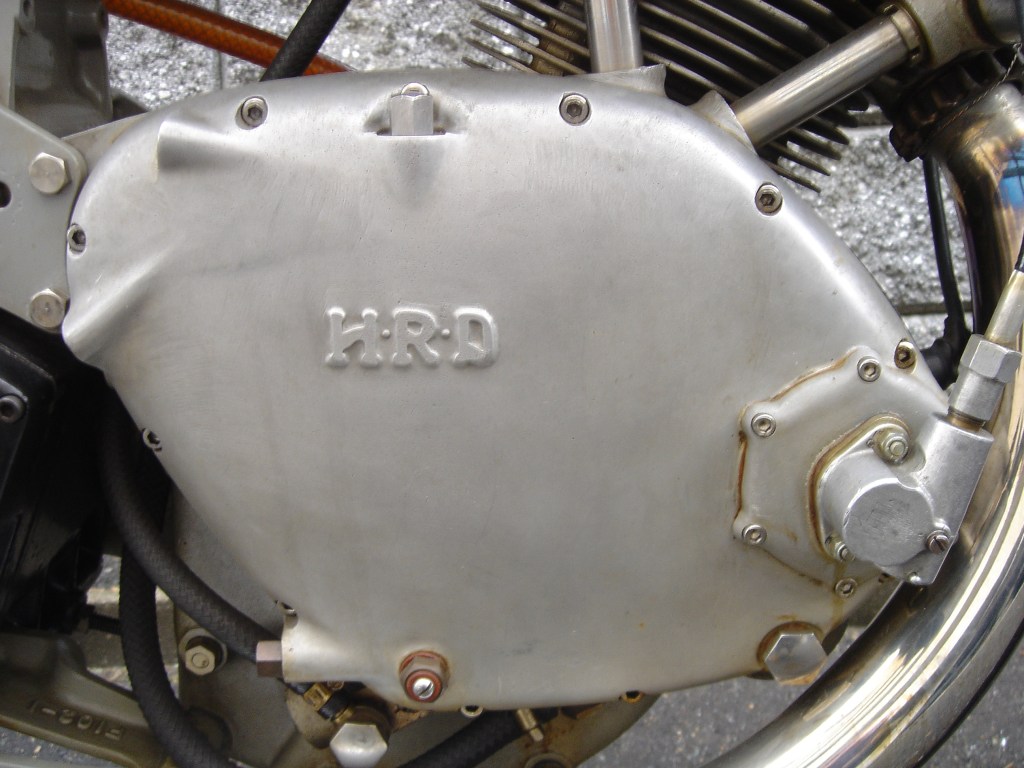
And the timing chest cover has the HRD logo cast into it so is highly likely to be original to the bike. The vast majority of postwar single cylinder machines produced by the factory are ‘Vincent’ branded and very few timing chest covers were cast with the HRD logo. The mating number stamped onto an inner surface of this cover will confirm originality.
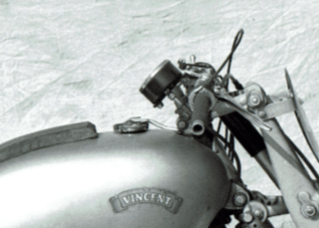
When I acquired 2751, it had fitted to it a very smart looking painted petrol tank that has been signed by John Surtees at an event in Japan (see pic in the ‘History’ section of this blog).
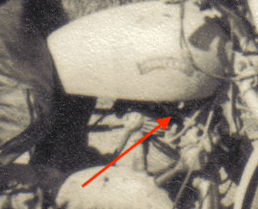
This tank looked splendid but as I dug into the original specification of 2751 I realised that the original tank would have been dull chromed as this was mentioned on the Works Order Form. Period shots of other Grey Flashes fitted with these exotically finished items exist:
Then, one day, I was communicating with David White, in NZ. David, a Vincent enthusiast and racer, knew of the myth of 2751 and had provided me with most of the period shots of it being raced by Len Perry. He mentioned in a June 2008 email: “I’ve been digging around trying to source a set of rear torque stays and I think I’ve managed to source a set from a gentleman named Ian Neilson who happens to own amongst other things a Grey Flash replica. Anyway, during our conversation, after I mentioned the reason why I was after some replacement stays, Ian reminded me that he has both the original petrol tank and seat unit off Len Perry’s Flash. The tank was modified by Len years ago but still has some dull chrome which sounds promising. Anyway, Ian may part with these items so best if you phone and speak to him directly.”
I procrastinated a while… Then in another email David mentioned: “Ian has told me that the tank was painted black and had filler over the welds when he purchased it and he had had it stripped to reveal the past dull plating and modifications.”
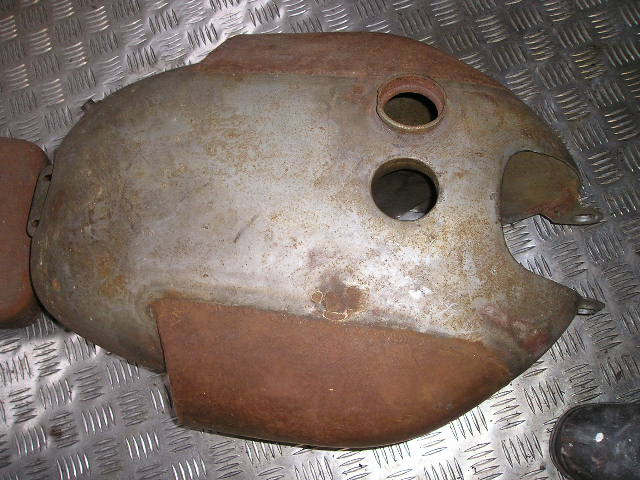
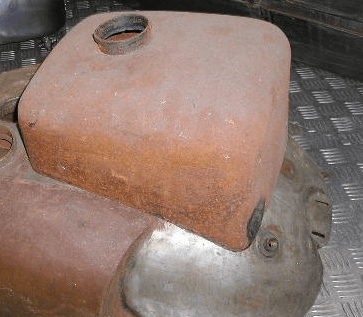
This sounded very intriguing but I didn’t hold out my hopes. I contacted Ian. The seat might have been fitted to 2751 at one time but it was not a Vincent item. The following pics of the tank were sent through:
Ooer…
Well, that does look like dull chromium plating but look at the state of it! And those welded-on extensions…
I had a bit of a think. I wanted the tank on the off chance that what Ian had told me was indeed true – but I knew there was a very high chance that this was some other tank from an unrelated machine. The modifications did look very old and the finish possibly period. I came to a deal with Ian whereby I swapped the Surtees-signed tank fitted to the bike for his rusty item – a direct swap. I paid the freight of shipping my tank to him from Japan to NZ and he agreed to cover the costs of sending his tank to EuroBrit MotorBikes in Melbourne, Australia. I remember packing up my perfectly good tank and wondering what the hell I was doing…
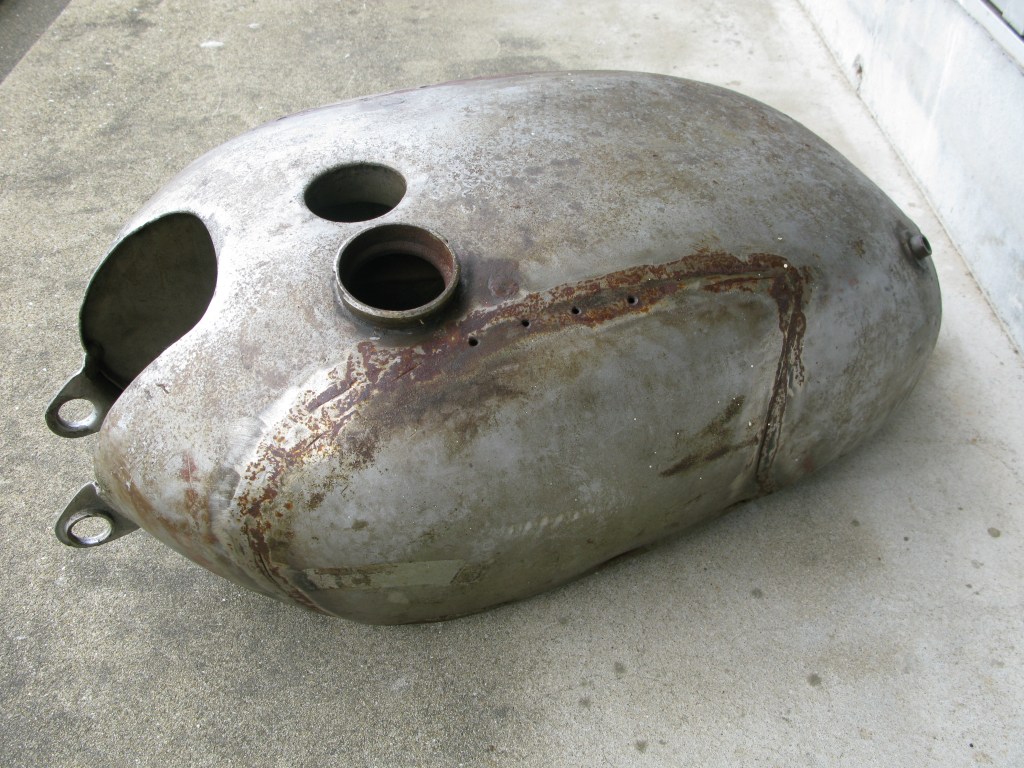
Then, one day, chum Franc, at EuroBrit called to tell me the tank had arrived. He unpacked it and I asked him to grind off the side extensions to see what lay underneath. This is what was revealed:
Original transfers and…
…dull chrome!
The dull chrome being uniform all over the tank…
I felt that this was overwhelmingly convincing. The finish under the extensions was consistent with the finish visible on the areas not covered by them. And the finish looked period-correct and the extensions had obviously been welded on at a later date and didn’t feature the plating. The transfers were positioned correctly and had been damaged by the heat generated by the welding.
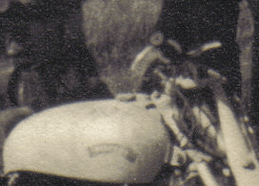
An approximation of correct transfer placement can be ascertained from this period shot:
When compared with this one:
And…
This one…
…compared to this shot.
What remained of the extensions was further trimmed.
A pump bracket is fitted.
And is plainly visible in this period shot of 2751.
In addition, the tank was of the correct pattern fitted to 2751 in period shots of the bike. But the biggest clue that the tank was what it was purported to be lay in the fact that only I, Bill Hoddinott and David Dunfey knew that 2751 had been fitted with a tank finished in a such a way. If anyone had wanted to enrich themselves by selling me a rusty old tank, and telling me that it was originally fitted to the bike, then it would have been highly unlikely that they would have known that it was not painted (as many Grey Flash tanks were). Only a very few people had any recollection of the details of the bike and Works Order Forms are closely guarded and only available to owners of genuine Vincent racing machines – to prevent counterfeiting. Obviously, I was elated my gamble had paid off and am dead certain that this is indeed the fuel tank that 2751 left The Works fitted with. I invite anyone to prove me otherwise! 😊
Note added 27.05.2020: During a recent phone conversation with “Mr. K” (the Vincent enthusiast that bought 2751 from Peter Johnson and brought it to Japan) he stated that, whilst attending the 1995 New Zealand Rally, he was approached by a man (most likely Ian Neilson) purporting to own the original tank from 2751 – Mr. K had made it known that he owned the Weston Webb Grey Flash. He (Mr. K) recalled that the man described the tank as “big type” (a reference to the welded on pannier extensions) and that although he was offered the part, he declined to purchase it as he was unable to corroborate whether it was genuine or not sight unseen.
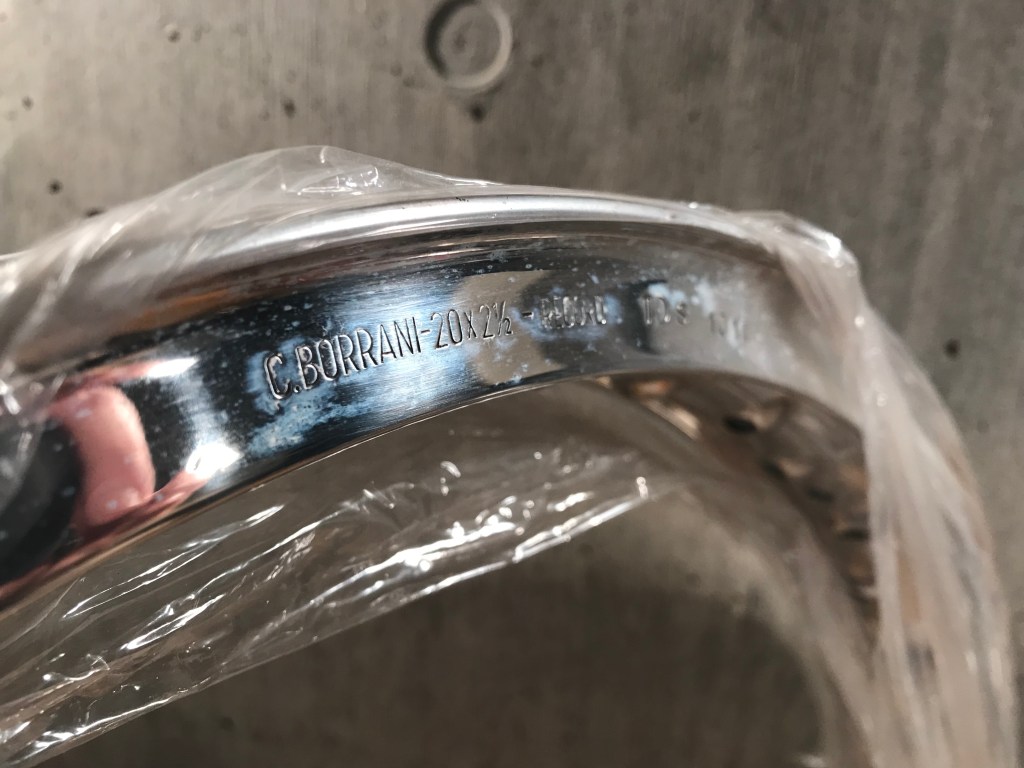
When I acquired 2751 I noted that the wheel rims fitted were 21″ for the front and 19″ to the rear – both Borrani. Bill Hoddinott commented:
“I have the impression that the Works used both Borrani and Dunlop 20 (rear) and 21 inch alloy (front) rims on GFs and BLs interchangeably from ’49 through ’55 according to whatever happened to be available on the market. Far as I know the D and B were identical in appearance though it seemed some Bs had higher shoulders on them than others. So it would seem that both Ds and Bs are acceptable on GFs and BLs. I understand some of the rims were not even marked with a maker’s name. The Works did not identify them in the Spare Parts List.”
So, the correct WM1 1.85″ x 21″ rim for the front was deemed correct but I needed to find a rare WM2 2.5″ x 20″ rim for the rear. Bill Hoddinott put me in touch with John Hanson who kindly agreed to sell me one that he had surplus to his requirements.
John had the rim polished before sending it to me.
The spoke holes were drilled in the right pattern so I now had one hard-to-find item checked off the list. Finding period-correct tyres in an acceptable condition would be impossible so I would have to compromise with the rubber.
When I acquired 2751 from Mr. K , he let me have an NOS Vincent racing seat that he had. This was a real plus as these seats are almost impossible to come by. And indeed when I unwrapped the packaging, a very rare item in fine condition presented itself.
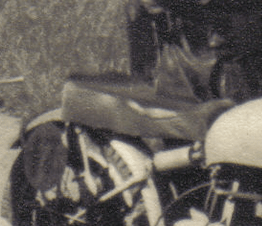
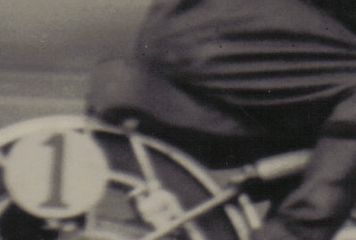
Perfect, or so I thought… Then, after extensive communication with Bill Hoddinott and David Dunfey, I came to the realisation that this rare racing part would never have been fitted to 2751. The very early production Grey Flashes and Black Lightnings featured many components fitted to road-going models that had been adapted – and this applied to the seat. By looking at period shots of 2751, I could indeed see that the seat fitted was what appeared to be a road-going seat that had been cut down.
When compared with:
A bit of a shame really as the the later purpose built racing seat looks way better… Also, the footrests and tachometer would not have been of Vincent racing pattern – but more of that later.
Anyway, the NOS seat was now determined to be incorrect and thus surplus to my requirements. It was sold to the owner of a genuine Black Lightning to recoup some of the outlay for 2751. What is such a rare item worth? Well, in 2009 I sold it for US$7,000…





































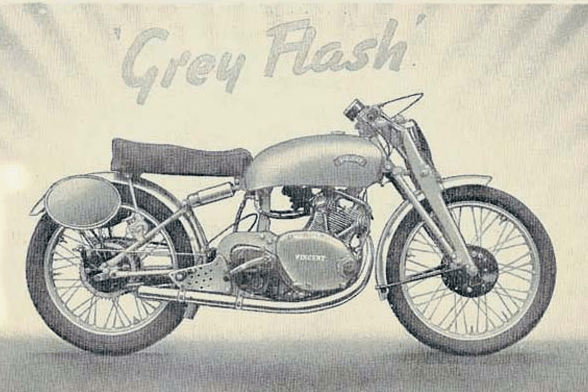


 Grey Flash 2751